
Flexible Intermediate Bulk Containers Manufacturers: Complete Guide to FIBC Bags
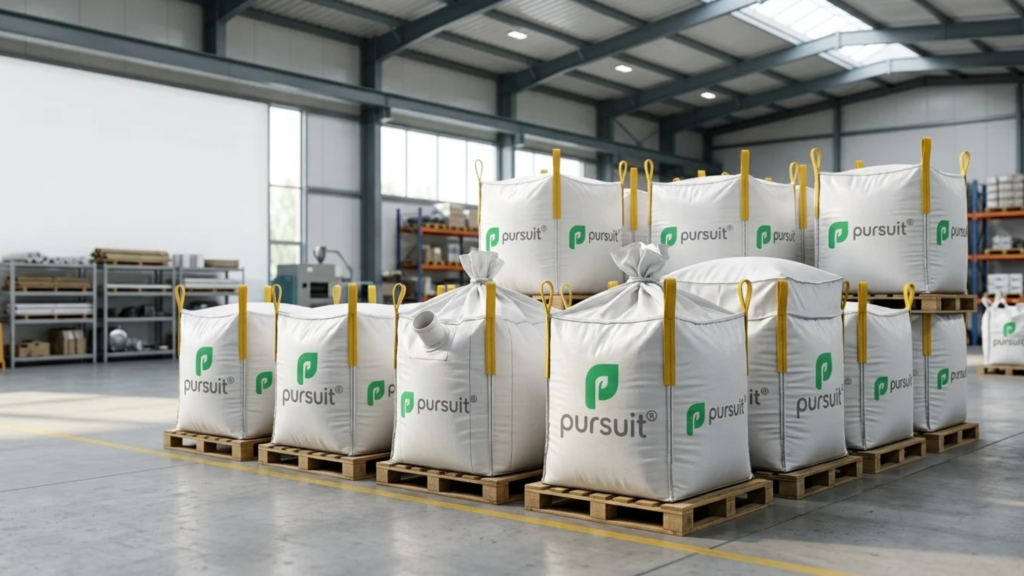
Flexible Intermediate Bags (FIBC) are bags that are made from a flexible material, designed for bulk storage, handling, and transportation for chemicals, agricultural products, minerals and industrial powders.
Businesses can find flexible intermediate bulk containers manufacturers who can supply them with the desired capacity, structure, safety equipment, and product compatibility of the bags for efficient bulk packaging and transportation.
What Are Flexible Intermediate Bulk Container Bags?
Flexible intermediate bulk container bags are industrial packaging bags that are primarily composed of woven polypropylene (PP) fabric.
They are also called as FIBC bags, Jumbo bags or Bulk bags are designed to carry large amounts of dry flowable material facilitating the efficient filling, lifting, storage and discharge.
From that point of view, the production of FIBC bags is possible to be done in various sizes, lifting loops, filling ports, discharge spouts, liners, and fabric type, which are different from the conventional small sacks to fulfill the requirements of each industrial field.
What Does FIBC Stand For?
FIBC is the name given to Flexible Intermediate Bulk Container. Such containers are popular in sectors that involve the efficient packaging and shipment of bulk goods.
They can be designed to meet specific requirements and have a flexible construction that makes them well suited to many commercial and industrial applications.
How Do FIBC Bags Work?
The filling spout or the duffle top (open top) is used to fill FIBC bags.
The bottom construction defines the material discharge method, and integrated lifting loops enable compatible lifting equipment to lift filled bags.
The proper FIBC is compatible with the material being packed, the safe working load, the filling and unloading equipment and the storage and transportation environment.
What Materials Are Used to Manufacture FIBC Bags?
The conventional FIBC bags are mainly produced in woven polypropylene as it offers strong, lightweight and flexible packaging structure.
Depending on application, manufacturers can use:
- To wear a hat.Woven PP fabric: It is used to form the load bearing structure.
- Polypropylene lifting loops: Support lifting when designed and used within the bag’s rated capacity.
- Fabric coatings or laminations: Help control moisture penetration and improve surface properties.
- Inner liners: If a product needs a special protection then provide an additional barrier.
- Printing and identification labels: Show information about the product, handling instructions and traceability information.
The choice of material properties should be considered in terms of the application, the level of protection required, the storage conditions and relevant safety requirements.
What Are the Different Types of FIBC Bags?
FIBC bags can be made in various designs depending on the nature of the product, handling requirement and industrial application.
The selection depends on the material being packed, desired capacity, type of discharge and electrostatic and regulatory factors.
1. Type A FIBC Bags
Type A FIBC bags are woven cloth bags that are not designed specifically for electrostatic protection.
They are typically used in non-flammable products and in those areas where there are no flamable conditions.
Typical applications:
- Sand and non-flammable minerals
- Agricultural products
- Suitable non-flammable powders and granules
Important consideration: Type A bags should not be used where flammable atmospheres or combustible dust hazards require electrostatic protection.
2. Type B FIBC Bags
Fabric with low breakdown voltage, usually less than 6 kV, is used in the construction of C bags to minimize the possibility of triggering brush discharges.
However, they don’t emit static as would grounded conductive bags.
Typical applications:
- Selected dry powders and granules
- Industrial materials where a propagating brush discharge hazard must be addressed
Note: Type B bags are not completely effective in reducing electrostatic ignition hazards.
Whether they are suitable should be verified, according to the physical properties of dust of the product and environmental conditions.
3. Type C Conductive FIBC Bags
Conductive threads or materials that conduct electrostatic charge (with the proper grounding) are used in this type of FIBC bags.
They can be used in applications that involve control of electrostatic discharge.
Typical applications:
- Selected chemical powders
- Industrial materials handled in potentially flammable environments
- Processes requiring a defined grounding procedure
Note: filling and emptying of type C bags requires ground connection.
They should not be used for applications depending on grounding for safety if it can not be reliably maintained.
4. Type D Antistatic FIBC Bags
Type D FIBC bags are manufactured with dissipative or antistatic material and use to control electrostatic discharge without the need for grounding as with type C bags.
Typical applications:
- Selected chemical and industrial powder applications
- Processes where grounding a Type C bag is impractical
Please note: Type D bags are not applicable to all flammable atmosphere / combustible dust applications.
They are chosen according to the test results of the bag, product characteristics and operating conditions.
It is important that the selection of electrostatic bags is done in the context of a competent risk assessment and any relevant technical criteria, such as IEC 61340-4-4 if applicable.
5. U-Panel FIBC Bags
The u-panel bags are made from the u-shaped fabric panel and the other panels are connected to the U-shaped fabric panel as the sides. It is one of the popular designs in the regular industrial bulk packaging.
6. Four-Panel FIBC Bags
The bag body is formed by four side panels which belong to 4 panel bags. They can be created in various sizes, load and filling or unloading patterns.
7. Circular FIBC Bags
Tubular fabrics body is used to make circular FIBC bags. Suitability is determined by the construction of the fabric, the size, the required amount of filling and the shape the fabric takes when handled.
8. Baffle FIBC Bags
The baffle bags feature internal corner panels which assist the filled bag to stay a more stable square shape. They can be very useful if they are well designed to improve space utilization in storage and transport.
9. Ventilated FIBC Bags
Ventilated FIBC bags allow air to flow through the bag or have a specific fabric design that allows the air to circulate through the bag.
Typically they are utilized in product such as fire wood and potatoes, and some agricultural products that need to be ventilated.
10. BOPP Laminated FIBC Bags
BOPP-laminated FIBC bags are bags with an additional layer of printed polypropylene film for branding, product identification and for specific surface protection requirements.
A proper moisture protection is only possible with a complete bag construction and closure design.
11. UN-Certified FIBC Bags
The UN-certified FIBC bags are designed and tested for a specific dangerous goods packaging application, as required.
The packaging design, intended substance, packaging group and transport should be identical to the certification.
What Are the Top and Bottom Construction Options for FIBC Bags?
The flow of materials into and out of the bag are determined by the upper and lower patterns of an FIBC bag.
Choosing the correct openings can enhance filling efficiency, minimise material spillage and ease unloading.
Top Construction Options
| Top design | Main characteristics |
|---|---|
| Open top | Provides a wide opening for convenient filling. |
| Duffle top | Includes a fabric extension that can be tied or closed around the contents. |
| Filling spout | Provides a controlled opening for filling equipment. |
| Full cover top | Offers additional coverage when the application requires it. |
Bottom Construction Options
| Bottom design | Main characteristics |
|---|---|
| Flat or plain bottom | Suitable for applications where the bag is emptied by another method, such as cutting or tipping, where appropriate. |
| Discharge spout | Enables controlled unloading through an outlet. |
| Conical bottom | Supports product flow in suitable applications and compatible discharge systems. |
| Closed bottom | Keeps the contents enclosed until the selected unloading process is performed. |
What Are Single-Loop and Two-Loop FIBC Bags?
Lifting-loop bags come in two designs: single loop and two loop designed for use with lifting equipment and load that are compatible.
These can be employed in simplified lifting applications where they could be useful.
Tunnel-lift bags incorporate lifting sleeves or tunnels that allow compatible forklift handling.
The setup configuration will depend on the method used to lift and the operating environment and the safe working load required.
What Are the Key Features and Benefits of Flexible Intermediate Bulk Containers?
For packing and shipping large quantities of compatible materials, flexible intermediate bulk containers (FIBC) are an option that comes in handy.
Among their main advantages are flexibility in design, ease of handling and modifications to the packaging for various supply chain demands.
1. High Load Capacity
There are different rated capacities used for FIBC bags. The correct capacity shall be chosen based on the product’s weight, bulk density, safe working load of the product, and the dimensions of the bags.
2. Durable Woven Polypropylene Construction
Woven PP fabric offers flexible packaging structures that are suitable for tough handling situations.
Actual performance will vary based on fabric, stitching, construction and operating practices.
3. Space-Efficient Storage and Transportation
The empty FIBC bags are usually foldable and can be stored in fairly small areas compared to rigid packaging.
There are also good examples of bag design that can help businesses to organize bulk material storage and transportation.
4. Customizable Sizes and Designs
Manufacturers can provide various sizes, loop designs, filling openings, discharge methods, printing or liner options to meet customer needs.
5. Improved Handling Efficiency
Lifting loops and material handling equipment that is compatible with the process can help make the transfer of bulk materials easier from production through storage and transportation.
6. Packaging Cost Efficiency
FIBC bags can be used to cut packaging and handling expenses, where appropriate, versus some alternative systems.
Actual savings will vary based on specifications of bags, compatibility of products, equipment, logistics and reuse requirements.
7. Product Protection Options
Special protection against selective environmental or contamination risks can be achieved by using coated fabric, laminations and inner liners.
Protection has to be checked for the material and storage conditions.
Which Industries Use Flexible Intermediate Bulk Container Bags?
FIBK bags are bags that are used in a variety of industries for bulk material storage, handling and transportation that requires flexibility.
The need for bags should be related to the operation requirements of the respective industries and the construction and specifications of the bags are selected.
Chemical and Petrochemical Industry
For chemical powders, granules, resins and other bulk materials that are compatible, use FIBC.
Using of special liners, electrostatic protection, identification labels and regulated packaging may be required, depending on the product.
Agriculture, Grains and Pulses
In the agriculture aspect, the bags are used for various products like grain, seeds and pulses etc., in FIBC bags. Selection criteria are: ventilation, cleanliness, moisture management, safe handling.
Food Ingredients and Food-Grade Materials
Food-grade FIBCs can be designed for compatible ingredients such as flour, sugar and selected food powders.
Buyers should verify the applicable food-contact requirements, material declarations, manufacturing hygiene and contamination-control measures.
Minerals and Construction Materials
FIBCs are used for compatible materials such as sand, mineral powders and selected construction ingredients.
Fabric strength, abrasion resistance, bag dimensions and discharge requirements should be considered.
Plastics, Resins and Polymer Granules
Bulk bags are utilized for the transport of appropriate granules, plastic resins and related substances by manufacturers and distributors.
Bag selection can be influenced by the following: filling systems, product flow, liner requirements and static-control measures.
Pharmaceutical and Specialty Industrial Materials
Selected pharmaceutical ingredients and specialty powders may require controlled packaging specifications, validated material compatibility and documented quality procedures.
Buyers should confirm that the manufacturer and bag design meet the application’s specific requirements.
How Do You Choose the Right FIBC Bag Manufacturer?
There are more things that you should take into account than price when choosing a dependable manufacturer.
The buyers should consider the parameters and specifications, manufacturing quality, technical support, delivery capability, the manufacturer’s ability to fulfill the requirements of the intended application.
1. Review Manufacturing Capabilities
Determine if the manufacturer can provide the necessary bag design, size, fabric characteristics and quantities.
For repeat orders, analyze production planning and maintainability of production specifications.
2. Verify Safe Working Load and Safety Factor
Safe Working Load (SWL) is the maximum load specified for the bag in the conditions it is meant to be used in.
Product documentation and on applicable standards should be checked for safety factor and applicable tests.
Never select a bag based only on its appearance or assumed weight capacity.
3. Confirm Product Compatibility
The material being packed determines whether a standard bag, coated fabric, liner, ventilated construction or specialized electrostatic design is appropriate.
For hazardous or potentially flammable materials, obtain a suitable technical assessment before selecting the bag.
4. Evaluate Quality Control and Certifications
Ask about manufacturing inspections, testing procedures, traceability and applicable quality-management certifications.
Confirm the scope and validity of any certificate rather than assuming it applies to every product.
Where food contact, dangerous-goods transport or other regulated applications are involved, verify the specific compliance requirements.
5. Assess Customization and Lead Times
Discuss bag dimensions, filling and discharge arrangements, lifting loops, printing, liners, order quantities and delivery schedules before placing an order.
6. Request Samples and Technical Documentation
Where practical, review samples, drawings, specifications and test documentation before approving bulk production.
A clearly defined specification helps reduce misunderstandings and maintain consistency across repeat orders.
What Specifications Should You Share When Ordering FIBC Bags?
Fully stating requirements enables manufacturers to advise on a suitable design and to arrive at a correct quotation.
| Specification | Information to provide |
|---|---|
| Product | Material name, form and relevant handling properties |
| Capacity | Required weight and bag volume |
| Dimensions | Required length, width and height |
| Safe Working Load | Required rated capacity and applicable safety factor |
| Bag construction | U-panel, circular, four-panel, baffle or another design |
| Top opening | Open top, duffle top, filling spout or full cover |
| Bottom opening | Flat bottom, discharge spout, conical bottom or another design |
| Fabric | Required construction, coating or lamination |
| Liner | Whether an inner liner is required and its specifications |
| Lifting arrangement | Single-loop, two-loop, four-loop or another compatible design |
| Special requirements | Food contact, electrostatic control, UN certification or other applicable requirements |
| Order details | Quantity, printing, delivery destination and required schedule |
These are helpful to the manufacturer in determining feasibility, their recommendation of specification, and in making a more accurate commercial quotation.
FIBC Bags vs. Other Industrial Packaging Solutions
One of the several types of packaging in the industrial sector is FIBC bag. The best option will depend on the product characteristics, storage conditions, handling equipment and cost of the entire supply chain.
| Packaging solution | Potential advantages | Important considerations |
|---|---|---|
| FIBC bulk bags | Flexible, foldable when empty and available in multiple designs | Require appropriate lifting equipment and correct handling |
| Small woven sacks | Useful for smaller product quantities and manual distribution | Require more individual units to move the same total quantity |
| Paper bulk packaging | Can suit certain dry materials and packaging systems | Moisture resistance and load requirements must be evaluated |
| Rigid plastic containers | Maintain a rigid shape and can suit specific handling systems | Storage space, cleaning and return logistics may affect cost |
| Drums and rigid intermediate bulk containers | Suitable for selected liquids and other compatible materials | Product compatibility, cleaning and transport requirements vary |
When deciding on packaging, companies should focus on the overall packaging and handling, storage and transportation expenses and not just the unit price.
Why Choose Pursuit Industries as Your FIBC Bulk Bag Manufacturing Partner?
Pursuit Industries offers industrial packaging solutions such as FIBC bags and polypropylene woven packaging.
Pursuit can discuss with businesses the characteristics of their product, the way it needs to be handled, and the specifications for their orders, and help the company find the best packaging solution for them using flexible intermediate bulk containers manufacturers.
Manufacturing and Bulk Supply Capabilities
Pursuit is a supplier of woven polypropylene packaging products to industrial and export markets.
Before ordering, buyers have the opportunity to consult the team regarding the bag configurations required, specifications and supply quantities.
Quality and Product Specifications
The first step of selecting the right packaging is to have clear specifications and the right quality checks.
It is important for the buyers to discuss their load rating, dimensions, construction of fabric, filling, discharge, and any product-specific requirements.
Packaging Solutions for Different Industries
There are various combinations of bags which are needed in various industries.
Pursuit can discuss the application and requirements in bulk packaging used in sectors like chemicals, agriculture, industrial material etc.
Export Experience and International Supply
Pursuit has international export experience, serving customers from over 86 countries with woven polypropylene products.
This experience is helping it’s buyer industrial packaging solutions in various markets.
How to Request an FIBC Bag Quote from Pursuit
To discuss a bulk bag requirement, prepare the following information:
- Product name and intended application
- Required bag dimensions and safe working load
- Preferred bag type and lifting arrangement
- Top and bottom construction
- Liner, coating, printing or special compliance requirements
- Order quantity and delivery destination
Share these details with Pursuit through its FIBC product page to discuss your requirements and request a quotation.
Frequently Asked Questions About Flexible Intermediate Bulk Containers
What Is the Full Form of FIBC?
Flexible Intermediate Bulk Container (FIBC) is a type of flexible container for bulk materials. It is a large flexible bag made from, typically, woven polypropylene which is used to store and move compatible bulk materials.
What Are Flexible Intermediate Bulk Container Bags Used For?
FIBB bags are used for bulk materials like chemical powder, agricultural product, mineral, plastic granules, and selected food ingredients, in the packaging, storage and transport.
What Is the Standard Capacity of an FIBC Bag?
Different sized FIBC bags are produced based on the application. The standard weight for common industrial designs is between 500kg and 2,000kg, although this is not a standard weight.
Before using, Buyers should verify the bag’s rated Safe Working Load and minimum volume requirements.
What Is the Difference Between Type A, Type B, Type C and Type D FIBC Bags?
Type A bags offer no electrostatic protection. Low-breakdown-voltage fabric is used for type B bags. Type C bags are made of conductive materials and need to be grounded.
Type D bags are intended to control electrostatic discharge as Type C bags, except that they are not grounded. This is dependent on a documented risk assessment and performance testing of the bag.
Are FIBC Bags Reusable?
Some FIBC bags are designed and certified for multiple trips, while others are intended for single use.
Reuse must follow the manufacturer’s instructions, applicable certification and inspection requirements. A bag should not be reused if its condition or intended use makes it unsafe.
Can FIBC Bags Be Customized?
Yes. Depending on manufacturing capabilities, FIBC bags can be customized by dimensions, capacity, fabric construction, lifting loops, top and bottom openings, printing, liners and other application-specific features.
How Do I Choose a Reliable FIBC Manufacturer?
Review manufacturing capabilities, quality controls, product specifications, applicable certifications, testing documentation, delivery reliability and experience with similar applications.
Request a written specification and quotation before confirming an order.
Are FIBC Bags Suitable for Chemicals?
There are many chemicals, powders and granules that can be compatible with FIBC bags.
But the material, liner and electrostatic classification and regulations need to match the chemical and operating conditions.
What Is the Difference Between FIBC Bags and Jumbo Bags?
Typically, the terminology “FIBC bags” and “jumbo bags” is considered synonymous and both classify flexible bulk bags.
The exact construction, size, capacity and safety features depends on the design and its use.
Conclusion: Find the Right Flexible Intermediate Bulk Container Bags for Your Business
For businesses that need to transport bulk products that can be mixed (compatible), flexible intermediate bulk container bags provide a convenient way to do that.
The appropriate bag should be chosen based on size, fabric structure, filling and discharge methods, product compatibilities and safety considerations.
When comparing flexible intermediate bulk containers manufacturers, prioritize documented specifications, quality assurance, customization capabilities and dependable supply.
Pursuit Industries offers FIBC and polypropylene woven packaging solutions for industrial and export markets.
Looking for FIBC bags for your business? Visit Pursuit’s FIBC product page to explore the available solutions and discuss your bulk packaging requirements.
