
Flexible Intermediate Bulk Containers Manufacturers: A Complete Guide for Buyers in 2026
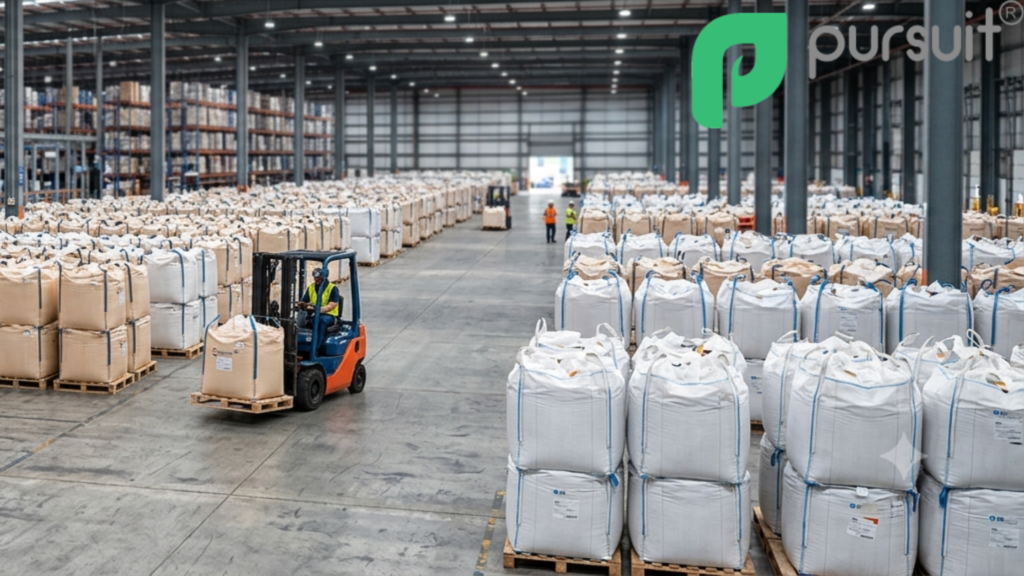
Flexible Intermediate Bulk Containers, usually mentioned as bulk bags, big bags, jumbo bags, or super sacks , are big flexible containers made with woven polypropylene fabric.
They’re built for keeping and moving dry, free flowing bulk materials around. On paper a normal FIBC can handle something like 500 kg up to 2,000 kg, so in practice they end up being one of the more cost-effective options for bulk packing across many global supply chains.
You’ll see these containers mostly in agriculture , chemicals, food processing, pharmaceuticals , construction, and mining.
The reason is pretty straightforward, powders, granules, and grains need quick, reliable handling, and the whole setup helps with that.
Why Is the FIBC Market Growing So Rapidly?
In terms of market size, the global FIBC market was estimated at around USD 6.0–9.05 billion for 2025–2026 .
It’s expected to expand with a CAGR of about 4.2% to 5.42% until 2034–2035 , and then land at roughly USD 8.7–14.37 billion by the mid-2030s.
Top growth drivers include:
| Driver | Impact |
|---|---|
| Rising demand from agriculture & chemical sectors | Accounts for over 80% of global FIBC demand |
| Growth in food ingredient exports | Requires liner-ready, contamination-controlled bags |
| Sustainability push | Recycled-content PP bags growing at 8.64% CAGR |
| Smart packaging adoption | RFID/IoT-enabled FIBCs gaining traction |
| Asia-Pacific production dominance | India & China produce over 140 million units/year combined |
How to Choose the Right Flexible Intermediate Bulk Containers Manufacturer
Selecting a reliable FIBC manufacturer requires evaluating certifications, technical capabilities, production capacity, and industry-specific compliance. Here are the critical factors:
1. Verify Essential Certifications
The most important certifications to look for:
| Certification | Purpose | Required For |
|---|---|---|
| ISO 9001:2015 | Quality management system baseline | All FIBC applications |
| ISO 21898 | FIBC design, construction & testing standards | General compliance |
| UN Certification | Hazardous material transport safety | Chemical/pharma FIBCs |
| BRCGS / ISO 22000 / HACCP | Food safety & hygiene | Food-grade FIBCs |
| GMP | Good Manufacturing Practice | Pharmaceutical-grade FIBCs |
| ISO 14001 | Environmental management | Sustainability-focused buyers |
Manufacturers holding these certifications are ones that buyers should consider first: ISO 9001, ISO 22000, BRC and GMP and to UN certification for hazardous material bags, Pursuit FIBC Solutions adds.
2. Understand FIBC Types for Your Application
FIBCs are classified into four types (A, B, C, D) based on electrostatic protection levels:
| Type | Static Protection | Best For | Key Feature |
|---|---|---|---|
| Type A | None | Non-flammable materials (grains, sand, cement) | Basic woven PP; most cost-effective |
| Type B | Low breakdown voltage | Dry powders in low-static environments | Prevents brush discharges |
| Type C | Conductive, requires grounding | Flammable powders, chemical solvents | Must be grounded during filling/emptying |
| Type D | Anti-static, no grounding needed | Most hazardous environments | Safest for combustible materials |
Type A bags hold ~44% market share in 2026, while Type D bags show the highest growth at 7.53% CAGR due to rising safety requirements in chemical and lithium processing.
3. Evaluate Manufacturing Capacity & Lead Times
Key questions to ask your FIBC manufacturer:
- What is your monthly production capacity for different FIBC types?
- What are typical lead times for standard vs. custom orders?
- Do you maintain inventory buffers for seasonal demand spikes?
- Can you scale production for large-volume contracts?
Leading manufacturers like Simplex Chemopack (India) supply 12 million bulk bags annually, while FIBC Vietnam operates a 78,000 sqm facility with ~550,000 units/month capacity.
4. Check Customization Capabilities
A quality FIBC manufacturer should offer:
- Fabric weight options (custom GSM)
- Liner materials: PE, aluminum, conductive
- Discharge configurations: Spout bottom, flat bottom, duffle top
- Lifting loop designs: 1-loop, 2-loop, 4-loop, cross-corner
- Printing & branding capabilities
- Specialized coatings: UV-resistant, anti-static, moisture barrier
5. Assess Quality Control Processes
Professional manufacturers implement:
- Incoming raw material inspection
- In-process quality checks during weaving, cutting, sewing
- Final product testing: Load testing, seam strength, UV degradation
- Batch tracking systems for full traceability
- Non-conforming product handling protocols
Top Flexible Intermediate Bulk Containers Manufacturers Worldwide
Here are the leading FIBC manufacturers recognized globally for quality, scale, and compliance:
| Manufacturer | Country | Key Strengths | Notable Certifications |
|---|---|---|---|
| Berry Global Inc. | USA | Largest global packaging conglomerate | ISO 9001, BRCGS |
| Greif Inc. | USA | Industrial packaging leader | ISO 9001, UN certified |
| Global-Pak | USA | Specialist FIBC producer | ISO 9001, EFIBCA member |
| LC Packaging | Netherlands | European market leader | ISO 9001, BRC, GMP |
| Rishi FIBC Solutions | India | Export to 40+ countries | ISO 9001, ISO 22000, BRC, GMP, UN |
| Simplex Chemopack | India | 12M bags/year capacity | ISO 9001, ISO 7 clean room |
| Conitex Sonoco | USA | Integrated supply chain | ISO 9001, EFIBCA |
| Packem Umasree | Brazil/India | First 100% sustainable FIBCs | Recycled PET certified |
| FIBC Vietnam (Minh Hung Group) | Vietnam | 550K units/month | FSSC 22000, HACCP, ISO 9001, Halal |
| Sinobangla Industries | Bangladesh | Largest in Bangladesh | ISO 9001, OHSAS 18001, EFIBCA member |
Regional Production Hubs: Where Are FIBCs Manufactured?
Asia-Pacific dominates global FIBC production, accounting for over 50% of total output:
| Region | Key Countries | Production Volume | Growth Rate |
|---|---|---|---|
| Asia-Pacific | India, China, Vietnam, Bangladesh | 140M+ units/year (India & China alone) | India: 5.8% CAGR |
| North America | USA, Canada | 90M+ units/year (with Europe) | USA: 3.8% CAGR |
| Europe | Netherlands, Germany, Turkey | Strong in high-spec bags | Turkey: 4.5% CAGR |
India is the fastest-growing FIBC manufacturing hub, with the Indian government raising export incentives (RoSCTL rate to 2.3%) for FIBC producers in February 2024. Gujarat and Tamil Nadu have emerged as major production clusters.
What Are the Key Benefits of FIBCs Over Traditional Packaging?
| Benefit | Description |
|---|---|
| Cost-effective | Replaces multiple smaller sacks; reduces labor |
| Lightweight yet strong | Woven PP balances durability with low tare weight |
| Space-saving | Folds flat when empty; optimizes return logistics |
| Reusable & recyclable | Multi-trip bags with 6:1 safety factor |
| Customizable | Liners, spouts, coatings, and printing options |
| Safe Working Load (SWL) | Standard 500 kg–2,000 kg capacity |
What Safety Standards Apply to FIBC Manufacturers?
FIBC manufacturers must comply with international safety standards to ensure product integrity:
| Standard | Scope |
|---|---|
| ISO 21898 | Design, construction, and testing of FIBCs for bulk transport |
| ASTM D6776 | Performance requirements for strength and durability |
| IEC 61340 | Electrostatic protection testing for Type C/D bags |
| UN Certification | Hazardous goods transport compliance |
FAQ: Flexible Intermediate Bulk Containers Manufacturers
What is the difference between IBC and FIBC?
IBCs (Intermediate Bulk Containers) are rigid, hard-sided containers typically made of plastic or metal.
FIBCs (Flexible Intermediate Bulk Containers) are soft, woven fabric bags made primarily from polypropylene.
FIBCs are ideal for dry bulk products, while IBCs are better suited for liquids.
What materials are FIBCs made from?
FIBCs are primarily constructed from woven polypropylene (PP) fabric, which accounts for 78% of global production.
Some bags incorporate polyethylene (PE) liners for moisture protection, and emerging sustainable options use recycled PET (rPET) or recycled PP.
Are FIBC bags reusable?
Yes. A lot of the FIBCs are multi-use. Single-trip bags must have a 5:1 safety factor and multi-use and UN-certified bags must have a 6:1 safety factor.
A bag’s reusability relies on the structure of the bag, treatment and meeting safety inspections.
Which FIBC type should I choose for flammable materials?
If you are dealing with flammable powders or a combustible environment, use a Type C (conductive (must be grounded)) or a Type D (anti-static (no need to ground)).
Type D is the safest option since it does not have any risk of human error related to grounding.
What is the standard capacity of an FIBC?
Standard FIBC capacities range from 500 kg to 2,000 kg (approximately 1,100–4,400 lbs). The most common capacity band is 500 kg–1,000 kg, accounting for 39% of market demand in 2026.
How do I verify if an FIBC manufacturer is reliable?
Check for:
- Valid ISO 9001:2015 certification
- Industry-specific certifications (UN, BRC, HACCP, GMP)
- In-house testing laboratories
- Batch traceability systems
- Customer references from your industry
- Membership in industry associations (EFIBCA, FIBCA)
Conclusion
When selecting a manufacturer for flexible intermediate bulk containers, consider certifications, technical capabilities, production scale, and industry expertise.
The global FIBC market is growing rapidly, as sustainability is driving market growth, new packaging innovations are becoming more ‘smart’ and Asia-Pacific is dominating the manufacturing industry.
Key takeaways for buyers:
- Look for manufacturers with ISO 9001 + industry specific certifications
- Match the type of FIBC (A/B/C/D) with your material’s safety needs
- Analyze production capacity and lead times relative to your production volumes.
- Request Batch Test Reports and Traceability Documentation.
- Explore sustainable alternatives for recycled content FIBCs to meet ESG standards.
These criteria are the elements that enable buyers to obtain suitable, compliant and cost-effective FIBC partnerships that ensure efficient long-term supply chains.
