
Bulk Bags: Types, Sizes, Uses and How to Choose the Right FIBC
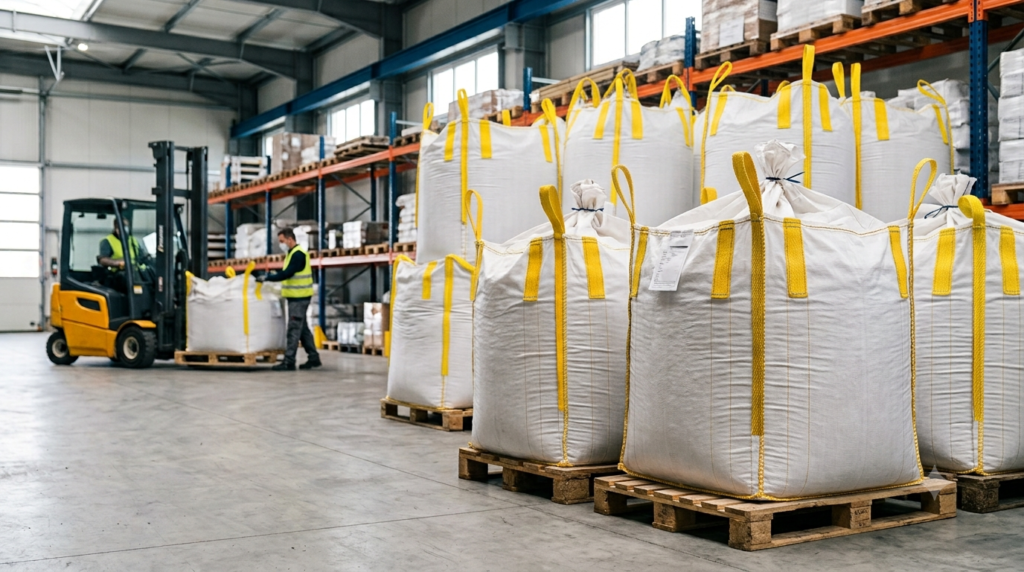
Bulk bags or Flexible Intermediate Bulk Containers (FIBCs), jumbo bags or big bags are large industrial bulk packaging containers for storing, handling and transporting dry bulk materials.
Made primarily from woven polypropylene (PP), they are available in different sizes, load capacities, designs and configurations to suit industries such as agriculture, chemicals, food processing, construction and manufacturing.
Choosing the right bulk bag depends on the material being packed, its weight and density, the required dimensions, filling and discharge methods, handling equipment and applicable safety requirements.
Knowing about these factors enables businesses to choose appropriate packaging for their products, activities and supply chains.
What Are Bulk Bags (FIBC)?
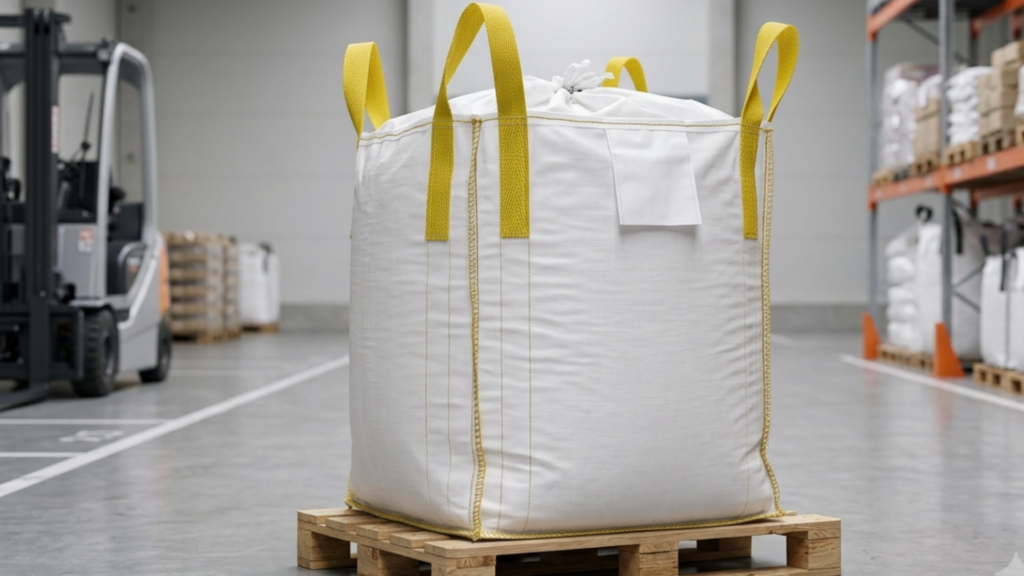
Bulk bags are bags that are made of woven polypropylene, they are also flexible. They can be used for carrying and moving large volumes of dry flowable product such as grains, plastic resin, mineral powder, fertilizers and industrial ingredients.
FIBCs are also known as Flexible Intermediate Bulk Container. These bags are usually fitted with lifting loops for safe transportation using forklifts, cranes or other suitable lifting equipment in accordance with the manufacturer’s instructions.
Bulk bags are different from small sacks because they can carry a bulk amount of material in a single bag. They can also be made flexibly, which enables efficient storage and transportation of bags, if they are filled and handled and stored correctly.
What Materials Are Bulk Bags Made From?
The material used for most standard bulk bags is woven polypropylene fabric as this is a reasonable mix of strength, low weight, and durability.
Manufacturers can add the following to the composition:
- Coated or uncoated PP Fabric: It is decided based on the level of protection and material handling conditions required.
- Inner liners: For additional containment or moisture protection in the application.
- Filling spouts and discharge outlets: Used for controlled filling/loading.
- Specialized fabric and construction: For special applications that demand specific static control, ventilation or regulatory characteristics.
The right material and construction will vary according to the product, operating environment and required performance specifications.
Bulk Bags vs Jumbo Bags vs Big Bags: Is There a Difference?
Often, bulk bags, jumbo bags and big bags are all used to refer to large flexible, industrial bags. The term often used by manufacturers and packaging pros is known as FIBC.
A product that’s claimed to be a jumbo bag, however, is not necessarily the same as all other FIBCs.
There are too many variations in dimensions, fabric construction, safe working load, lifting arrangements and intended application of products for any single product to be considered entirely standard.
When you are buying, do not depend only on the name of the product but upon the real specifications of the product.
What Are Bulk Bags Used For?
Bulk bags are useful for businesses to package and transport materials that are not easily and efficiently packaged in smaller sized bags.
Depending on the properties of the material and the conditions of storage, transport and discharge, the appropriate design must be determined.
1. Agriculture and Food Ingredients
Agricultural businesses use bulk bags for products such as seeds, grains, pulses and other dry commodities.
Ventilated designs may be appropriate for selected agricultural products where airflow is required.
For food ingredients, buyers should confirm that the bag’s materials, manufacturing conditions and any liner meet the applicable food-contact requirements.
A bag described as food-grade should not be assumed suitable for every food product or regulatory market.
2. Chemicals and Plastic Resins
FIBCs are suitable for use by the chemical manufacturer and plastics processing industries with suitable powders, granules and resin pellets.
The selection process should consider chemical compatibility, dust containment, moisture sensitivity and static electricity risks.
Conductive or static-dissipative designs may be necessary for certain materials and operating environments.
3. Construction, Minerals and Aggregates
Bulk bags are used for transporting compatible construction materials such as sand, selected aggregates, mineral powders and dry materials.
The rated capacity, size, and fabric construction and lift method of the bag should correspond to the material and lift method used.
Special care should be taken with the design of the bags and their loading limits if abrasive, or unusually dense material is to be used.
4. Pharmaceuticals and Industrial Ingredients
Some specialized bulk containers are used in the industrial and pharmaceutical supply chains for appropriate dry ingredients.
Controlled manufacturing environments, traceability, validated cleaning procedures, and other quality documentation may be necessary for these applications.
Please check the appropriate requirements for the product before choosing a bag.
What Are the Different Types of Bulk Bags?
There are several constructions of bulk bags. There are benefits to each design and the right one for you will depend on the material, the filling equipment, discharge requirements and handling conditions.
1. U-Panel Bulk Bags
U-panel bags are those that are constructed using the U-shaped fabric panels. They are widely available and have been proposed for applications in general industrial packaging.
Their suitability will vary based on the specification of the fabric, the size of the bags, the load ratings and the applications.
2. Four-Panel Bulk Bags
Four-panel bulk bags are made out of individual side panels. They can be engineered to have a specific body shape and dimensional stability for a specific application.
Users are advised to check the bag’s build and stuffed dimensions to their own storage and transport needs.
3. Circular or Tubular Bulk Bags
The circular or tubular bags are made of tubular body construction. This can trim some of the seams in the body and offer a convenient alternative for some uses of bulk materials.
The actual shape, stability and performance will be dependent on the full bag design.
4. Q Bags or Baffle Bulk Bags
Q bags, also known as baffle bags, have the special feature of an inner fabric baffle which keeps the bag in a square shape when filled.
They can be shaped to optimize space efficiency in the palletization and container loading process. The bags’ size and the kind of baffle used, however, influence what shape can be created and how much can fit in the bag.
5. One-Loop, Two-Loop and Four-Loop Bulk Bags
These bags can be identified by their lifting-loop design.
- Single lifting loop bags: They have one lifting loop providing compatibility with lifting systems.
- Two loop bags: Two lifting loops, suitable for handling systems set up for 2 loops.
- Four-loop bags: These are the ones that are used in the industrial sector where four-loop lifting devices are needed.
The count of loops isn’t a bag’s lifting ability. Always verify the rated load and approved handling method.
6. Ventilated Bulk Bags
Ventilated bulk bags include ventilated fabric sections or other vents designed to facilitate airflow.
They can be used for certain agricultural products and other materials that need to be ventilated. They are not a substitute for proper drying, storage conditions or material-specific moisture management.
7. Food-Grade Bulk Bags
Food-grade FIBCs are designed for applications where food-contact suitability and contamination control are important.
Before ordering, confirm the applicable material declarations, liner specifications, manufacturing controls and documentation required for the intended product and destination market.
8. UN-Certified Bulk Bags
The UN-certified FIBCs are designed and tested for applicable regulated dangerous-goods packaging requirements.
Not every chemical requires UN-certified packaging, and not every UN-certified bag is suitable for every dangerous good.
Buyers must verify the applicable classification, packaging instructions, certification markings and transport regulations.
9. Conductive and Static-Control Bulk Bags
Where there is an operational risk associated with electrostatic charging, static-control FIBCs are used.
- Type C bags: Conductive elements which need to be securely grounded during filling and discharge.
- Type D bags: Use special static dissipative materials which are capable of controlling electrostatic discharge without the usual grounding system under their intended conditions.
Type is determined by the material, environment, flammable atmosphere risks and operating procedures.
Type C and Type D bags must not be used interchangeably and Type D bags are not reliable in all hazardous situations.
Bulk Bag Sizes, Dimensions and Load Capacity
Bulk bags are produced in different sizes and sizes for various material density, filling system and transport needs. No definite size that would be right for all uses.
What Sizes Do Bulk Bags Come In?
A bulk bag’s dimensions are usually specified by its length, width and height. This will depend on the amount of material, bulk density and space in the filling area, warehouse, vehicle or container to be filled.
For instance, bulk densities can differ between two materials of the same weight and thus require different bag volumes.
How Much Weight Can a Bulk Bag Hold?
The Safe Working Load (SWL) is the maximum load for the bag for the intended working conditions.
Bulk bags come in various rated capacities such as 500kg, 1,000kg or other application specific capacity. These are only some of the possible ratings; not all bag designs are available or suitable at all capacities.
Before selecting a bag, confirm:
- The required net material weight.
- The material’s bulk density and volume.
- The bag’s marked safe working load.
- The required safety factor and applicable standards.
- The compatibility of the lifting equipment and handling method.
Do not estimate safe capacity of a bag solely by its appearance or size.
How to Calculate the Required Bulk Bag Volume
An initial estimate of the required mass of the material is obtained by dividing required mass of material by its bulk density.
Required volume (m³) = Material mass (kg) ÷ Bulk density (kg/m³)
For example, if a business needs to pack 1,000 kg of material with a bulk density of 500 kg/m³:
Required volume = 1,000 ÷ 500 = 2 m³.
This is a theoretical material volume estimation. The final bag sizes should take into consideration the filling behaviour, the usable capacity, free space, the shape of the bag and the filling equipment.
Safe Working Load vs Safety Factor
Safe working load is defined as the rated load with which a bag is designed to work under certain conditions.
The safety factor is a relationship between a design or test and the construction and applicable standard of a bag.
The higher the safety factor, the more it does not indicate that the bag can be loaded beyond the safe working load indicated. Handle according to manufacturer’s instructions and handling requirements.
Bulk Bag Filling, Discharge and Lifting Options
The top and bottom design and lifting system of a bulk bag can have an impact on filling rates, unloading control and compatibility with existing equipment.
Bulk Bag Filling Options
Common filling configurations include:
- Open top with suitable filling methods: Has an open upper part that can be stuffed with appropriate filling.
- Duffle top: Has fabric closure which can be tied after stuffing.
- Filling spout: Filled more easily and in a controlled manner by compatible equipment.
Depends on the filling system, dust control requirements, material flow and closure requirements.
Bulk Bag Discharge Options
The various bottom designs consist of flat-bottom, discharge spout and special full discharge.
A discharge spout to regulate material discharge as unloading occurs may be beneficial. The correct outlet depends on the material’s flow characteristics, downstream equipment and the required level of discharge control.
For fine powders, consider whether additional containment or dust-control measures are necessary.
Bulk Bag Lifting Loops and Equipment Compatibility
The lifting loops must be suitable for the lifting equipment and approved handling procedure.
Check the rated capacity, loop arrangement, lifting points and condition of the bag before use. Never use torn or makeshift lifting devices or equipment.
How to Choose the Right Bulk Bags for Your Application
The first step to choosing the right bulk bag is not just the price of the bag, it’s the material and conditions in which it operates.
1. Identify the Material
Determine whether the material is a powder, granule, agricultural commodity or another dry bulk product.
Consider its density, particle size, moisture sensitivity, abrasiveness, chemical properties and any dust or electrostatic hazards.
2. Determine the Required Capacity and Dimensions
Calculate the required material weight and estimated volume. Check the dimensions against the filling equipment, pallets, storage area and shipping arrangements.
Check the safe working load without considering the volume of the bag.
3. Select the Appropriate Fabric and Liner
Coated fabric, uncoated fabric or an inner liner will be suitable depending on the material and the storage and contamination-control requirements.
For moisture-sensitive materials, confirm the level of protection required. A coated fabric or liner should not automatically be considered fully waterproof or a guarantee against moisture ingress.
4. Choose the Right Construction and Lifting System
Discuss the difference of U-panel, four panel construction, circular and baffle construction based on shape, stability and packing efficiency.
Then determine a lifting arrangement that is compatible with the lifting equipment available at filling points, warehouse and unloading points.
5. Confirm Safety and Regulatory Requirements
Check food-contact requirements for food products. Verify dangerous goods related packaging certification and transport regulations.
For electrostatic risks, determine the material, environment and necessary FIBC classification.
Request the specifications and documents required for your application from the manufacturer.
6. Consider Storage and Export Shipping
If the shipment is to be sent abroad, consider the loaded size of the bag, how to arrange the bags on the pallets, how many bags will fit into the container, storage requirements in the destination country, destination country requirements.
An appropriate configuration can help increase the efficiency of handling and avoid unnecessary packaging and logistics problems.
What Affects Bulk Bag Prices?
The price of bulk bags varies from one bulk bag to another based on a full specification and order. The most significant ones are:
- The size and load capacity: The amount and type of material required and the construction vary depending on the size and rated capacity of the bags.
- Fabric specification: The weight of the fabric, it’s coating and other construction details will influence the finished product.
- Liners & Closures: Other pieces can affect the price.
- Filling and discharge features: Spouts, duffle tops and specialized outlets impact the design.
- Printing & customization: Production may be affected by printing and custom specifications and dimensions.
- Testing and certification: Required documentation, testing and regulatory compliance can affect the quotation.
- Order quantity and delivery: Order volume, lead time, shipping arrangements and destination can influence the final price.
To obtain a useful quotation, provide the material name, required capacity, dimensions, bag construction, filling and discharge requirements, order quantity and destination.
Bulk Bag Safety, Storage and Reuse
Proper handling and storage are essential to maintaining packaging integrity and protecting workers and materials.
Safe Filling, Lifting and Discharging
Use the bag only within its specified load rating and intended application. Inspect the bag before use, follow the manufacturer’s filling and lifting instructions, and use compatible equipment.
Prevent personnel from coming in contact with suspended loads. Do not stand under a lifted bag or to use damaged lifting loops to move a bag.
Storage and UV Exposure
Store bulk bags according to the manufacturer’s recommendations. Protect them from damaging environmental exposure, contamination and conditions that could weaken the fabric.
The suitability of materials and specifications for outdoor storage should be checked not assumed for UV resistance.
Can Bulk Bags Be Reused?
Some bulk bags are designed for single use, while others may be suitable for controlled reuse under specified conditions.
Reuse depends on the bag’s design, previous contents, condition, cleaning requirements and applicable regulations. Don’t assume that an item in a single-use bag is still suitable for reuse.
Cleaning and Recycling
Where permitted, reusable bags should be inspected and handled according to the manufacturer’s procedures. Bags that have contained chemicals or hazardous substances may require specialized treatment or disposal.
Where appropriate collection and processing facilities are available, polypropylene can be recyclable. Contamination, liners, coatings, mixed materials and local recycling facilities affect the actual recyclability.
Why Choose Pursuit for Bulk Bags?
Choosing an industrial packaging supplier involves more than comparing prices. Buyers should evaluate product specifications, quality requirements, customization options, documentation and the supplier’s ability to support their application.
Pursuit is an Indian packaging and woven-products company with global export experience.
As for bulk bag needs, the buyers may talk to the company about the application, required bulk bag sizes, rated capacity, bulk bag construction and applicable quality or compliance paperwork.
Prior to placing an order, validate the availability of the needed FIBC design, specifications, testing documentation, production lead time and shipping.
Looking for bulk bags for your business? Contact Pursuit with your material details, required capacity, dimensions and order quantity to discuss a suitable packaging solution.
Frequently Asked Questions About Bulk Bags
1. What is the difference between bulk bags and FIBC bags?
Bulk bags are typically also referred to as FIBC bags. The term “flexible” refers to the flexibility of the container in use, and is known as flexible intermediate bulk container (FIBC), while bulk bag is a commercialised term.
2. How much weight can a bulk bag hold?
These bulk bags come in various strengths and capacities such as 500 kg or 1000 kg. The safe working load is marked on the bag and will depend on the construction and use of the bag.
It is always advisable to check the manufacturer’s specification before filling.
3. What are the standard bulk bag dimensions?
There is no single universal dimension for all bulk bags. Dimensions vary according to the required volume, material density, filling system, handling equipment and transportation requirements.
4. Which bulk bag is best for fine powders?
The appropriate bag depends on the powder’s particle size, flow behavior, dust-generation potential and moisture sensitivity.
Buyers may need to consider fabric construction, coating, liners, filling spouts and discharge arrangements. Confirm the specification with the manufacturer.
5. What is the difference between U-panel and baffle bulk bags?
U-panel bags have a U-shaped body construction and baffle bags have panels inside the filled bag to prevent it from turning into a blob.
Depending on the application, baffle bags can enhance space utilisation when palletising and shipping.
6. What is the difference between Type C and Type D bulk bags?
Type C bags require conductive components which should be grounded when used. Type D bags are constructed of special materials that allow for control of electrostatic discharge without the traditional grounding system that is used for Type C bags, requiring an evaluation of the material and operating environment.
7. Can bulk bags be used for food products?
Yes, there are food grade FIBCs available that are suitable. But the buyer should check to ensure that the bag components, lining, factory and verification procedures and documentation are in compliance with the food-contact regulation for that product and intended use.
8. Are bulk bags waterproof?
Not all bulk bags are waterproof. The level of protection is dependent on the fabric, coating, lining, closure and whole construction. If moisture protection is required, the actual storage and transport conditions should be indicated.
9. Can bulk bags be reused?
Some bags are designed for reuse, while others are intended for single use. Reuse must follow the manufacturer’s instructions and applicable safety requirements, taking the bag’s condition and previous contents into account.
10. What information is needed to request a bulk bag quotation?
Provide the material name, required capacity, bag dimensions, construction type, filling and discharge requirements, liner or coating needs, quantity and delivery destination.
Any applicable food-contact, dangerous-goods or electrostatic requirements should also be specified.
Get the Right Bulk Bags for Your Business
The right bulk bag helps businesses handle dry materials efficiently while meeting their packaging, storage, transportation and safety requirements.
By evaluating material characteristics, bag construction, capacity, filling and discharge systems, and applicable compliance needs, buyers can make a more informed purchasing decision.
Contact Pursuit with your bulk bag requirements and application details/specifications to discuss the most appropriate available solution.
