
The Ultimate Grain Storage Guide: Traditional Challenges & Modern FIBC Solutions
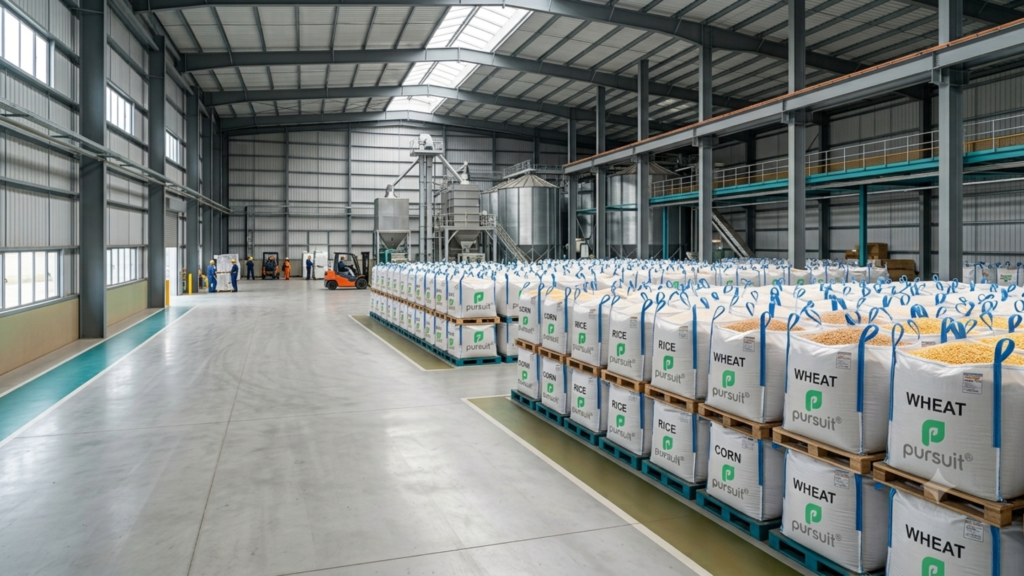
Grain Storage involves the scientific activity of preventing or minimizing post-harvest losses and ensuring the continuity of food grains by keeping the grains in a safe, dry and pest free condition.
Grains can be stored for long periods of time without losing their nutritional value or market value with proper storage; the grains will be protected from moisture, insect pests, rodents and fungal molds.
What is Grain Storage? (Core Definition)
Grain storage is the process of keeping harvested crops—such as wheat, rice, corn, pulses, and oilseeds—in a controlled environment to maintain their quality until they are processed or sold.
It bridges the seasonal gap between fresh harvests and year-round consumer demand.
Historically, agricultural supply chains lose 6% to 10% of food grains during the storage phase alone due to unscientific methods.
By optimizing containment, moisture control, and handling, agribusinesses can reduce these post-harvest losses to almost zero.
The Hidden Pain Points in Traditional Grain Storage
Farmers, suppliers, and exporters globally face repetitive challenges that drain profit margins:
- Moisture & Mold Growth: Standard gunny bags or open storage absorb atmospheric humidity. If grain moisture rises above 13%, toxic molds (like mycotoxins) rapidly ruin the entire batch.
- Insect and Pest Infestation: Traditional woven bags are easily breached by weevils, beetles, and rodents, leading to heavy weight loss and contamination.
- Spillage & Poor Handling: Using small 50kg sacks for moving grains leads to a lot of sack tearing and fatigue of the workers, along with significant spillage in transit.
- Low Quality Packaging, which cannot bear the vertical pressure, will not be able to use the warehouse space.
The Ultimate Solution: Modern FIBC Bags for Grain Storage
In order to rising those challenges, global logistics in agriculture has started to be bulk packaging. Also known as jumbo bags or bulk bags, FIBC are highly efficient and durable bags for grain storage today.
These bags are made of 100% pure woven polypropylene (PP) and are designed to contain 500 kg to 2,000 kg of dry flowable materials, to completely transform the management of grains.
Traditional Sacks (50kg) vs Modern FIBC Bags (500kg - 2,000kg)
--------------------------------------------------------------
* Spillage Risk: High (Easy tearing) vs Low (High tensile strength)
* Labor Cost: Heavy manual lifting vs Automated mechanical handling
* Storage Space: Poor vertical stacking vs Excellent stackability
* Moisture Protection: Low vs High (With specialized liners)
How FIBC Bags Solve Specific Grain Storage Problems
1. Absolute Moisture and Humidity Isolation
Grains require airtight protection to prevent spoilage. High-quality FIBC bags can be equipped with customized LDPE/HDPE internal liners.
These liners create a complete moisture barrier, oxygen barrier, and condensation barrier which will keep moisture and oxygen from migrating into your grains and away from fungal molds.
2. Space Optimization via Baffle Bags
For large-scale commercial warehouses, space saving is important. The Baffle FIBC bags are made with the help of fabric panels that are placed inside the bag to keep it square or rectangular when it’s completely filled.
This square footprint keeps the bags from bulging, so they may be stored safely on top of one another to utilize space to the fullest in the warehouse and shipping containers by up to 30%.
3. Food-Grade Safety and Contamination Control
Grains are consumed directly by human and the packaging should be subjected to stringent hygienic requirements.
The certified food-grade FIBC bags make sure that the polypropylene fabric is contaminated-free, free from chemical residues and static energy, and not damaging the natural quality and taste of the grains.
4. Efficient, Spill-Free Loading and Unloading
FIBC is a full form of Flexible Intermediate Bulk Container. The standard agricultural jumbos can safely store and transport 500/2,000 kg (1/2 ton) of grains such as wheat, rice, corn, pulses etc.
Frequently Asked Questions (FAQ)
What is the full form of FIBC, and how much grain can it hold?
Polypropylene is not resistant to direct sunlight. High quality bulk bags are made from UV-stabilized polypropylene fabric, though, so the fabric will not be damaged by sunlight and bags can be safely temporarily stored outdoors and transported over long distances by the open method.
Can FIBC bags be stored outdoors?
Standard polypropylene can degrade under direct sunlight. However, high-quality bulk bags are manufactured using UV-stabilized polypropylene fabric, which protects the material from solar damage, allowing for safer temporary outdoor storage and long-distance open transit.
Why choose an Indian manufacturer for FIBC bulk bags?
Indian is one of the most important export countries of the best quality, cost-effective and internationally certified industrial packaging.
Manufacturers utilize advanced extrusion and clean-room facilities to deliver custom-built bulk packaging solutions globally.
Conclusion & Next Steps
Upgrading your grain storage mechanism from traditional bags to engineered bulk containers is the fastest way to minimize post-harvest losses, cut down labor costs, and streamline global logistics.
Making investment in moisture resistant, strong FIBCs protects your crop and your bottom line.
We are a government recognized 2-Star Export House, offering our clients bulk packaging solutions for their agriculture related products for 86+ countries.
Need to make the most of your storage infrastructure? See all of our Pursuit Industries FIBC Bags or read our detailed FIBC Bags Buying Guide.
