
Polyurethane Adhesive by Material: Complete Guide to Choosing the Right PU Adhesive
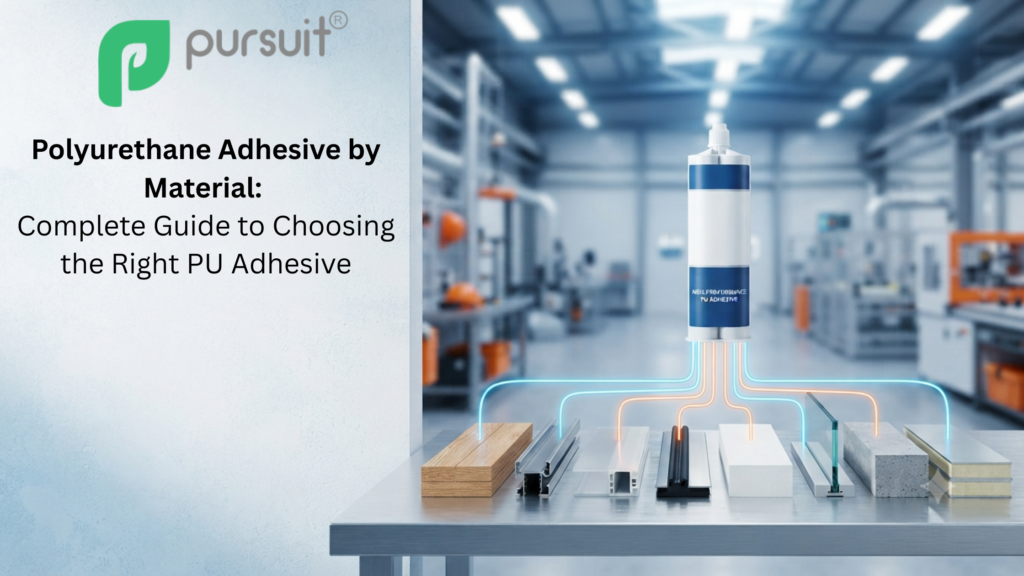
Picking the right polyurethane adhesive really matters if you want reliable, strong, and long-lasting bonds on different surfaces. Polyurethane adhesive, PU adhesive for short, is this pretty adaptable bonding solution that shows up in lots of areas like construction, automotive, furniture, packaging, footwear, and even composite manufacturing.
Not all PU adhesives can be used with all substrates though. Surface properties, flexibility, expansion ratios and environmental conditions are different for various materials, and so are the requirements of material compatibility for adhesive performance.
If the wrong material is selected for the polyurethane adhesive, it can lead to poor bonding, failure of the bond, decreased durability, and increased maintenance costs.
From bonding wood and metal, plastic and rubber, foam and glass, and concrete, the right formulation is the right choice for the maximum strength and reliability.
In this guide, we will talk a bit about how to apply it, what it’s made of, how it is manufactured , plus the benefits and how to choose polyurethane adhesive for various industrial materials.
Which Polyurethane Adhesive Should You Choose?
| Material | Recommended PU Adhesive |
|---|---|
| Wood | One Component PU |
| Metal | Two Component PU |
| Plastic | Flexible PU Adhesive |
| Rubber | Elastic PU Adhesive |
| Foam | Low Density PU Adhesive |
| Concrete | Structural PU Adhesive |
| Glass | Moisture Cure PU |
What is Polyurethane Adhesive?
Polyurethane adhesive is a high-performance bonding material, and it’s basically made through the reaction of polyols along with isocyanates.
When those parts are brought together, they build a tough polymer network as it cures, which is why it ends up offering high resistance to moisture and chemicals, strong weather tolerance, and also flexibility, plus good adhesion.
Depending on the exact blend, PU adhesives cure in two main ways. Some systems cure by reacting with moisture from the air moisture-cure systems, while others are mixed as two components right before use.
That kind of flexibility is part of why polyurethane adhesives work for structural bonding needs and also for non-structural bonding tasks.
Polyurethane Adhesive Composition
A typical polyurethane adhesive formulation includes:
- Polyols
- Isocyanates
- Catalysts
- Fillers
- Pigments
- Stabilizers
- Performance additives
Each ingredient plays an important role in determining curing speed, flexibility, strength, and durability.
Why Choosing Adhesive by Material is Important
Materials have different properties when stretched, cooled or wetted. The use of an adhesive that matches the material will provide better and longer-lasting bond.
Important factors include:
- Surface energy
- Material flexibility
- Thermal expansion
- Moisture resistance
- Temperature tolerance
- Surface porosity
- Load-bearing requirements
Using the correct PU adhesive minimizes bond failure while improving product performance and service life.
Polyurethane Adhesive by Material
Polyurethane Adhesive for Wood
Wood requires adhesives that accommodate natural expansion and contraction caused by humidity.
Common Applications
- Furniture manufacturing
- Plywood
- MDF
- Particle board
- Wooden doors
- Flooring
Benefits
- Waterproof bonding
- Excellent gap filling
- Sandable after curing
- High flexibility
- Long-lasting durability
Polyurethane Adhesive for Metal
Metals require strong structural adhesives capable of handling vibration and heavy loads.
Suitable Metals
- Aluminium
- Mild Steel
- Stainless Steel
- Galvanized Sheets
Applications
- Automotive assemblies
- HVAC panels
- Industrial machinery
- Metal fabrication
Tip: Proper cleaning and surface preparation significantly improve bond strength.
Polyurethane Adhesive for Plastic
PU adhesives bond many engineering plastics while maintaining flexibility.
Compatible Plastics
- PVC
- ABS
- Polycarbonate
- Acrylic
- FRP
Not all plastics bond equally. Low-surface-energy plastics may require special surface treatment or primers.
Polyurethane Adhesive for Rubber
Rubber components experience constant movement and vibration, making flexible adhesives essential.
Applications
- Conveyor belts
- Shoe manufacturing
- Automotive seals
- Industrial rubber components
Elastic polyurethane adhesives help absorb shock while maintaining strong adhesion.
Polyurethane Adhesive for Foam
Low-density polyurethane adhesives are ideal for lightweight materials.
Applications
- PU Foam
- Mattresses
- Furniture cushions
- Automotive seating
- Thermal insulation
These adhesives provide strong bonding without damaging delicate foam structures.
Polyurethane Adhesive for Glass
Glass requires adhesives that offer transparency and durability.
Applications
- Glass panels
- Decorative assemblies
- Industrial glazing
Benefits include:
- Transparent bonding
- Moisture resistance
- Vibration resistance
- UV durability
Polyurethane Adhesive for Concrete & Stone
Structural polyurethane adhesives are widely used in construction projects.
Applications
- Precast panels
- Flooring
- Concrete joints
- Stone installation
These adhesives provide excellent load-bearing performance and weather resistance.
Polyurethane Adhesive for Composite Materials
Composite materials demand adhesives capable of handling different expansion rates.
Suitable Materials
- FRP
- Carbon Fiber
- Honeycomb Panels
- Sandwich Panels
These formulations deliver lightweight yet high-strength structural bonding.
Polyurethane Adhesive Formulation
The performance of polyurethane adhesive depends on its carefully balanced formulation.
| Ingredient | Function |
|---|---|
| Polyols | Flexibility and toughness |
| Isocyanates | Strength and curing |
| Catalysts | Faster curing |
| Fillers | Improved mechanical properties |
| Pigments | Color consistency |
| Stabilizers | Shelf-life enhancement |
| Additives | Moisture, UV and chemical resistance |
Polyurethane Adhesive Manufacturing Process
The manufacturing process typically follows these stages:
Raw Materials
↓
Mixing
↓
Chemical Reaction
↓
Quality Testing
↓
Packaging
↓
Industrial Supply
Strict quality control ensures consistent viscosity, curing performance, and bond strength.
One Component vs Two Component Polyurethane Adhesives
| Feature | One Component (1K) | Two Component (2K) |
|---|---|---|
| Mixing Required | No | Yes |
| Bond Strength | High | Very High |
| Cure Speed | Medium | Fast |
| Waterproof | Yes | Yes |
| Structural Bonding | Limited | Excellent |
One-component adhesives are convenient for general applications, while two-component systems are preferred for heavy-duty industrial bonding.
Key Properties of Polyurethane Adhesives
- High Bond Strength
- Waterproof Performance
- Chemical Resistance
- Weather Resistance
- Excellent Flexibility
- Vibration Resistance
- UV Resistance
- Temperature Resistance
- Long Service Life
These properties make polyurethane adhesives suitable for demanding industrial environments.
Industrial Applications
Polyurethane adhesives are widely used across various industries.
Construction
Bonding panels, insulation materials, flooring, and concrete components.
Automotive
Vehicle interiors, body panels, trims, and structural assemblies.
Furniture
Wooden furniture, laminates, MDF, and cabinetry.
Packaging
Flexible packaging and industrial packaging applications.
Footwear
Shoe assembly and sole bonding.
Marine
Boat interiors and moisture-resistant bonding.
Railways
Interior panel installation and vibration-resistant assemblies.
Electrical
Electronic enclosures and insulation components.
Appliances
Household appliance assembly and insulation bonding.
Composite Panels
FRP, sandwich panels, and lightweight structures.
PU Foam Manufacturing
Mattresses, seating systems, and insulation products.
Advantages of Polyurethane Adhesives
- Excellent adhesion on multiple materials
- Fast and reliable curing
- High flexibility
- Superior durability
- Excellent gap-filling capability
- Waterproof performance
- Chemical resistance
- Paintable surface
- Long service life
- Suitable for indoor and outdoor applications
How to Select the Right Polyurethane Adhesive
Before selecting a PU adhesive, consider:
✔ Material type
✔ Operating temperature
✔ Moisture exposure
✔ Outdoor weather conditions
✔ Load requirements
✔ Required curing time
✔ Chemical exposure
✔ Production speed
Evaluating these factors helps ensure optimal bonding performance and long-term reliability.
Why Choose Pursuit Industries?
As crucial as selecting the right formulation is choosing the right adhesive supplier. Pursuit Industries specialises in the provision of industrial grade polyurethane adhesive products for many manufacturing processes.
Key strengths include:
- Quality-tested formulations
- Industrial-grade performance
- Global export capabilities
- Technical support
- Custom adhesive formulations
- Bulk supply options
- Consistent product quality
Frequently Asked Questions
What materials can polyurethane adhesive bond?
Wood, metal, plastic, rubber, foam, glass, concrete, stone, FRP, composites, and a bunch of engineered materials can be glued together using polyurethane adhesives.
Though, the exact mixture—formulation—really matters, because depending on the job, and what surface you’re working with, you have to pick the correct one, not just “any” PU.
Is polyurethane adhesive waterproof?
Yes. Most polyurethane adhesives offer excellent water resistance, making them suitable for indoor, outdoor, and high-moisture environments.
Is polyurethane adhesive stronger than epoxy?
Both are high-performance adhesives. Polyurethane offers greater flexibility and vibration resistance, while epoxy generally provides higher rigidity and compressive strength.
Can polyurethane adhesive bond metal to plastic?
Yes. Flexible polyurethane adhesives are commonly used to bond metal to plastic in automotive, appliance, and industrial applications.
What is polyurethane adhesive made of?
Polyurethane adhesive is primarily made from polyols, isocyanates, catalysts, fillers, pigments, stabilizers, and specialty additives.
What is the curing time?
Depending on the formulation, curing may take anywhere from a few hours to 24 hours for full strength.
Can polyurethane adhesive be used outdoors?
Yes. Many polyurethane adhesives are designed to resist moisture, UV exposure, and changing weather conditions.
Is polyurethane adhesive flexible?
Yes. It has many benefits, one of which is flexibility after curing, decreasing the possibility of bond failure from movement or vibration.
Which polyurethane adhesive is best for wood?
One component moisture cure polyurethane adhesive is frequently used in wood furniture, wood floors, doors, plywood, MDF and other wood products.
What industries use polyurethane adhesives?
Construction, automotive, furniture, packaging, footwear, marine, railways, electronics, appliances, and composite manufacturing all rely on polyurethane adhesives.
Conclusion
The selection of the proper polyurethane adhesive by material, is crucial to assure reliable and durable bonding performance.
Each material exhibits different characteristics and selecting the right formulation of PU adhesives will enhance the bond strength, moisture, chemical and environmental resistance, and flexibility.
From wood, to metal, plastic to rubber, foam, glass, and concrete, or composite materials, the right polyurethane adhesive can improve product quality and also lower maintenance and production failure.
Looking for polyurethane adhesive products that actually perform? Reach out to Pursuit Industries to get polyurethane adhesive formulations for industrial use on wood, metal, plastic and concrete applications.
