
What Is PU Adhesive and How Do You Choose the Right One for Industrial Bonding?
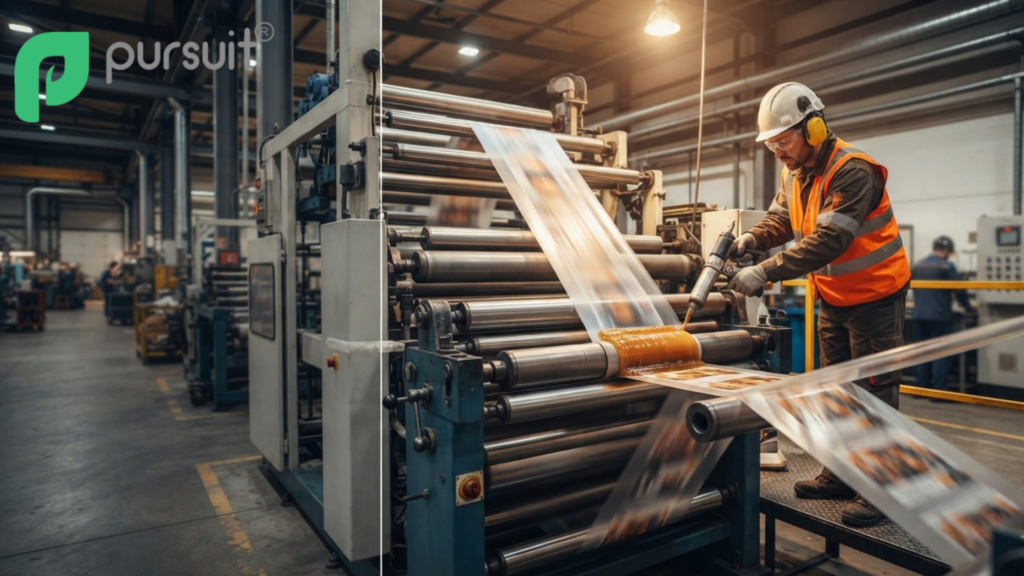
PU adhesive (polyurethane adhesive) is a chemical bonding agent formed from a reaction between polyols and isocyanates, prized for its flexibility, strong adhesion to diverse substrates, and resistance to moisture, heat, and chemicals.
Manufacturers across packaging, footwear, textiles, and construction use it for lamination, sealing, and structural bonding where both strength and flexibility are required.
What Is PU Adhesive?
PU adhesive is a synthetic bonding compound made from polyurethane chemistry, formed when polyols react with isocyanates to create long, flexible polymer chains.
This reaction gives the adhesive a unique combination of strength and elasticity that rigid adhesives like epoxies cannot match.
Unlike solvent-based or purely mechanical bonding agents, PU adhesive cures through a chemical crosslinking process, which allows it to bond dissimilar materials — metal to plastic, fabric to film, wood to foam — without cracking under stress or vibration.
This makes it an ideal option for use in manufacturing applications where products bend, stretch or otherwise change temperature throughout their useful life.
How Does PU Adhesive Work?
The mechanism of action of PU adhesive is based on the covalent bonding with the surface of a substrate as well as the formation of internal polymer strength during the hardening process.
The isocyanate will react with moisture or a curing agent, causing a chain-extension reaction to occur and creating a strong, flexible adhesive.
There are three functional stages to this process:
- Wetting stage: The liquid adhesive spreads across the substrate surface, filling micro-pores and irregularities.
- Reaction stage: Isocyanate groups react with polyol groups (or ambient moisture), forming urethane linkages.
- Curing stage: The adhesive builds molecular weight and crosslink density, reaching full bond strength typically within 24–72 hours depending on formulation and ambient conditions.
This staged mechanism is responsible for the unique combination of “stick-on-the-moment” and “sticks-for-ever” properties of PU adhesive.
What Are the Types of PU Adhesive?
The curing mechanism and physical form of the products are the basis of the general classification of PU adhesives, each of which meets the needs of the production line.
- One-component (1K) moisture-curing PU adhesive: Cures when it comes in contact with the moisture in the air or on the substrate; does not need mixing.
- Two component adhesive (2K) – A resin-hardener combination that is mixed together before use; can be used on high volume production lines to provide faster, controlled curing.
- Solvent-based PU adhesive: Dissolved in a solvent carrier to be sprayed or rolled; widely used in footwear and leather lamination.
- Water-based (PU dispersion) adhesive: Environmentally friendly adhesive that emits fewer VOCs, and is increasingly used in areas that prioritise environmental compliance.
- Hot-melt PU adhesive (HMPUR): Molten adhesive, which provides initial bond strength on cooling and then chemically cures to achieve final bond strength, is popular for use in packaging and textile lamination because of its rapid processing time.
Why Choose PU Adhesive Over Other Bonding Agents?
PU adhesive is selected over other adhesive types such as epoxies, acrylics or mechanical fasteners due to its ability to provide flexibility, impact resistance and strong adhesion between dissimilar surfaces in one single formulation.
Key advantages include:
- Tolerates stress without cracking: Joints formed with flexing, vibrating, impact will not crack, making them perfect for repetitive use.
- Bonding to many materials: Adheses to metals, plastics, foams, textiles, wood, as well as composites, without using a special adhesive for each material.
- Moisture and chemical resistance: Can withstand and endure moisture and chemically exposed environments.
- Temperature tolerance: Resists loss of bond integrity over a wide operating temperature range than many hard adhesive bonds.
- Gap filling ability: ability to fill gaps between the surface or substrate without compromising bond strength.
Where Is PU Adhesive Used?
PU adhesive is used in any place where manufacturers require durable and flexible bonding between different materials, particularly for packaging lamination, footwear manufacturing, coating of textiles, automotive interior manufacture and bonding of construction panels.
| Industry | Typical Application |
|---|---|
| Flexible packaging | Laminating films, foils, and paper for pouches and wrappers |
| Footwear | Bonding soles, uppers, and insoles |
| Textiles & nonwovens | Fabric lamination, coating, and bag-making |
| Automotive | Interior panel bonding, headliners, foam lamination |
| Construction | Sandwich panels, insulation board bonding |
| Woodworking & furniture | Edge banding, laminate bonding |
How Do You Select the Right PU Adhesive for Your Application?
When it comes to right PU adhesive it’s all about matching the curing mechanism, open time, and bond flexibility with your substrate combination and production speed.
Consider these factors before finalizing a supplier or formulation:
- Substrate pairing: Confirm the adhesive is validated for both materials being bonded (e.g., film-to-foil vs. fabric-to-foam).
- Line speed and open time: Hot-melt PU suits high-speed lines; 1K or 2K liquid PU suits slower, precision bonding.
- Environmental exposure: Outdoor or humid-use products need higher hydrolysis resistance formulations.
- Regulatory compliance: Food-contact packaging requires adhesives compliant with relevant food-safety migration limits.
- VOC and safety requirements: Water-based PU dispersions are preferable where solvent emissions are restricted.
- Cure time vs. throughput needs: Balance final bond strength requirements against how quickly the line needs to move product downstream.
Working with a manufacturer who can customize viscosity, open time, and cure profile to your specific line conditions — rather than offering a single generic formulation — typically produces more consistent bond quality at scale.
PU Adhesive vs Other Adhesives: A Comparison
| Property | PU Adhesive | Epoxy Adhesive | Acrylic Adhesive |
|---|---|---|---|
| Flexibility | High | Low (rigid) | Moderate |
| Substrate versatility | Very high | Moderate | High |
| Moisture resistance | High | High | Moderate |
| Cure speed | Moderate (varies by type) | Slow | Fast |
| Impact resistance | High | Low | Moderate |
| Typical use case | Lamination, flexible bonding | Structural, load-bearing joints | Fast-assembly, general bonding |
FAQs About PU Adhesive
Is PU adhesive waterproof? Yes, cured PU adhesive is highly resistant to moisture and is commonly used in humid or outdoor-exposed applications.
How long does PU adhesive take to cure? Most PU adhesives reach handling strength within a few hours and achieve full cure strength within 24–72 hours, depending on formulation and ambient humidity.
Can PU adhesive bond metal to plastic? Yes, PU adhesive is specifically valued for bonding dissimilar substrates like metal to plastic, fabric to foam, and film to foil.
Is PU adhesive safe for food packaging? Certain PU adhesive formulations are manufactured to meet food-contact compliance standards; always confirm migration-limit certification with your supplier before use in food packaging.
What is the difference between 1K and 2K PU adhesive? 1K (one-component) PU adhesive cures using ambient moisture and requires no mixing, while 2K (two-component) PU adhesive is mixed from a resin and hardener for faster, more controlled curing on high-volume lines.
