
What Is Polyurethane Adhesive? Types, Uses & How It Works (2026 Guide)
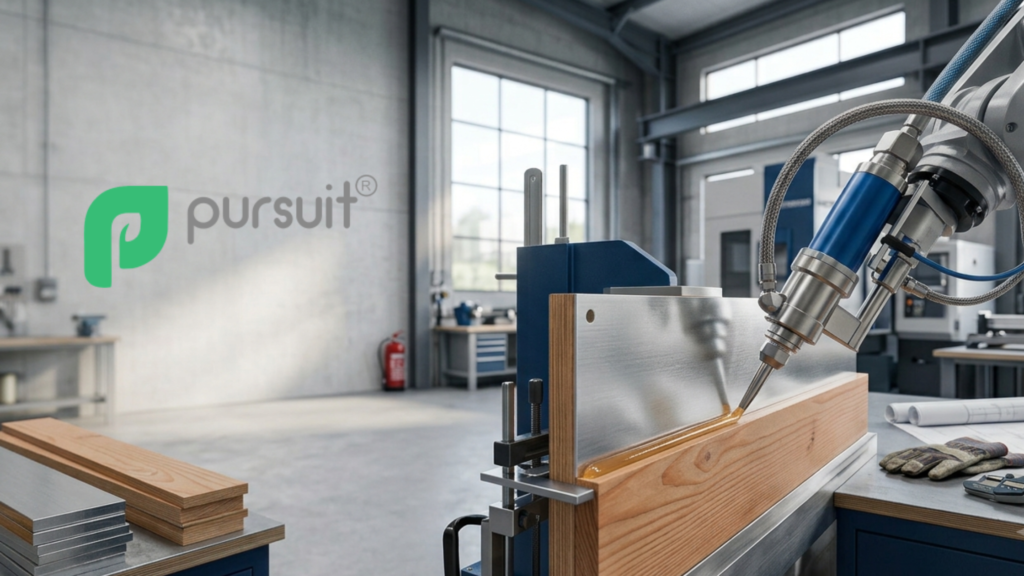
What Is Polyurethane Adhesive?
Polyurethane adhesive is basically a synthetic bonding agent, made by reacting polyols with isocyanates , and it results in a flexible high strength urethane polymer.
It’s not like rigid epoxies, because PU tends to soak up vibration a bit ,and it can bond different materials wood, metal, plastic, and concrete.
Also it handles moisture well and keeps working through temperature extremes. In practice cure times are often somewhere around 12 to 24 hours ,and tensile strength usually lands between 1,000–3,000 PSI depending on the exact formulation.
What Is Polyurethane Adhesive Made Of?
What makes polyurethane adhesive work is an exothermic chemical reaction . Polyols are long chain alcohols ,and isocyanates are compounds that carry a reactive –NCO group.
When those connect they form urethane linkages, and that builds a three dimensional polymer network. That network is the reason it has both strength and flexibility.
The chemistry is highly tunable:
- Backbone flexibility — polyether, polyester, caprolactone, or polybutadiene (flexibility and chemical resistance)
- Type of isocyanate — either aromatic, which costs less, or aliphatic, which is UV stable and used in outdoor/exposed applications.
- Additives — fillers, plasticizers and moisture scavengers to fine-tune viscosity, cure speed and hardness
Variations of these can be used to tailor the characteristics of an adhesive, from soft and flexible sealants to hard and strong construction materials.
What Are the Types of Polyurethane Adhesive? (1K vs 2K)
Polyurethane adhesives are sold as either one-component (1K) or two-component (2K) systems, each suited to different applications.
| Type | How It Cures | Depth of Cure | Best For |
|---|---|---|---|
| 1K (One-component) | Reacts with atmospheric moisture | Limited (~9.5 mm max) | Sealants, general bonding, DIY use |
| 2K (Two-component) | Resin + hardener mixed together | Unlimited | Structural, industrial, high-load bonds |
Key takeaway: “1K” is easier to use, but takes longer to cure and requires humidity. The 2K systems cure faster and more predictably, but are limited to using precise mixing equipment and are the most common choice for automotive and structural applications.
Is Polyurethane Adhesive Waterproof?
Yes. Polyurethane adhesive used for this application is cured and is waterproof and has durable bond strength even in wet conditions.
This is why it is used in outdoor projects, marine projects, and any projects that are pruned to rain, humidity or submersion.
- Elastic and flexible in wet-dry cycling without cracking
- Properly formulated, is more durable against hydrolysis than many water-based options
- These are typically used with roofing, flooring and masonry waterproofing systems.
However, there is one problem – too much moisture before application (prior to curing) can lead to bubbling in 1K systems, which can slightly affect the bond performance – surface prep and control of humidity are important.
How Strong Is Polyurethane Adhesive?
Polyurethane adhesive kind of generally shows a tensile strength around 1,000 to 3,000 PSI, but it really depends on the specific product, and also on what material you’re bonding together.
Aliphatic structural grades tend to keep more than 80% of their initial strength after 10 years outside, and the PU bonds will often last through 1,000+ thermal cycles (from −40°C to +85°C) , per ASTM D4332.
However, it’s not all about strength – the true strength of polyurethane is its fatigue resistance and impact resistance.
Because it flexes rather than cracks, it often outlasts more rigid adhesives (like epoxy) in joints subject to vibration, thermal expansion, or repeated stress — such as automotive panels or wooden decking that expands and contracts seasonally.
Polyurethane Adhesive vs Epoxy vs Silicone
| Property | Polyurethane | Epoxy | Silicone |
|---|---|---|---|
| Flexibility | High | Low (rigid) | High |
| Tensile strength | Moderate–High | Very High | Low–Moderate |
| Water resistance | Excellent | Good | Excellent |
| UV resistance | Good (aliphatic grades) | Poor (yellows over time) | Excellent |
| Cure time | 12–24 hrs | 24–72 hrs | Varies (fast to moderate) |
| Gap-filling | Good (slight expansion) | Moderate | Good |
| Best for | Dissimilar materials, vibration-prone joints | Rigid, high-load, chemical-resistant bonds | Sealing, extreme temperature swings |
In short: choose polyurethane when your bond needs to flex, bridge gaps, or join dissimilar materials outdoors.
Pick epoxy when you need maximum stiffness, plus chemical resistance, for joints that don’t move much.
Use silicone if it’s about performance at extremes of temperature, cold and/or UV protection, but not necessarily strength.
What Is Polyurethane Adhesive Used For?
Polyurethane adhesives have many applications in various industries where flexibility, durability and weather resistance are needed:
- Industrial — bonding of windshields in automobiles, bonding of structural panels, assembly of battery enclosures
- Construction — by means of installation of flooring, roofing membranes, masonry veneer attachment, and concrete crack injection.
- The sole bonding process is one of the most significant volume processes in the UK and is the biggest application of footwear & leather in the world.
- Furniture — Wood joints, laminate bonding and upholstery attachment.
- Packaging & electronics — component encapsulation, flexible packaging lamination
- Marine — hull bonding and sealing, where UV and moisture resistance play important roles.
Despite that, the automotive segment continues to be the primary application segment, with vehicle light weighting and multi-material designs, which demand bonding of metal, composites and plastics.
How to Choose the Right Polyurethane Adhesive
- Match the substrate — the moisture cure system; typically 1K moisture cure systems work on porous substrates (wood or concrete), while 2K moisture cure systems work on non-porous or structural joints (metal or composites)
- Check the environment —fresh air, UV-exposed applications – aliphatic PU; structural bonds – lower cost aromatic PU
- Consider cure time vs working time — fast curing (2K) systems are ideal for production lines; slower (1K) curing systems provide more working time for manual application
- Verify compliance — automotive and food-contact applications may need to be certified – such as FMVSS for automotive glazing, FDA compliance for food-contact bonding
FAQs
Is polyurethane adhesive the same as polyurethane glue? Yes — polyurethane glue and polyurethane adhesive are the same product: glue’ is generally used in consumer/DIY applications, ‘adhesive’ is the industrial/technical term.
Will polyurethane adhesive adhere to metal to plastic? Yes, it is one of its special qualities — polyurethane adhesives are used extensively because they are capable of joining dissimilar materials such as metal, plastic, wood and composites in a single joint.
So is there an alternative safe to use if you want to use polyurethane adhesive? Polyurethane adhesive (polyurethane) needs to be well-ventilated when using since there is exposure to isocyanate. Generally, cured polyurethane is inert and safe and is even employed in medical wearable devices because of its biocompatibility.
What about shelf life for a Polyurethane Adhesive? When used properly, a structural grade polyurethane adhesive can hold up to 10+ years of outdoor exposure, with 80% or more of the bond strength still there.
