
Polypropylene material: complete guide to properties, types, uses & sustainability
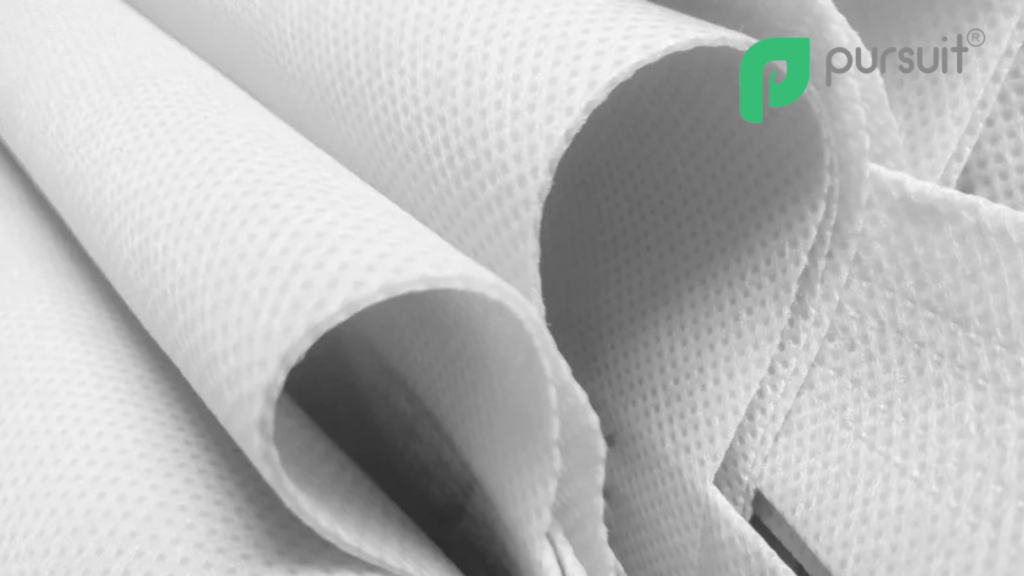
What is polypropylene material?
Polypropylene (PP) is a semi-crystalline thermoplastic polymer produced by polymerizing propylene monomers.
First synthesized in 1954 by Giulio Natta and Karl Ziegler — work that earned them the Nobel Prize in Chemistry — polypropylene material has grown into the world’s second most widely produced synthetic plastic, with global production exceeding 80 million metric tons annually.
Its chemical formula is (C₃H₆)n. The monomer unit, propylene, links into long chains whose tacticity — the spatial arrangement of methyl groups — determines the material’s crystallinity and performance.
Isotactic PP (the commercial standard) packs chains neatly, giving high stiffness and a melting point around 160–165 °C.
In simple terms: Polypropylene is a lightweight, rigid-to-flexible plastic that resists moisture, chemicals, and fatigue. It is food-safe, recyclable (resin code #5), and used in everything from food packaging to car bumpers to surgical textiles.
Key properties & specifications
Polypropylene material has a range of well known physical, thermal and chemical properties that determine the ability of the material to perform.
The typical benchmarks for homopolymer PP are listed below.
Density
0.90–0.91 g/cm³
Tensile strength
25–40 MPa
Melting point
160–165 °C
Flexural modulus
1,500–2,000 MPa
Heat deflection temp
100–115 °C
Izod impact (notched)
20–70 J/m
Water absorption
< 0.03 %
Resin ID code
#5 PP
Chemical resistance
Polypropylene material exhibits excellent resistance to most acids, alkalis, and organic solvents at room temperature.
It resists detergents, bleach, and concentrated sulfuric and hydrochloric acids. It is however attacked by strong oxidizing agents, and swells at high temperatures in aromatic and chlorinated hydrocarbons.
Fatigue resistance (“living hinge” property)
A very unique quality of polypropylene is its remarkable resistance to fatigue.
The thin PP film can be flexed over 10 million times before it fails — the size of the “living hinge” on shampoo bottles and food containers.
Types of polypropylene
There are three main structural forms of polypropylene material on the market, with each type providing a different performance range.
1. Homopolymer PP (PP-H)
The basic form, made up of propylene’s monomers.
Possesses the highest stiffness and strength and is suitable for rigid packaging, structural parts and pipes.
It is mostly limited by its low impact strength at low temperatures.
2. Random copolymer PP (PP-R)
Ethylene monomolecular units (usually 1-4%) are randomly introduced into the polymer chain, which interferes with the crystallinity of the polymer.
The material is both softer and more transparent with increased low temperature impact strength. Commonly used for hot/cold plumbing pipes and film packaging of food products.
3. Impact copolymer PP (PP-I / block copolymer)
Relies on the presence of an ethylene-propylene rubber (EPR) phase dispersed in a PP matrix.
This results in very good impact toughness, particularly at low temperatures, and acceptable stiffness.
The standard bumper material used for vehicles, appliances and industrial containers.
4. Long glass fiber reinforced PP (LGFPP)
Glass fibers are added to PP in various quantities (10–40%) to significantly increase stiffness, strength and heat resistance.
Used for load-bearing brackets, structural parts of automotive structures and parts of industrial machinery, where weight reduction is an essential concern rather than metal.
Applicable to parts where weight reduction is an essential concern rather than metal, such as load-bearing brackets, structural parts of automotive structures and parts of industrial machinery.
Applications & uses of polypropylene material
The low density, chemical inertness and processability of polypropylene make it the material of choice for uniquely broad applications.
Packaging
Food containers, yoghurt pots, bottle caps, BOPP film, flexible pouches. The FDA has approved the use of PP for direct food contact.
Automotive
Bumper fascias, dashboards, door trims, battery cases and underbody shields. It is weight saving without any corrosion risk when compared to metal.
Textiles & nonwovens
Surgical masks, diapers, geotextiles, rope and carpet backing. PP fibre is light in weight and moisture absorbing.
Construction
Pipes for hot/cold water plumbing, conduit, roof membranes, and concrete reinforcement fibres.
Medical
Medical syringes, surgical mesh, IV bags and laboratory ware. PP can be steam sterilized (autoclave safe); it is biologically inert.
Electronics
Cable insulation, capacitor dielectric films, battery separators (Lithium ion) and component housings.
Polypropylene vs other plastics
The selection of the proper polymer is dependent on the performance-cost compromise. Polypropylene material is compared with its closest alternatives.
| Property | PP | HDPE | ABS | Nylon 66 | PET |
|---|---|---|---|---|---|
| Density (g/cm³) | 0.90 | 0.95 | 1.05 | 1.14 | 1.38 |
| Cost (relative) | Low | Low | Medium | High | Medium |
| Chemical resistance | Excellent | Very good | Fair | Good | Good |
| Max service temp (°C) | 100–115 | 80–90 | 80–100 | 120–150 | 85–100 |
| Living hinge capability | Excellent | Good | Poor | Fair | Poor |
| Steam sterilizable | Yes | No | No | Yes | No |
| Recyclability | #5 — accepted | #2 — widely | Limited | Limited | #1 — widely |
Sustainability & recycling of polypropylene material
PP carries resin identification code #5. While historically recycled at lower rates than PET (#1) and HDPE (#2), infrastructure for PP recycling is expanding rapidly.
As of 2024, several major municipalities and brands have increased PP acceptance, driven in part by the Polypropylene Recycling Coalition’s advocacy.
Mechanical recycling
Post-consumer PP is picked up in a variety of different colors, sorted, washed, melted, and re-pelletised.
The material has good properties until the 3rd – 5th reprocessing. The recycled PP (rPP) is currently applied in automotive industries, furniture and construction.
Chemical recycling
Pyrolysis of PP transforms it into propylene monomer or synthetic fuel, a closed loop for contaminated streams which cannot be mechanically recycled.
Pyrolysis units for commercial processing of mixed polyolefin wastes, such as PP, are in operation in Europe and North America.
Environmental footprint
PP’s low density means less material per part and lower transport emissions. Its carbon footprint at production is approximately 1.9–2.1 kg CO₂e per kg — lower than nylon (6–9 kg CO₂e/kg) and comparable to HDPE. Replacing virgin PP with rPP reduces the carbon footprint by up to 50%.
Sustainability tip for specifiers: When designing for recyclability, choose natural (unpigmented) or lightly pigmented PP, avoid multi-material laminate bonds with non-PP films, and clearly label components with the #5 resin code.
Frequently asked questions about polypropylene material
Is polypropylene material safe for food contact?
Yes. Polypropylene is FDA approved and used in the making of reusables like lunchware, bottle caps and storage containers for food. Does not leach BPA or phthalates.
Stable at microwave temperatures (usually up to 120 °C), but can be avoided in consumer-grade PP which has not been tested to withstand very high-temperature steam.
What is the difference between PP homopolymer and copolymer?
PP homopolymer is made entirely from propylene and offers the highest stiffness and clarity.
PP copolymer includes ethylene units, which disrupt crystallinity to improve flexibility and low-temperature impact resistance.
Random copolymers provide better clarity; block (impact) copolymers are more concerned with toughness than clarity.
What temperature can polypropylene withstand?
The heat deflection temperature of standard PP homopolymer is 100-115℃ and melting point is 160-165℃.
In practice the maximum temperature for continuous service is 90–100 °C.
Unmodified PP is brittle at low temperatures, below 0 °C; impact copolymers are down to −20 °C or lower at low temperatures.
Can polypropylene be recycled?
Yes. Polypropylene is recyclable mechanically and chemically, and has resin code #5. There is some variation from region to region with acceptance for curbside programs, but the numbers are increasing.
Mechanically recycled PP is employed in automative parts, furniture, industrial packaging. Chemical recycling via pyrolysis converts it back to fuel or feedstock.
Why is polypropylene used in medical devices?
Polypropylene is used in medical devices because it is biologically inert, chemically resistant to disinfectants, and can withstand steam sterilization (autoclave).
It complies with USP Class VI biocompatibility. Typical uses are in syringes, IV connectors, surgical mesh and disposable laboratory products.
What is a polypropylene living hinge?
A living hinge is a thin, flexible area of polypropylene which is designed to flex between two rigid components without ever breaking.
PP is capable of flexing over 10 million cycles, due to its molecular structure. The living hinge is injection moulded in one step which is very cost-effective. The classic one is a flip-top cap on a shampoo bottle.
