
How to Choose FIBC Bag: The Complete Buyer’s Guide for 2026
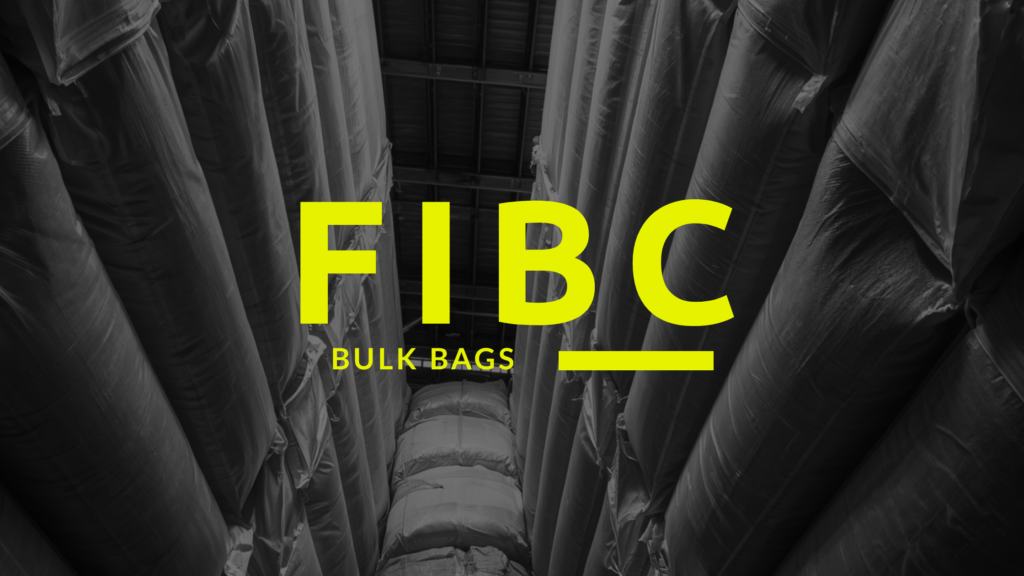
When ordering bulk packaging for the first time or switching to a new supplier it can save your business thousands of dollars, and a good deal of headache, to know how to select the right FIBC bag.
FIBC stands for Flexible Intermediate Bulk Container. These are large woven polypropylene bags — commonly called bulk bags, jumbo bags, or super sacks — designed to carry anywhere from 500 kg to 2,000 kg of dry, flowable materials in a single lift.
They are used across industries including agriculture, chemicals, construction, food processing, pharmaceuticals, and mining.
The wrong bag type, safe working load, or liner can lead to bag failure, product contamination, regulatory non-compliance and expensive recalls.
This guide walks you through everything you need to know — step by step — so you can make an informed, confident buying decision.
What Is an FIBC Bag? (Quick Overview)
FIBC bag is a standard industrial bag that is fabricated from woven polypropylene fabric. It typically consists of:
- A woven outer body (the bag shell)
- A hole is created in the top of the container and may be referred to as a filling inlet, or spout or open top.
- A fluid outlet in the lower (spout, flat bottom or cone)
- Lifting loops (2 or 4) sewn on the top of the structure
The bags can be used one time or multiple times, depending on your application. They are tested to meet a specified Safe Working Load (SWL) which typically includes a safety factor of 5:1 or 6:1.
Step 1 — Understand the 4 Main FIBC Types
The first important step in learning how to select FIBC bag is to know the type of FIBC bag matching with your product and process.
Type A FIBC
Type A bags, which are produced from simple woven polypropylene, do not have electrostatic protection. They’re the most basic and inexpensive of them all.
Apply when: Your product is not flammable and there is no flammable solvents or gases around you.
Never use in: Chemical powders, flammable areas, static discharge areas.
Type B FIBC
Type B bags employ low breakdown voltage materials, thus eliminating the propagation of the harmful brush discharges. But they will not expel static charges from the bag surface.
When to use: Where there is no flammable vapour or gas in the environment, and the minimum ignition energy of the powder is greater than 3mJ.
Type C FIBC (Conductive)
Type C bags have conductive threads woven through them which should be grounded during bag filling and emptying. When they are properly earthed, they totally avoid electrostatic build-up.
Use when: Handling flammable powders with a minimum ignition energy below 3 mJ, or when flammable vapors or gases may be present. Grounding is mandatory — always.
Type D FIBC (Dissipative/Antistatic)
Type D bags are made from special antistatic or static-dissipative fabrics. They do not need to be grounded as with Type C.
Use when: When flammable materials are handled in situations where reliable grounding connections cannot be assured. They are safer than Type C in less controlled environments.
Comparison Table: FIBC Types at a Glance
| Type | Electrostatic Protection | Grounding Required | Best For |
| A | None | No | Non-flammable products only |
| B | Partial (no propagating brush discharge) | No | Flammable powders, no vapors |
| C | Full (conductive threads) | YES — mandatory | Flammable powders + vapor risk |
| D | Full (dissipative fabric) | No | Flammable materials, unreliable ground |
Step 2 — Determine Your Safe Working Load (SWL) and Safety Factor
Every FIBC is rated for a Safe Working Load (SWL), which is the maximum weight the bag is designed to carry in normal use. Most standard bags are rated for 500 kg, 1,000 kg, 1,500 kg, or 2,000 kg.
The ratio of the bag’s break strength to its SWL is known as Safety Factor (SF):
- 5:1 Safety Factor — Standard for single-use bags
- 6:1 Safety Factor — Used for multi-trip or multi-use bags
A 1,000kg SWL bag that has a 5:1 SF is tested to carry 5,000kg before failure.
A good rule of thumb is to choose an SWL rating that is equal to or higher than the weight of the product. Never exceed the stated SWL — even briefly during loading or transport.
Step 3 — Choose the Right Top and Bottom Design
The inlet and outlet directly affects your filling, sealing and discharge. Here are your main options:
Top Inlet Options
- Open Top — Fully open top, suitable for materials which flow freely or are coarse, filled by conveyor or by gravity.
- Fill Spout — A tubular spout that is tied or clamped, works best with fine or dusty powders.
- Duffle Top — A large closure panel which folds over to provide a compromise between dust control and easy access
Bottom Outlet Options
- Closed Bottom / Flat Bottom — Product not discharged from bottom for storage purposes only
- Discharge Spout — An opening in the center of the spillway that allows controlled gravity discharge of the spillway.
- Full-Open Bottom — Discharged freely with special equipment, but without control
- Conical Bottom — Facilitates complete flow, good for cohesive or sticky materials
Step 4 — Decide Between Single-Use and Multi-Use Bags
This is not a matter of preference, but also of economics and use.
Single-Use Bags (SF 5:1)
These once-used and recycled or disposed of. They are affordable when:
- Product contamination from one batch to another is an issue.
- The bag will be very soiled with use.
- You’re sending products to end users that will throw away the bag
Multi-Use Bags (SF 6:1)
These can be repeated 3 to 10 times or even more. They are meaningful when:
- Bags are returned to you by your customer or within your own supply chain
- There is a bag inspection and maintenance process in place
- However, the cost of a bag to an individual buyer is offset by savings due to its re-use.
A liner is an inside lining bag put into the FIBC to safeguard the contents from dust, contamination or dampness. Not all applications require it — but many do.
Step 5 — Choose the Right Liner
A liner is an inner bag inserted into the FIBC to protect contents from moisture, dust, or contamination. Not every application needs one — but many do.
Types of Liners
- Form-fit liner — Shaped to fit inside the bag; suitable for fine powders and hygroscopic (moisture absorbent) materials
- Tubular liner — A simple cylindrical inner liner for general protection of cargo;
- Aluminum foil liner — Moisture, oxygen and UV barrier for foods and pharmaceuticals
- Antistatic liner — Must be used with Type C or D bags when handling flammable materials.
Remember, when you have a food ingredient, a fine chemical or pharmaceutical powder product, always use a liner. If moisture or cross-contamination from the outer bag is a concern — use a liner.
Step 6 — Check Certifications and Compliance Requirements
The selection of a bag without checking compliance with relevant standards is a big risk. These are the top key certifications to inquire about:
UN Certification (Dangerous Goods)
If you are using transport regulations (ADR, IMDG, IATA) to ship goods that fall under the dangerous goods category, you need to have a UN certification on your FIBC.
The UN mark printed on the bag confirms that it has passed drop, stacking and top-lift tests according to UN Recommendations on the transport of dangerous goods.
ISO 21898
This is the main International standard that relates to the design, testing and use of FIBCs for non-dangerous goods. A reputable supplier should be able to confirm compliance.
Food-Grade Certification
For food ingredients, sugar, grains, spices, or feed, the bag materials — fabric, liners, stitching thread, and labels — must comply with food-contact regulations. In the EU, this falls under EU Regulation 10/2011.
In the USA, FDA compliance is required.
BRC / AIB / FSSC 22000
If your customer is a food manufacturer with BRC or FSSC certification, they may require FIBC suppliers to hold equivalent food safety certifications. Always confirm before ordering.
Step 7 — Evaluate Fabric Weight and Coating
The woven polypropylene fabric is rated in grams per square meter (GSM). Higher GSM means thicker, stronger fabric — but also heavier bags and higher cost.
Typical GSM ranges:
| GSM Range | Application |
| 100–120 GSM | Light-duty, short transport distances |
| 130–160 GSM | Standard industrial use |
| 180–220 GSM | Heavy-duty, abrasive, or coarse materials |
Coating options:
- Uncoated (breathable) — appropriate for those products that require ventilation (firewood, potatoes, etc.)
- Inner PE coating — moisture proof, dust proof.
- Waterproof (both sides) — Most moisture resistant, typically used for cement, minerals and chemicals
Real-World Use Cases: What Do Different Industries Choose?
Knowing what other industries are choosing will make it easier to make a comparison.
Agriculture (Grain, Seeds, Animal Feed) Typically: Type A or B – breathable or single-PE coated – 1,000 kg SWL – with flat or discharge spout bottom. A food grade certification is a minimum requirement.
Chemical Industry (Powder Chemicals, Pigments) May need Type C or D depending on the minimum ignition energy for the powder. May be certified by UN. Liners with a form fit are prevalent.
Construction (Cement, Sand, Gravel) Heavy duty 180+ GSM laminated bags, flat or spout bottom, SWL 1,500–2,000 kg. UV stabilization is important for outdoor storage.
Food Processing (Sugar, Salt, Flour, Starch) Food grade certified bags (Aluminum or PE liner). Type A/B. Thoroughly documenting for compliance in the supply chain.
Pharmaceuticals (API powders, excipients), form-fit antistatic liners, extremely tight quality documentation and supplier auditing requirements.
Common Mistakes When Choosing FIBC Bags
Advanced procurement managers can still make mistakes. These are the most frequently used ones:
- Selecting purely on the basis of price without checking for the safety factor
- Does not consider the static hazard classification of the product
- Buying bags for food without verification of compliance with liners
- Not specifying UV stabilization for outdoor storage applications
- Multi-use bags are assumed to be safe to re-use without an inspection protocol.
- Overlooking UN certification requirements for classified materials
FAQ: How to Choose FIBC Bag
Q: What is the difference between a 5:1 and 6:1 safety factor FIBC? A 5:1 safety factor means the bag is tested to five times its Safe Working Load before failure — standard for single-use bags. A 6:1 SF is the stronger, multi-use rating, required when the bag will be reloaded and used multiple times.
Q: Do all FIBC bags need to be grounded? Only Type C bags require mandatory grounding. Type D bags use dissipative fabric and do not require a ground connection. Type A and B bags have no conductive properties and grounding has no effect.
Q: What is the maximum weight an FIBC can carry? Standard FIBCs are rated from 500 kg to 2,000 kg. Custom bags can be engineered for higher loads, but these are non-standard products requiring specific testing and documentation.
Q: Can I reuse an FIBC bag? Only bags with a 6:1 safety factor and a multi-use designation from the manufacturer should be reused. Every bag must be inspected before reloading. Single-use (5:1 SF) bags should never be refilled.
Q: Are FIBC bags safe for food products? Yes — but only if the bags are made expressly for food contact, are made from food-grade polypropylene, use food-safe stitching and are lined with food-safe liners. Ask your supplier for a Declaration of Compliance at all times.
Q: How do I know if I need a UN-certified FIBC? If your product is classified as a hazardous material under transport regulations (e.g., ADR for road, IMDG for sea), you need a UN-certified bag. Check with your logistics provider or safety officer to confirm the classification of your product.
Q: What does UV stabilization mean for FIBC bags? Polypropylene degrades when exposed to sunlight over time. UV-stabilized bags have additives that slow this degradation, extending safe outdoor storage life — typically rated for 6–12 months of outdoor use. Without UV stabilization, bag strength can decrease significantly within weeks of sun exposure.
Q: How should I dispose of used FIBC bags? All single-use bags should be recycled if they are offered in a polypropylene recycling program. There are a large number of manufacturers and third-party recyclers with FIBC take back programs. Never bury or burn polypropylene bags.
External Authority Reference Suggestions
- EFIBCA (European Flexible Intermediate Bulk Container Association)
- ISO 21898 Standard
- FDA Food Contact Compliance Guidelines
Conclusion
It’s not hard to understand why choosing FIBC bag is not a matter of simple things to know, but important to know when you make a wrong selection.
The choice of static protection type, the selection of the appropriate liner, the safety factor and compliance certifications are all key decisions that impact product safety, operational efficiency, and regulatory compliance.
Begin by product properties such as weight, flowability, moisture sensitivity and static risk. Next, correlate those requirements to the appropriate bag type, construction and certification.
Choose a supplier that can give you full paperwork – test certificates, compliance statements and traceability.
When you still don’t know which specification of FIBC is suitable for your application please contact an experienced supplier for a technical consultation before ordering.
In 15 minutes you can avoid a costly purchasing mistake by talking to the right expert.
Ready to source the right FIBC bag for your business?
Request a free technical consultation and sample bag from a certified FIBC manufacturer today. Bring this checklist to the conversation — and walk away with a specification you can trust.
