
Grain Storage Bags: Types, Benefits, Uses & How to Choose the Right Bag
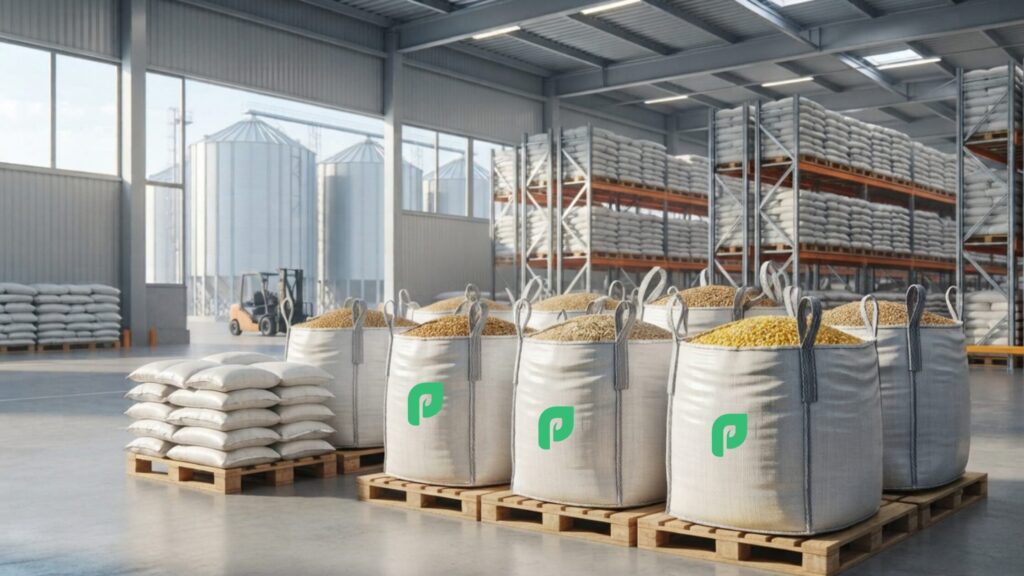
Grain storage is important for the preservation of quality, safety and value of harvested agricultural products.
From wheat to rice, maize and corn, soybeans and pulses, even to seeds, the selection of the appropriate grain storage bags can facilitate handling, transport, stacking, and protection during storage.
The type of grain, amount, storage time, moisture content, method of handling and level of protection desired are the factors that determine the type of bag to be used.
Common solutions are PP woven grain bags, laminated bags, BOPP bags and FIBC bulk bags.
Grain storage bags are sturdy bags for storing, handling and moving grains and commodities like wheat, rice, maize, corn, soybeans, and pulses.
PP woven bags and FIBC bulk bags can offer practical packaging solutions in agriculture and bulk grain packaging based on the amount and storage conditions.
What Are Grain Storage Bags?
Grain Storage Bags are bags used to package, store, handle and transport agricultural grains and products.
They can be produced in woven polypropylene (PP), laminated PP fabric, BOPP materials or bulk-bag constructions like FIBC, according to the application’s requirement.
The requirements of a grain bag are different from those of ordinary bags, as it must resist the weight of the product, the handling involved in loading and unloading, stacking pressure, transporting and storing in bags.
How Do Grain Storage Bags Protect Stored Grains?
A suitable grain storage bag can help provide:
- Physical protection during handling and transportation
- Strong load-bearing performance
- Protection from dust and external contamination
- Better handling and stacking
- Product identification through printing
- Suitable moisture protection when the bag construction includes appropriate lamination or a liner
- Efficient bulk handling when FIBC bags are used
A storage bag should not be used in isolation, however, for grain storage. Grain moisture, temperature, warehouse conditions, pests, sanitation and practices of storage also influence grain quality.
What Materials Are Grain Storage Bags Made From?
Different grain storage applications require different bag constructions.
Polypropylene (PP)
Polypropylene is also manufactured in a variety of shapes and forms having different characteristics, which can be extruded and woven to manufacture strong material used for packing various agricultural products and food grains in sacks and bulk bags.
PP Woven Fabric
PP tapes are woven into fabric, which can be manufactured into various sizes, strength and structure bags.
PP woven bags are widely used in agricultural products such as grain, seeds, pulses and animal feed.
Laminated PP
A laminated layer can also be added to give extra surface protection and may be necessary if extra protection against external moisture or product leakage is needed.
BOPP
Woven PP bags can be employed with BOPP (bi-axially oriented polypropylene) when the requirement is for high-quality printing, branding and presentation in the retail environment.
FIBC Construction
FIBC bags, also known as flexible intermediate bulk bags, are bulk bags that are woven polypropylene bags that are used to handle and transport larger amounts of dry, flowable products.
They are therefore of special interest for bulk agricultural and grain applications.
What Are the Different Types of Grain Storage Bags?
No one grain storage bag will fit every application. The suitable design will vary depending on the type of grain, amount of grain to be stored, storage conditions, means of transport and the type of packaging required.
PP Woven Grain Bags
PP woven grain bags are packaged from the woven polypropylene fabric, which can be used in the packaging of individual grain bags for agricultural commodities.
These are available in several different sizes, GSM, constructions, colors and print options.
Common applications include:
- Wheat
- Rice
- Maize
- Corn
- Pulses
- Seeds
- Animal feed
- Other agricultural commodities
Their strong woven construction makes them suitable for handling and transportation where individual sacks are preferred.
Laminated Grain Storage Bags
Laminated PP bags combine woven polypropylene fabric with an additional laminated layer.
The additional layer can provide:
- Increased surface protection
- Better resistance to external moisture
- Reduced product leakage
- Improved printability
- Additional protection against dust
Lamination should be selected according to the actual storage and transportation requirements rather than assuming that every laminated bag provides the same level of moisture protection.
BOPP Grain Bags
BOPP laminated bags are often selected when packaging also needs strong visual presentation and high-quality printing.
They can be useful for:
- Rice packaging
- Pulses
- Food grains
- Retail-oriented agricultural products
- Branded grain packaging
- Export packaging
FIBC Grain Storage Bags
The grain bags referred to as FIBC grain bags, jumbo bags, big bags and super sacks are designed for larger volume handling.
They can be configured with different:
- Bag dimensions
- Safe working loads
- Lifting loops
- Top constructions
- Bottom discharge options
- Liners
- Printing
- Fabric specifications
FIBC solutions are particularly useful when grains need to be handled in bulk rather than packed into numerous smaller sacks.
Other Produts: 10 specialised outdoor and agri-use products — Tarpaulin, Ground Cover, Grow Bags, Shade Net, Silage Bale Wrap Film, HDPE Vermibed, Lumber Wraps, Pond Liner, Silt Fencing and Mulch Film — built to handle sun, rain, soil and storage stress season after season.
Which Grain Storage Bags Are Best for Different Grains?
When grains are to be handled in bulk, rather than a lot of smaller sacks, FIBC solutions are very helpful.
Grain Storage Bags for Wheat
Wheat can be packed in PP woven sacks for conventional bagged storage and transportation.
For larger quantities, FIBC bulk bags can reduce the number of individual units that need to be handled.
Grain Storage Bags for Rice
Rice packaging can range from standard PP woven bags to laminated and BOPP bags, depending on whether the requirement is bulk storage, transportation, retail presentation, or export packaging.
Grain Storage Bags for Corn and Maize
Corn and maize can be packed using durable PP woven bags or bulk FIBC solutions.
For bulk applications, the bag specification should be selected according to the filled weight, handling equipment, storage conditions, and transportation requirements.
Grain Storage Bags for Soybeans
Soybeans can be packaged in PP woven bags or suitable FIBC bulk bags depending on the volume and supply chain requirements.
Strength, bag construction, storage environment, and handling method should be considered before selecting the final specification.
Grain Storage Bags for Pulses
The pulses like chickpeas, lentiles, beans and other legumes can be packaged in woven PP, laminated, BOPP or bulk bag depending on the application.
Grain Storage Bags for Seeds
Seed packaging may require additional attention to contamination control, identification, moisture conditions, and the intended end use.
For food or agricultural applications, the required material and regulatory specifications should be confirmed before production.
What Are the Benefits of Using Grain Storage Bags?
The right grain storage bag can offer several practical advantages across agricultural supply chains.
Strong and Durable Construction
Weave polypropylene material offers good strength for handling, stacking and transportation.
The strength required varies according to the size of the bag, the filled weight, construction, seam design and intended handling conditions.
Lightweight Packaging
In the field of agriculture, PP woven bags can offer good strength-to-weight ratios, suitable for agricultural packaging and logistics.
Easy Handling and Transportation
Individual grain bags can be manually handled or palletized, while FIBC bags can be moved using appropriate lifting equipment.
This can make bulk handling more efficient where larger quantities are involved.
Custom Printing and Identification
Grain bags can be customized with printing for:
- Brand name
- Product name
- Weight
- Batch information
- Handling instructions
- Agricultural information
- Export or customer-specific requirements
Custom Sizes and Specifications
Manufacturers can customize grain bags according to application requirements.
Specifications may include:
- Length and width
- GSM
- Fabric construction
- Lamination
- Liner
- Printing
- Closure
- Loop configuration
- Top and bottom design
Suitable Options for Different Storage Requirements
A major advantage of PP packaging is that the construction can be adapted to the application.
For example, a standard woven bag may be suitable for one application, while another may require lamination, a liner, or an FIBC construction.
How to Choose the Right Grain Storage Bags?
Choosing a grain storage bag should be based on the complete application rather than only the bag price.
Step 1: Identify the Grain
First determine what will be stored.
For example:
- Wheat
- Rice
- Maize
- Corn
- Soybeans
- Chickpeas
- Lentils
- Other pulses
- Seeds
Different products can have different packaging and storage requirements.
Step 2: Determine the Required Bag Capacity
Decide whether the application requires individual sacks or bulk packaging.
Smaller and medium-capacity bags can be suitable for conventional grain handling, while FIBC bags are designed for larger bulk quantities.
The required capacity should always be matched with the bag’s specified safe working load and design.
Step 3: Select the Appropriate PP Fabric Construction
Important considerations include:
- GSM
- Tensile strength
- Fabric construction
- Seam strength
- Filled weight
- Handling conditions
A higher GSM should not automatically be assumed to be the best solution. The complete bag construction should be evaluated according to the application.
Step 4: Decide Whether Lamination or a Liner Is Required
Consider lamination or an internal liner when the application requires additional protection from external moisture, dust, contamination, or product leakage.
The selection will depend on the type of grain, the storage conditions, and the barrier properties desired.
Step 5: Consider UV Exposure
For bags which are frequently stored/transported in the sun, UV stabilization may be required.
This is especially relevant for applications where the product is subject to outdoors or long-term exposure.
Step 6: Choose the Correct Closure and Handling Design
For standard bags, closure and stitching requirements should be selected according to the filling and handling process.
For FIBC bags, consider:
- Lifting loops
- Top construction
- Bottom construction
- Filling spout
- Discharge spout
- Liner
- Handling equipment
Step 7: Check Food-Grade and Destination-Market Requirements
When bags are used for food grains, buyers should confirm the required material specifications, food-contact requirements, certifications, and destination-market regulations before production.
PP Woven Bags vs FIBC Bags for Grain Storage
Both PP woven bags and FIBC bags can be used in grain-related applications, but they serve different handling requirements.
| Feature | PP Woven Grain Bags | FIBC Grain Bags |
| Typical application | Bagged grain | Bulk grain |
| Handling | Manual or pallet handling | Forklift, crane or suitable lifting equipment |
| Packaging format | Individual sacks | Large bulk container |
| Quantity | Smaller individual units | Large-volume loads |
| Storage | Warehouses, farms and distribution | Bulk storage, warehouses and industrial logistics |
| Customization | Size, GSM, printing, lamination, liner | Size, SWL, loops, liner, top/bottom design |
| Best suited for | Individual grain packaging | Bulk agricultural handling |
Pursuit’s FIBC solutions are positioned for agricultural applications including grains and seeds, while its PP woven products provide options for agricultural and food-related packaging.
When Should You Choose PP Woven Bags?
Choose PP woven bags when the supply chain requires individual sacks, conventional stacking, retail or distribution packaging, or customized printed packaging.
When Should You Choose FIBC Bags?
FIBC bags are more appropriate when the requirement involves larger quantities and bulk handling with suitable lifting equipment.
The final selection should be based on the required safe working load, bag design, filling method, discharge method, storage conditions, and handling equipment.
How to Store Grain Properly in Storage Bags?
Selecting a strong bag is only one part of proper grain storage. The grain and storage environment also need to be managed correctly.
Dry the Grain Before Storage
Grain should be at an appropriate moisture level before long-term storage.
A bag cannot compensate for grain that is stored with unsuitable moisture conditions.
Inspect Bags Before Filling
Check bags for:
- Tears
- Damaged seams
- Holes
- Contamination
- Incorrect closures
Damaged bags should not be used for storage.
Do Not Overload the Bag
The bags must be filled as per the specified capacity & safety working load of each bag.
Excessive filling may strain the fabric, seams, lifting loops and/or the closures.
Keep Bags Away From Ground Moisture
Where appropriate, use pallets or other suitable warehouse practices to reduce direct contact with floors and potential sources of moisture.
Maintain Good Warehouse Conditions
Storage areas should be:
- Clean
- Dry
- Well managed
- Protected from avoidable water exposure
- Suitable for pest-control practices
Follow Proper Stacking Practices
Stacking should be planned according to bag construction, filled weight, warehouse conditions, and handling procedures.
Avoid unstable stacks that could damage bags or create safety risks.
Inspect Stored Grain Regularly
Regular inspection can help identify:
- Moisture problems
- Pest activity
- Damaged bags
- Leakage
- Contamination
- Changes in grain condition
Common Grain Storage Problems and How the Right Bag Helps
Moisture and Condensation
Moisture can impact on grain quality in storage and can be a cause of grain spoilage.
For applications, laminated construction or a suitable liner can be used to give extra protection. However, bag selection should be combined with proper grain moisture management and warehouse conditions.
Bag Tearing
Weak fabric, unsuitable construction, overloading, rough handling, or poor stitching can contribute to bag damage.
The bag should be specified according to filled weight and handling conditions.
Dust and External Contamination
Suitable woven, laminated, or liner-based constructions can help reduce exposure to external contaminants.
Poor Stacking
The correct bag dimensions and construction can make warehouse handling easier, but stacking must still follow appropriate safety and storage practices.
Outdoor UV Exposure
Polypropylene tends to become degraded, with exposure to sunlight overtime unless the bag is built to withstand UV exposure.
Difficult Bulk Handling
When large quantities of grain are moved regularly, individual sacks can increase handling requirements.
FIBC bulk bags can provide a more suitable format for bulk handling when compatible lifting equipment is available.
Are PP Woven Bags Good for Grain Storage?
Yes, PP woven bags can be suitable for grain packaging and storage when their construction and storage conditions match the grain, required protection, filled weight, and handling method.
Their woven polypropylene structure provides a strong and lightweight packaging format for agricultural products.
However, not every PP woven bag provides the same level of moisture protection.
A standard woven construction, laminated bag, and liner-equipped bag can have different performance characteristics. Therefore, the bag should be selected according to the actual storage conditions and product requirements.
How Much Grain Can a Storage Bag Hold?
There is no single universal capacity for a grain storage bag.
Capacity depends on:
- Bag dimensions
- Fabric construction
- GSM
- Grain density
- Filled weight
- Bag design
- Safe working load
- Intended handling method
Smaller Grain Bags
Standard grain packaging can be produced in different capacities depending on customer and market requirements.
Custom-Capacity Bags
Manufacturers can develop bag dimensions according to the customer’s filling equipment, grain quantity, storage system, and transportation requirements.
FIBC Grain Bags
FIBC bags are designed for bulk quantities and can be customized according to the required safe working load and dimensions.
The important distinction is that bag volume and safe working load are not the same thing. A bag’s physical volume does not automatically determine how much weight it can safely carry.
What Should You Check Before Buying Grain Storage Bags?
Before placing an order, buyers should evaluate:
- Material
- Bag size
- Required capacity
- Safe working load
- GSM
- Fabric construction
- Tensile strength
- Seam quality
- Lamination
- Liner requirement
- UV stabilization
- Printing
- Closure
- Top and bottom construction
- FIBC loop configuration
- Food-grade requirements
- Destination-market requirements
- Supplier manufacturing capability
For export requirements, specifications should be finalized with the supplier based on the actual commodity, packing process, logistics conditions, and applicable regulations.
Why Choose Pursuit Industries for Grain Storage Bags?
Pursuit Industries provides flexible packaging solutions for agricultural and industrial applications, including PP woven products and FIBC bulk bags.
PP Woven Packaging Solutions
PP woven bags can be developed for agricultural products and grain-related packaging applications, with specifications customized according to the required application.
FIBC Bags for Bulk Grain Handling
FIBC bags provide a bulk packaging option for larger quantities of grains and seeds.
This can be useful for agricultural processors, traders, exporters, warehouses, and businesses involved in bulk material handling.
Customized Bag Specifications
Depending on the product and application, packaging can be customized for requirements such as:
- Dimensions
- GSM
- Fabric construction
- Printing
- Liner
- Loop configuration
- Top construction
- Bottom construction
Quality-Focused Manufacturing
For international buyers, packaging requirements can vary significantly by commodity, destination, handling system, and regulatory requirements.
Pursuit can work with customers to determine the appropriate bag construction for their specific application.
Pursuit currently serves customers across 86+ countries, supporting its international approach to packaging and agricultural product requirements.
Frequently Asked Questions About Grain Storage Bags
What are the best bags for grain storage?
The best grain storage bag depends on the grain type, quantity, storage duration, moisture conditions, handling method, and required protection.
PP woven bags are suitable for many conventional grain-packaging applications, while FIBC bags are useful for larger bulk quantities.
Are polypropylene bags good for storing grain?
Yes. PP woven bags can be suitable for grain packaging and storage when their construction is appropriate for the product and storage environment.
What size bag is best for grain storage?
The appropriate size depends on the required filled weight, handling process, storage system, transportation method, and customer requirements. Grain bags can be manufactured in different dimensions and capacities.
Can FIBC bags be used for grain storage?
Yes. FIBC bags can be used for bulk grain handling and transportation when the bag is correctly specified for the grain, filled weight, lifting method, and storage conditions.
Are PP woven bags waterproof?
Standard PP woven fabric should not automatically be considered completely waterproof. Laminated construction or a suitable liner can provide additional protection where moisture resistance is required.
What is the difference between PP woven bags and FIBC bags?
PP woven grain bags are generally used as individual sacks, while FIBC bags are larger bulk containers designed for handling significantly larger quantities using suitable lifting equipment.
Are grain storage bags reusable?
Reusability depends on the bag design, material, construction, previous use, contamination status, and manufacturer’s intended application. FIBC bags should only be reused when their design and condition make reuse appropriate and safe.
How do you protect grain from moisture during storage?
Start with appropriate grain moisture management and a dry storage environment. Depending on the application, suitable laminated bags or liners may provide additional protection against external moisture.
Can grain storage bags be customized?
Yes. Depending on the manufacturer and application, grain bags can be customized for dimensions, GSM, printing, lamination, liners, closures, and other construction requirements.
What should I look for when buying grain storage bags?
Consider the grain type, filled weight, bag dimensions, fabric construction, GSM, seam quality, moisture requirements, UV exposure, handling method, food-grade requirements, and destination-market specifications.
Can grain storage bags be used for wheat, rice and maize?
Yes. Suitable PP woven and bulk-bag constructions can be used for different grains, including wheat, rice, maize, and other agricultural commodities, provided the bag specification matches the application.
Conclusion: Choosing the Right Grain Storage Bags
The right grain storage bag is more than a simple container. It needs to match the grain, filled weight, storage environment, handling process, transportation method, and required level of protection.
For conventional individual packaging, PP woven grain bags can provide a strong and practical solution. Where additional protection or branding is required, laminated and BOPP constructions can be considered.
For larger quantities, FIBC grain bags offer a bulk-handling solution that can simplify storage and transportation.
The most effective approach is to select the bag specification according to the actual application rather than choosing a bag based only on size or price.
If you are looking for customized grain storage bags, PP woven bags, or FIBC bulk bags for agricultural, food-grain, trading, or export applications, Pursuit Industries can help you identify the appropriate bag construction and specifications for your requirement.
Contact Pursuit Industries to discuss your grain packaging and bulk storage requirements.
