
Peanut Butter Supplier in India: The Complete B2B Sourcing Guide (2026)
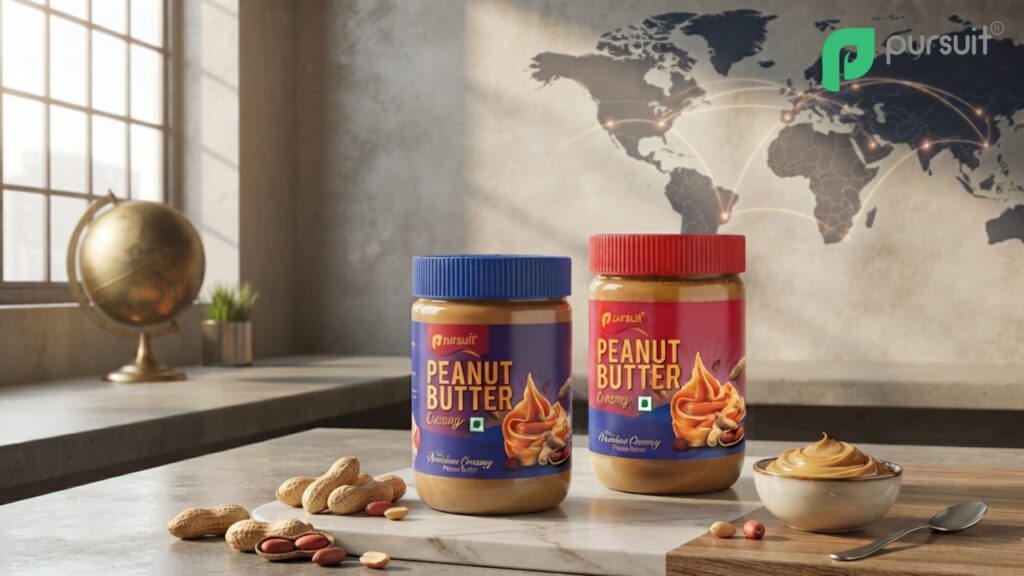
Finding peanut butter to sell — be it a retail store, food factory or world-wide importer — rests on one thing: the peanut butter supplier.
The right partner will impact your margins, your shelf life, your compliance documents, and ultimately your customer’s reorder.
A reliable peanut butter supplier is someone who offers certified, hygienic production (ISO/FSSAI/HACCP), consistent raw material sourcing, flexible bulk packaging/private labelling/and export documentation experience.
The second largest peanut butter producing country in the world is India, which is also the second largest producer of groundnut, making it a preferred raw material for peanut butter making and thus keeping the raw material price low and the supply stable in India.
For businesses sourcing peanut butter from India, suppliers such as Pursuit Industries can provide B2B supply and export support alongside product sourcing.
This guide explores and explains the process you need to assess a peanut butter manufacturer, what a profitable sourcing relationship for B2B buyers means, and where peanut butter is sourced in the world today.
What Does a Peanut Butter Supplier Actually Do?
A peanut butter supplier is not the same as a peanut butter brand . Like sure, they’re related, but it’s kind of a different job.
A supplier—sometimes acting as a manufacturer, an exporter, or a private label producer—usually takes care of sourcing the peanuts, roasting them, grinding , doing quality testing, and handling packaging of peanut butter for other companies: retailers, food service groups, snack labels, and international distributors.
Most suppliers of peanut butter for B2B use supply any mixture of the following:
- Bulk supply in industrial packaging (drums, pails, totes) for food manufacturers
- Private label / OEM manufacturing – their production line, your brand.
- They do retail-ready packing too, like jars, pouches, sachets, for supermarkets and e-commerce setups
- Export documentation support — certificates of origin, phytosanitary certificates, and destination-market compliance (FDA for the US, EU aflatoxin limits, GCC/Halal requirements, etc.)
For example, a B2B supplier such as Pursuit Industries can support buyers with peanut butter sourcing and export requirements, depending on the product, packaging, and destination market.
Who Are the Largest Peanut Butter Manufacturers Globally?
Globally, the largest peanut butter manufacturers are concentrated in the United States (home to major consumer brands) and in top groundnut-producing countries — India, China, Nigeria, and Senegal — which supply raw and processed peanut butter to brands and food manufacturers worldwide.
India’s position matters here: as the world’s second-largest groundnut producer, it gives Indian peanut butter manufacturers a structural cost and consistency advantage over suppliers in countries that must import raw groundnuts.
This is a significant factor in the fact that global buyers are more inclined to source peanut butter from suppliers based in India as opposed to domestic-branded suppliers.
Indian exporters such as Pursuit Industries also serve international B2B buyers looking for peanut butter and other Indian-origin food products.
Is Sourcing from a Bulk Peanut Butter Supplier Profitable for Your Business?
Yes — for retailers, food manufacturers and distributors, sourcing peanut butter for bulk use or as a private brand tends to be profitable due to the decrease in costs per kilogram that occurs as bulk sales or private-labeling increase and because margins are generally higher for private brands than for established consumer brands.
A few factors determine how profitable it is for your business specifically:
- Order volume — bulk packaging (5kg–200kg drums) brings down landed cost per unit
- Format — natural and organic peanut butter carry a 20–40% price premium over standard variants
- Private label vs. reselling — manufacturing under your own brand protects margin better than distributing someone else’s
- Freight and compliance costs — a supplier who already handles export documentation reduces hidden costs and delays
Working with a wholesale peanut butter supplier that offers flexible MOQs and private-label options lets a business test a market before committing to large volumes — which is usually the safer path to profitability.
Where Does the US (and Other Global Markets) Source Peanut Butter From?
Peanut butter is mainly obtained from domestic manufacturers for retail brands, but bulk and private-label peanut butter is imported from international suppliers, particularly the peanut exporters from India, to meet cost-sensitive, high-volume requirements for food manufacturers, snack brands and private-brand retailers.
Beyond the US, Indian peanut butter exporters commonly ship to:
- Middle East — UAE, and the wider GCC region
- Africa — Nigeria, Kenya, South Africa, Egypt, Ghana
- Europe — Germany, France, Spain, Netherlands, Italy, Poland
- North America & Oceania — USA, Canada, Australia
This spread is indicative of why buyers are looking for India’s peanut butter exporter instead of a domestic supplier, or just one country supplier: a single Indian manufacturer can typically supply multiple export markets with the same production line.
Peanut Butter Supplier vs. Peanut Butter Exporter vs. Manufacturer: What’s the Difference?
While often used interchangeably, for a B2B buyer the difference is important when considering a partner:
| Term | What It Means | Why It Matters to a Buyer |
|---|---|---|
| Peanut Butter Manufacturer | Owns and operates the production facility | Direct quality control, no middleman markup |
| Peanut Butter Supplier | May manufacture directly or aggregate from producers | Can mean shorter lead times but less production oversight |
| Peanut Butter Exporter | Specializes in export documentation, logistics, and destination-market compliance | Critical if you’re importing across borders |
The best partners are peanut butter manufacturers and exporters who not only produce peanut butter but also take care of the export activities from start to end, which eliminates the need to coordinate with multiple vendor partners.
Types of Peanut Butter Available from Indian Suppliers
Most established Indian suppliers manufacture across several variants to serve different markets:
- Natural Peanut Butter — 100% ground peanuts, no additives (health/organic segment)
- Creamy / Smooth Peanut Butter — spreadable, high demand across retail
- Crunchy Peanut Butter — coarser grind, strong preference in US markets
- Unsweetened Peanut Butter — no added sugar, growing demand from health brands
- Sweetened Peanut Butter — sugar or jaggery-based, common in mainstream retail
- Organic Peanut Butter — NPOP/NOP/EU Organic certified
What to Look for in a B2B / Wholesale Peanut Butter Supplier
Before signing on with a bulk peanut butter supplier, check for:
- Certifications — ISO, FSSAI, HACCP at minimum; Halal/Kosher if relevant to your market
- Compliance for your destination market — FDA (US), EU aflatoxin limits, GCC standards
- Packaging flexibility — retail jars through to 200kg industrial drums
- Private label capability — custom branding, artwork, and label formatting per market
- MOQ that matches your order size — avoid suppliers whose minimums don’t fit your business stage
- Export track record — ask which countries they currently ship to and request references
Why Businesses Choose Pursuit Industries as Their Peanut Butter Supplier
Pursuit Industries is a government-recognized 2-Star Export House based in Gujarat, India, supplying B2B buyers across FIBC bags, chemicals, agro commodities, and food products — including peanut butter — under the principle “Built in India. Trusted by the World.”
Pursuit Industries offers B2B peanut butter sourcing and export support for buyers looking to source Indian-origin food products for international markets.
So if you’re trying to grow a private-label peanut butter range , or scale bulk supply for food manufacturing, or you’re aiming to find a long-term export partner, that whole combination is what turns a one-time purchase into an ongoing, repeat situation.
Frequently Asked Questions
Who is the biggest peanut butter manufacturer then? In general, the largest producers are US-based and also in top groundnut countries such as India, China, Nigeria, and Senegal, and they supply both consumer brands plus B2B private label buyers
Is selling peanut butter profitable? Yes, particularly at bulk order volumes and under private label, where margins are typically higher than reselling established brands — profitability depends on order volume, format (organic/natural command a premium), and whether you manufacture private label or resell.
Where does the US get its peanut butter from? The US primarily manufactures peanut butter domestically for retail brands but increasingly imports bulk and private-label peanut butter from international suppliers, especially Indian exporters, to support food manufacturers and private-label retail.
What is the MOQ for bulk peanut butter from an Indian supplier? MOQs vary by supplier and packaging format, but bulk industrial orders commonly start in the range of 500kg–2000kg, with some suppliers offering lower MOQs for retail-ready packaging.
Who is the best company for peanut butter supply? The “best” supplier depends on your market and order profile — the right partner is one with certifications matching your destination market, packaging flexibility, and a proven export track record to your specific region.
