The Complete Guide to Polyurethane Adhesives: Types, Properties, Applications & Selection (2026)
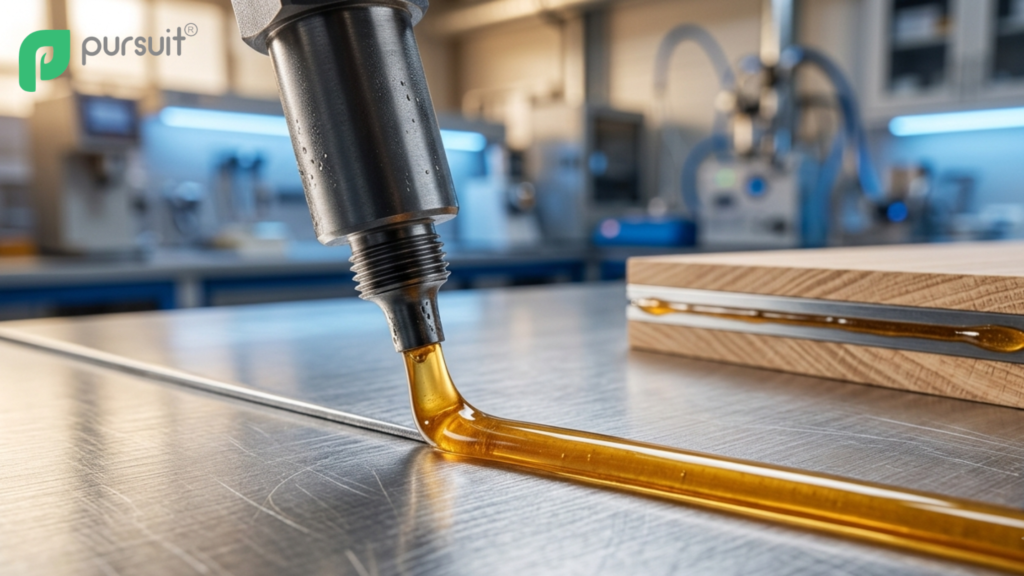
Polyurethane (PU) adhesives are versatile, high-performance bonding agents formed by reacting polyols with isocyanates.
They offer superior flexibility, impact resistance, and multi-substrate bonding compared to epoxies, silicones, and acrylics.
The global PU adhesives market reached $11.65 billion in 2026 and is projected to grow at a 6.9% CAGR through 2030, driven by automotive lightweighting, sustainable construction, and the shift from solvent-borne to reactive and waterborne systems.
Whether you’re bonding metal, wood, plastic, or composite materials, this guide covers everything from chemistry fundamentals to 2026 industry trends.
What Are Polyurethane Adhesives?
Definition & Chemistry
Polyurethane adhesives are synthetic polymers created through the exothermic reaction between polyols (long-chain alcohols) and isocyanates (reactive compounds containing the –NCO functional group).
This reaction forms urethane linkages (–NH–CO–O–), creating a three-dimensional polymer network that delivers exceptional bonding performance.
The chemistry is highly tunable. By selecting different polyol backbones (polyether, polyester, caprolactone, or polybutadiene) and isocyanate types (aromatic or aliphatic), formulators can engineer adhesives with specific hardness, flexibility, cure speed, and environmental resistance profiles.
How Do PU Adhesives Work? (Curing Mechanism)
Polyurethane adhesives cure through several distinct mechanisms depending on their formulation:
| Cure Mechanism | How It Works | Typical Applications |
|---|---|---|
| Moisture Cure (1K) | Atmospheric moisture reacts with terminal isocyanate groups, forming urea linkages and releasing CO₂ | Construction sealants, wood bonding, general assembly |
| Chemical Cure (2K) | Part A (prepolymer) mixed with Part B (curative/polyol); reaction occurs at controlled ratio | Structural bonding, automotive assembly, composites |
| Heat Cure (Hot-Melt) | Solid adhesive heated to melt, applied, then cools and crystallizes; may include secondary moisture cure | Packaging, textiles, woodworking |
| UV Cure | Photoinitiators activated by UV light trigger rapid polymerization | Electronics, medical devices, clear bonds |
Key Insight: One-component (1K) moisture-cure systems are simpler to use but slower and more sensitive to humidity.
Two-component (2K) systems offer faster, more predictable cures and superior performance but require precise mixing.
Why Choose PU Over Epoxy, Silicone & Acrylic?
Selecting the right adhesive chemistry depends on your specific application requirements. Here’s how polyurethane compares:
| Property | Polyurethane | Epoxy | Silicone | Acrylic |
|---|---|---|---|---|
| Flexibility | ★★★★★ Excellent | ★★☆☆☆ Rigid | ★★★★★ Excellent | ★★★☆☆ Moderate |
| Impact Resistance | ★★★★★ Superior | ★★★☆☆ Good | ★★★★☆ Very Good | ★★★☆☆ Good |
| Bond Strength | ★★★★☆ Very High | ★★★★★ Exceptional | ★★★☆☆ Moderate | ★★★★☆ High |
| Temperature Range | -40°C to +120°C | -55°C to +180°C | -60°C to +230°C | -40°C to +80°C |
| Cure Speed | Moderate to Fast | Slow to Moderate | Slow (condensation) | Fast |
| Gap Filling | ★★★★★ Excellent | ★★★☆☆ Good | ★★★★☆ Very Good | ★★☆☆☆ Poor |
| Multi-Substrate | ★★★★★ Excellent | ★★★★☆ Very Good | ★★★☆☆ Moderate | ★★★★☆ Good |
| Cost | $$ Moderate | $$$ Higher | $$$ Higher | $ Lower |
When to choose PU: You need a bond that can absorb vibration, bridge gaps, bond dissimilar materials, or withstand thermal cycling without cracking.
PU is the go-to for applications where flexibility and toughness matter more than maximum rigidity.
Types of Polyurethane Adhesives
One-Component (1K) PU Adhesives
Moisture-Cure Systems
1K moisture-cure PU adhesives are the most widely used type. They rely on ambient humidity to trigger polymerization. Key characteristics:
- Advantages: No mixing required, easy application, good for field work
- Limitations: Cure speed depends on humidity (40-70% RH ideal), skin formation can occur before full cure, limited depth of cure (~10mm)
- Typical Open Time: 10–60 minutes
- Full Cure: 24–72 hours depending on humidity and temperature
Best for: Construction sealants, wood flooring, DIY projects, general assembly where simplicity is valued over speed.
Hot-Melt PU (HMPUR)
Hot-melt polyurethane adhesives are solid at room temperature, heated to a liquid state for application, then cool to form an initial bond. Many HMPUR grades include a secondary moisture-cure component for enhanced final strength.
- Application Temperature: 110°C–150°C
- Set Time: Seconds to minutes (physical cooling)
- Final Cure: 24–72 hours (chemical crosslinking)
- Key Benefit: Combines the speed of hot-melt application with the durability of reactive chemistry
Best for: Textile lamination, automotive interior trim, packaging, woodworking edge banding, and footwear manufacturing.
Two-Component (2K) PU Adhesives
Mix Ratios & Pot Life
2K PU adhesives consist of:
- Part A: Isocyanate-terminated prepolymer
- Part B: Polyol blend (may include catalysts, fillers, additives)
| Mix Ratio | Pot Life | Working Time | Common Applications |
|---|---|---|---|
| 1:1 by volume | 3–5 minutes | 10–20 minutes | Fast automotive repairs, small parts |
| 2:1 by volume | 15–30 minutes | 45–90 minutes | General industrial assembly |
| 4:1 by weight | 60–120 minutes | 2–4 hours | Large panel lamination, composites |
| 10:1 by weight | 4–8 hours | 8–24 hours | Structural bonding, wind blades |
Critical Note: Mix ratio accuracy directly impacts final properties. Off-ratio mixing (even ±5%) can reduce strength by 30–50%.
Performance Advantages
2K systems deliver:
- Higher crosslink density → greater strength and chemical resistance
- Faster, more predictable cure → independent of ambient humidity
- Better temperature resistance → up to 150°C for some grades
- Adjustable working time → from 3 minutes to 8+ hours
- Zero VOC emissions → 100% solids formulations available
1K vs 2K: Which One to Choose?
| Factor | 1K (Moisture-Cure) | 2K (Chemical-Cure) |
|---|---|---|
| Ease of Use | ★★★★★ Just open and apply | ★★★☆☆ Requires precise mixing |
| Cure Speed Control | Limited (humidity-dependent) | Excellent (ratio/catalyst-dependent) |
| Final Bond Strength | ★★★★☆ Very Good | ★★★★★ Superior |
| Chemical Resistance | ★★★☆☆ Moderate | ★★★★★ Excellent |
| Temperature Resistance | Up to 80°C | Up to 150°C |
| Cost per Unit | Lower | Higher |
| Waste Risk | Low (no pot life) | High (unused mixed adhesive cures in pot) |
| Best For | Field work, simple bonds, cost-sensitive | Structural bonds, production lines, critical apps |
Decision Framework: Choose 1K for simplicity, field conditions, and non-structural bonds. Choose 2K for production environments, structural loads, chemical exposure, and when cure speed must be controlled.
Key Properties & Performance Characteristics
Bond Strength & Durability
Polyurethane adhesives typically achieve lap shear strengths of:
- Flexible grades: 2–6 MPa (290–870 psi)
- Semi-rigid grades: 6–12 MPa (870–1,740 psi)
- Structural grades: 12–25 MPa (1,740–3,625 psi)
Durability factors:
- PU adhesives maintain >80% of initial strength after 10 years of outdoor exposure (aliphatic grades)
- Fatigue resistance is exceptional—PU bonds outlast mechanically fastened joints under cyclic loading
- Creep resistance varies by formulation; structural grades are engineered for minimal deformation under sustained load
Flexibility & Elongation
This is where PU truly excels:
- Elongation at break: 100% to 800% depending on formulation
- Shore A hardness range: 20A (soft gel) to 90A (firm rubber)
- Elastic recovery: >95% for high-quality flexible grades
Why it matters: When bonded substrates expand/contract at different rates (thermal cycling), a rigid adhesive cracks. PU’s elasticity absorbs these differential movements, preserving bond integrity.
Temperature Resistance
| Grade Type | Minimum | Maximum | Notes |
|---|---|---|---|
| Standard flexible PU | -40°C (-40°F) | +80°C (+176°F) | Most common range |
| High-temp PU | -55°C (-67°F) | +120°C (+248°F) | Modified polyols, aromatic isocyanates |
| Extreme PU | -60°C (-76°F) | +150°C (+302°F) | Specialty formulations, limited flexibility |
Thermal cycling performance: PU adhesives withstand 1,000+ cycles between -40°C and +85°C without bond failure (per ASTM D4332).
Chemical & Water Resistance
| Chemical Class | Resistance Level | Notes |
|---|---|---|
| Water/Steam | ★★★★★ Excellent | Better than most organic adhesives |
| Oils & Greases | ★★★★☆ Very Good | Petroleum-based fluids |
| Dilute Acids | ★★★☆☆ Moderate | pH >3 generally acceptable |
| Dilute Bases | ★★★☆☆ Moderate | pH <11 generally acceptable |
| Solvents (ketones, esters) | ★★☆☆☆ Poor | Avoid direct exposure |
| UV Radiation | ★★★☆☆ Moderate (aromatic) / ★★★★☆ Good (aliphatic) | See UV stability section |
UV Stability: Aliphatic vs Aromatic Isocyanates
This distinction is critical for outdoor applications:
| Feature | Aromatic Isocyanates (MDI, TDI) | Aliphatic Isocyanates (HDI, IPDI, HMDI) |
|---|---|---|
| Cost | $ Lower | $$ Higher (2–4x) |
| UV Resistance | ★★☆☆☆ Poor—yellows and degrades | ★★★★★ Excellent—remains clear |
| Color Stability | Yellows within weeks outdoors | Remains transparent/colorless |
| Mechanical Properties | ★★★★★ Excellent | ★★★★☆ Very Good |
| Best For | Interior, painted, or hidden bonds | Exterior, clear bonds, automotive glass |
Rule of thumb: If the bond line will see sunlight and appearance matters, specify aliphatic PU. For structural interior bonds, aromatic PU offers better value.
Fundamental Building Blocks
Isocyanates: Aliphatic vs Aromatic
Isocyanates are the “hard segment” of polyurethane chemistry, contributing rigidity, strength, and temperature resistance.
Aromatic Isocyanates
| Type | Full Name | Characteristics |
|---|---|---|
| MDI | Methylene Diphenyl Diisocyanate | Most common; good balance of properties; cost-effective |
| TDI | Toluene Diisocyanate | Lower viscosity; faster reactivity; more flexible films |
| pMDI | Polymeric MDI | Higher functionality; crosslinked networks; rigid foams/adhesives |
Market note: MDI and TDI prices are volatile, with European producers facing margin pressure from high energy costs and Asian imports. This volatility is accelerating interest in ultra-low-monomer and isocyanate-free alternatives.
Aliphatic Isocyanates
| Type | Full Name | Characteristics |
|---|---|---|
| HDI | Hexamethylene Diisocyanate | Good weathering; used in coatings and clear adhesives |
| IPDI | Isophorone Diisocyanate | Excellent UV stability; low yellowing; premium applications |
| HMDI | Hydrogenated MDI | Best UV resistance; highest cost; optical clarity |
Polyols: The “Soft Segment”
Polyols determine flexibility, chemical resistance, and low-temperature performance.
| Polyol Type | Structure | Key Properties | Best Applications |
|---|---|---|---|
| Polyether | R–O–(CH₂CH₂O)ₙ–R | Hydrolysis resistant, low cost, flexible | General purpose, footwear, construction |
| Polyester | R–COO–(CH₂)ₙ–COO–R | Higher strength, better oil resistance, UV stable | Automotive, industrial, structural |
| Caprolactone | Polycaprolactone diol | Excellent hydrolysis resistance, low viscosity | Medical devices, underwater applications |
| Polybutadiene | Hydrocarbon backbone | Hydrophobic, electrical insulation, low moisture absorption | Electronics, sealants, specialty apps |
Selection tip: Polyether polyols offer the best hydrolysis resistance and flexibility at the lowest cost. Polyester polyols provide superior mechanical strength and oil resistance but are more prone to hydrolytic degradation in hot, humid conditions.
PU Prepolymers & Their Properties
Prepolymers are partially reacted isocyanate-polyol intermediates that balance processing ease with performance:
- NCO Content: 2–15% (higher = more reactive, harder final product)
- Viscosity: 500–50,000 mPa·s at 25°C (affects dispensing and wetting)
- Functionality: 2.0–3.5 (higher = more crosslinking, better heat resistance)
Prepolymers allow formulators to create stable, low-viscosity systems with controlled reactivity—essential for automated dispensing and consistent manufacturing.
Polyurethane Adhesives by Material/Substrate
Metal Bonding
Challenge: Metals are high-energy surfaces but have different thermal expansion coefficients than many materials they’re bonded to.
PU Advantages:
- Excellent adhesion to aluminum, steel, and coated metals without primers (in many cases)
- Flexibility compensates for thermal expansion mismatches
- Good electrical insulation prevents galvanic corrosion
Best Practices:
- Degrease with solvent (acetone, IPA)
- Abrade with 80–120 grit sandpaper for mechanical interlocking
- Apply within 4 hours of surface preparation
- Use structural 2K grades for load-bearing applications
Typical Strength: 8–15 MPa lap shear on aluminum (ASTM D1002)
Wood & Composite Bonding
Challenge: Wood is porous, hygroscopic, and varies in density. Composites (GRP, CFRP) have low-energy surfaces.
PU Advantages:
- Penetrates wood fibers for mechanical bonding
- Waterproof bonds that won’t creep like PVA glues
- Bonds to composite surfaces with proper surface treatment
- Gap-filling capability compensates for uneven surfaces
Best Practices:
- Moisture content: 6–12% for optimal bonding
- Spread rate: 150–250 g/m² for wood
- Clamp pressure: 0.3–0.7 MPa for 30–60 minutes
- Use D4-class PU for exterior/wet environments (per EN 204)
Notable: PU adhesives have largely replaced urea-formaldehyde resins in structural engineered wood products (CLT, glulam) due to lower formaldehyde emissions and superior durability.
Plastic & Polymer Bonding
Challenge: Low surface energy plastics (PP, PE, PTFE) resist adhesion.
PU Compatibility Matrix:
| Plastic | Bondability | Surface Treatment Required | Notes |
|---|---|---|---|
| ABS | ★★★★★ Excellent | Light abrasion | Strong bonds, no primer needed |
| PVC | ★★★★★ Excellent | Clean with solvent | Plasticizer migration can weaken bond over time |
| Polycarbonate | ★★★★☆ Very Good | Light abrasion | Stress cracking possible—test first |
| Nylon (PA) | ★★★★☆ Very Good | Plasma or corona treatment | Hygroscopic—dry before bonding |
| Polypropylene (PP) | ★★☆☆☆ Poor | Corona/flame/plasma treatment essential | Use specialty primers |
| Polyethylene (PE) | ★★☆☆☆ Poor | Corona/flame/plasma treatment essential | Very difficult without treatment |
| PTFE | ★☆☆☆☆ Very Poor | Sodium naphthalene etch | Consider mechanical fastening instead |
Pro tip: For difficult plastics, use PU adhesives formulated with adhesion promoters or couple with plasma/corona surface activation.
Glass & Ceramic Bonding
Challenge: Glass is smooth, high-energy, but brittle. Ceramics are rigid and often porous.
PU Advantages:
- Excellent adhesion to glass (especially with silane primers)
- Flexibility reduces stress concentration at the bond line
- Clear aliphatic grades available for visible joints
Best Practices:
- Clean glass with isopropyl alcohol (no residue)
- Apply thin, uniform bond lines (0.5–2mm) to minimize shrinkage stress
- Use aliphatic PU for exterior glass-to-frame bonding (no yellowing)
- Allow 7-day full cure before structural loading
Automotive application: Direct glazing (windshield bonding) is one of the largest PU adhesive applications, with Sika and Henkel dominating the OEM market.
Concrete & Masonry Bonding
Challenge: Concrete is alkaline (pH 12–13), porous, and often damp.
PU Advantages:
- Excellent adhesion to concrete (both cured and green)
- Tolerates moisture during application (moisture-cure systems)
- Flexible enough to bridge hairline cracks
- Resistant to alkaline environments
Best Practices:
- Remove laitance (weak surface layer) by shot-blasting or grinding
- Ensure surface is structurally sound (no loose material)
- For damp concrete, use moisture-tolerant primers or select specialized damp-concrete PU grades
- Minimum application temperature: +5°C (41°F)
Common applications: Concrete crack injection, masonry veneer attachment, flooring installation, structural concrete repairs.
Industry Applications
Automotive & Transportation
The automotive sector is the largest application segment for polyurethane adhesives, driven by light weighting trends and multi-material vehicle designs.
Windshield Bonding (Direct Glazing)
- Adhesive: High-modulus, high-strength 1K moisture-cure PU
- Function: Structural bonding of windshield to frame; contributes to crash integrity
- Key requirements: FMVSS 212/208 compliance, sag resistance, 30-minute safe-drive-away time
- Major suppliers: Sika (Tigris), Henkel (Terostat), 3M
Structural Assembly
- Application: Bonding aluminum/steel body panels, composite closures, battery enclosures
- Advantage: Replaces welds and rivets, reduces weight, improves crash energy absorption
- Example: BMW i3/i8 uses PU-adhesive bonded carbon fiber structures
- Trend: Electric vehicle battery packs use PU for thermal management and vibration damping
Interior Trim
- Applications: Dashboard lamination, door panel bonding, headliner attachment, carpet bonding
- Adhesives: Hot-melt PU (HMPUR) for fast processing; waterborne PUD for low VOC
- Innovation: Covestro launched waterborne PU adhesive solutions (Dispercoll U and U PLUS) in September 2024 for automotive interior lamination, supporting complex 3D-shaped parts and lower VOC emissions.
Construction & Building
Construction represents 36.4% of global PU adhesive demand (2025), the largest end-use segment.
| Application | Adhesive Type | Key Requirements |
|---|---|---|
| Curtain wall glazing | 1K moisture-cure, aliphatic | UV stability, movement accommodation, weatherproofing |
| Panel lamination (SIPs) | 2K or hot-melt PU | Fast cure, gap filling, foam compatibility |
| Flooring installation | 1K moisture-cure or MS hybrid | Moisture tolerance, sound damping, elasticity |
| Concrete repair | 2K injection grouts | Low viscosity, deep penetration, chemical resistance |
| Modular off-site construction | Fast-cure 2K systems | Rapid handling strength, low VOC, robotic dispensing |
Growth driver: Modular off-site construction is expanding rapidly in Europe and North America, with PU adhesives enabling stress distribution and eliminating heavy fasteners.
Smart PU formulations with self-healing or antimicrobial functions are emerging for healthcare and residential modules.
Footwear & Leather
PU adhesives are essential in footwear manufacturing:
- Upper bonding: Waterborne PUDs for leather and synthetic materials
- Sole attachment: Solvent-free and hot-melt PU for rubber, PU, TPU, and EVA soles
- Trend: Major brands (Nike, Adidas) are transitioning to waterborne PUDs to meet Restricted Substance Lists (RSLs) and reduce VOC emissions
Market note: Waterborne polyurethane dispersions (PUDs) are gaining significant share in footwear due to lower VOC profiles and safer work environments.
Furniture & Woodworking
- Edge banding: Hot-melt PU (HMPUR) for durable, heat-resistant edges
- Veneer lamination: 1K or 2K PU for curved and flat surfaces
- Structural joints: D4-class PU for outdoor furniture and kitchen/bathroom cabinets
- Mass timber: PU is replacing formaldehyde-based resins in CLT and glulam production
Packaging & Labeling
- Flexible packaging lamination: Solvent-free 2K PU for food-safe multilayer films
- Label adhesives: Pressure-sensitive PU for durable labels
- Trend: Solvent-free PU laminating adhesives now achieve coat weights of 0.8–2.5 g/m² at line speeds up to 350 m/min, reducing energy and solvent-recovery costs.
Textiles & Non-wovens
- Lamination: HMPUR for bonding fabrics to foams, films, and membranes
- Waterproof breathable fabrics: PU adhesives bond ePTFE membranes to textile substrates
- Automotive textiles: Headliners, seat covers, door panels
Electronics & Medical Devices
Electronics:
- Potting and encapsulation of PCBs
- Display bonding (optically clear aliphatic PU)
- Thermal interface materials
Medical Devices:
- Healthcare is the fastest-growing end-use segment, projected at a 7.45% CAGR (2026–2031).
- Wearable sensors, wound-care films, minimally invasive devices
- Requirements: ISO 10993 biocompatibility, low extractables, skin-friendly
- Example: Loctite AA 3952 (Henkel) is ISO 10993-certified for medical device bonding
Wind Energy & Composites
- Blade manufacturing: 2K PU for shear web bonding, root ring assembly, and leading edge protection
- Advantage: Lower exotherm than epoxy (reduces thermal stress on large composite structures)
- Innovation: Hexcel’s Modipur injection polyurethane allows complex composite components to cure at low temperatures and short cycles.
How to Select the Right PU Adhesive
Substrate Compatibility Matrix
| Substrate Combination | Recommended PU Type | Key Consideration |
|---|---|---|
| Metal to Metal | 2K structural PU | High strength, corrosion resistance |
| Metal to Plastic | Flexible 2K or 1K | Thermal expansion mismatch |
| Wood to Wood | 1K moisture-cure or 2K | Moisture content, exterior exposure |
| Glass to Metal | 1K aliphatic (direct glazing) | UV stability, modulus matching |
| Concrete to Concrete | 1K or 2K injection grout | Porosity, alkalinity, moisture |
| Composite to Composite | 2K structural PU | Surface preparation critical |
| Plastic to Plastic | 1K or 2K with primer | Surface energy matching |
Environmental Conditions
Ask these questions before selecting:
- Temperature range: What are the minimum and maximum service temperatures?
- Chemical exposure: Will the bond see oils, solvents, acids, or bases?
- UV exposure: Is this an interior or exterior application?
- Moisture: Will the bond be submerged, exposed to rain, or in high humidity?
- Movement: Will the joint experience vibration, thermal cycling, or dynamic loads?
Curing Time Requirements
| Production Scenario | Recommended System | Working Time | Handling Strength |
|---|---|---|---|
| High-speed automated line | UV-cure or fast 2K | <5 minutes | Immediate |
| Batch assembly | Standard 2K | 15–60 minutes | 2–4 hours |
| Field construction | 1K moisture-cure | 30–120 minutes | 12–24 hours |
| Large structure bonding | Slow 2K | 2–8 hours | 24–48 hours |
Regulatory & Safety Standards
| Standard/Regulation | Region | Key Requirements |
|---|---|---|
| REACH | EU | Isocyanate content caps, handler training mandates |
| EPA NESHAP | USA | VOC emission limits for industrial coatings |
| California AQMD Rule 1168 | California | Strict VOC limits for adhesives and sealants |
| LEED v4.1 | Global (building) | Low-emitting materials credit |
| ISO 10993 | Global (medical) | Biocompatibility testing for medical devices |
| FDA 21 CFR 175.105 | USA | Food-contact adhesives compliance |
| EN 204/205 | EU | Classification of wood adhesives (D1–D4 durability) |
Critical 2026 update: The EU’s mid-2026 VOC limits are compelling manufacturers to accelerate water-borne and reactive conversions.
REACH now caps isocyanate content and mandates handler training.
The EU Packaging and Packaging Waste Regulation 2025/40 limits primary aromatic amine migration to 0.01 mg/kg, pushing formulators toward ultra-low-monomer systems.
Cost-Performance Analysis
| Cost Factor | 1K Moisture-Cure | 2K Structural | HMPUR | Waterborne PUD |
|---|---|---|---|---|
| Material cost/kg | $ | $$ | $$ | $$ |
| Application equipment | Low | Medium | Medium-High | Low-Medium |
| Labor skill required | Low | Medium | Medium | Low |
| Waste/scrap rate | Low | Medium (pot life) | Low | Low |
| Total applied cost | $ | $$ | $$ | $$ |
| Performance value | ★★★☆☆ | ★★★★★ | ★★★★☆ | ★★★★☆ |
Total cost of ownership (TCO) tip: Factor in reduced warranty claims, longer service life, and elimination of mechanical fasteners when evaluating PU adhesives against alternatives.
Best Practices for Application
Surface Preparation
The golden rule: Bond strength is limited by the weakest interface. Proper surface preparation can increase bond strength by 200–400%.
| Substrate | Preparation Steps | Cleanliness Standard |
|---|---|---|
| Metal | Degrease → Abrade (80–120 grit) → Degrease again | Sa 2.5 (near-white metal) |
| Wood | Sand (80–120 grit) → Remove dust → Check moisture (6–12%) | No visible contamination |
| Plastic | Degrease → Abrade or plasma/corona treat → Prime if needed | Dyne level >40 mN/m |
| Glass | Degrease with IPA → Lint-free wipe | Water break-free surface |
| Concrete | Remove laitance → Shot blast or grind → Remove dust | CSP 3–5 (concrete surface profile) |
Common mistake: Touching prepared surfaces with bare hands transfers oils that reduce adhesion by 30–50%. Always wear nitrile gloves.
Mixing & Dispensing (2K Systems)
- Ratio accuracy: Use calibrated metering equipment; ±5% error reduces strength by 30–50%
- Mixing: Mix for the full recommended time (typically 1–3 minutes); scrape sides and bottom
- Pot life: Only mix what you can apply within the pot life; discard partially cured material
- Dispensing: Apply uniform bead thickness; avoid air entrapment
- Static mixers: Use disposable static mixers for consistent blending; replace when flow rate drops
Equipment recommendation: For production volumes >500 kg/month, invest in meter-mix-dispense (MMD) equipment with positive displacement pumps. For lower volumes, cartridge-based systems with static mixers are cost-effective.
Curing Conditions
| Factor | Optimal Range | Impact of Deviations |
|---|---|---|
| Temperature | 20–25°C (68–77°F) | Every 10°C below optimal doubles cure time |
| Humidity (1K) | 40–70% RH | <30% RH = very slow cure; >85% RH = bubbling/foaming |
| Air circulation | Moderate | Stagnant air slows moisture-cure; excessive airflow causes skinning |
| Bond line thickness | 0.1–3mm | Thicker = slower cure; very thin = starved bond |
| Clamping pressure | 0.1–0.7 MPa | Too low = poor contact; too high = adhesive squeeze-out |
Post-cure: Many PU adhesives achieve 60–70% of final strength in 24 hours but require 7 days for full properties. Avoid structural loading until minimum handling strength is reached.
Common Mistakes to Avoid
- Off-ratio mixing → Weak, rubbery, or brittle bonds
- Insufficient surface prep → Adhesive failure at interface
- Applying below minimum temperature → Incomplete cure, poor flow
- Exceeding pot life → Partially cured adhesive with poor properties
- Using aromatic PU outdoors → Yellowing, chalking, bond degradation
- Ignoring humidity (1K systems) → Extremely slow cure or foaming
- Bond line too thick → Slower cure, higher stress, more cost
- Incompatible substrates → No chemical adhesion (e.g., untreated PP/PE)
Safety & Handling Guidelines
Isocyanate exposure risks:
- Respiratory sensitization (asthma-like symptoms)
- Skin irritation and sensitization (dermatitis)
- Eye irritation
Required PPE:
- Nitrile gloves (not latex—isocyanates penetrate latex)
- Safety goggles
- Respiratory protection (P100 or ABEK1 filter) when spraying or in poorly ventilated areas
- Long-sleeve shirt and pants
First aid:
- Skin contact: Wash immediately with soap and water; do not use solvents
- Eye contact: Flush with water for 15 minutes; seek medical attention
- Inhalation: Move to fresh air; seek medical attention if symptoms persist
Storage:
- Store isocyanates in original containers at 15–25°C
- Keep containers tightly sealed (isocyanates react with moisture)
- Shelf life: Typically 6–12 months unopened
- Note: REACH mandates isocyanate handler training in the EU; OSHA applies exposure limits in the US.
Emerging Trends & Innovations (2026)
Bio-based & Sustainable PU Adhesives
The shift toward sustainability is reshaping the PU adhesives industry:
- Bio-based polyols: Derived from soy, castor oil, corn, and lignin; can replace 20–70% of petroleum-based polyols
- Carbon footprint: Bio-based PU adhesives can reduce cradle-to-gate CO₂ emissions by 30–50%
- Performance: Modern bio-based grades match or exceed petroleum-based equivalents in most properties
- Market driver: Major brands (IKEA, Nike, BMW) now require sustainable materials in supplier specifications
- Challenge: Supply chain scalability and cost parity; bio-based feedstocks currently cost 10–30% more
Innovation spotlight: Huntsman Corporation is gaining traction with sustainable polyurethane adhesives for bonding solutions, positioning as an emerging leader in eco-friendly formulations.
Waterborne PU Dispersions (PUDs)
Waterborne polyurethane dispersions are experiencing robust growth:
- Market size: $3.03 billion in 2026, projected to reach $4.76 billion by 2036 (4.6% CAGR)
- Key advantage: Low VOC (<50 g/L vs. 300–500 g/L for solvent-borne), non-flammable, easy cleanup
- Applications: Automotive interior trim, footwear, textile lamination, wood coatings, flexible packaging
- Technology: Anionic PUDs hold 58.7% market share due to smallest particle sizes (30–80 nm) and best film clarity
- Growth leaders: India (6.2% CAGR), China (5.5% CAGR), Brazil (4.6% CAGR)
Regulatory push: EU Decopaint Directive limits VOC in interior wood finishes to 130 g/L; China’s GB 30981 and US EPA NESHAP are driving similar conversions globally.
TPU Hot Melt Technologies
Thermoplastic polyurethane (TPU) hot melts are advancing rapidly:
- Thermoplastic is the fastest-growing PU adhesive type due to better flexibility, recyclability, and faster processing
- Key innovation: Reactive TPU hot melts that combine initial thermoplastic bonding with secondary moisture cure for enhanced final properties
- Applications: Automotive interior lamination, textile bonding, smart device assembly
- Advantage over EVA hot melts: Superior heat resistance, flexibility, and adhesion to difficult substrates
3D Printing & Advanced Manufacturing
PU adhesives are entering additive manufacturing:
- Multi-material 3D printing: PU used as a flexible interface layer between rigid printed sections
- Repair and bonding: PU adhesives bond 3D-printed parts to traditional manufactured components
- Smart dispensing: AI-controlled robotic dispensing systems are optimizing bead placement, reducing waste by 15–30%
- Henkel and Citrine Informatics are using machine learning to predict cure profiles and optimize joint strength, cutting development time by half.
Top Manufacturers & Suppliers (2026)
Global Leaders
| Company | Headquarters | Key PU Adhesive Brands | Specializations |
|---|---|---|---|
| Henkel AG & Co. KGaA | Germany | Loctite, Terostat, Technomelt | Automotive, electronics, medical, AI-enabled formulation |
| 3M | USA | Scotch-Weld, Fastbond | Industrial assembly, transportation, aerospace |
| Sika AG | Switzerland | Sikaflex, SikaBond, SikaForce | Construction, automotive glazing, waterproofing |
| H.B. Fuller | USA | Advantra, Swift, Rakoll | Packaging, hygiene, woodworking |
| Dow Inc. | USA | Voranol, Specflex | Polyols, prepolymers, raw materials |
| BASF SE | Germany | Elastocoat, Elastollan | Systems house, automotive, construction |
| Huntsman Corp. | USA | Suprasec, Rubinate | Isocyanates, sustainable formulations |
| Wacker Chemie | Germany | Geniosil (hybrid) | Silane-modified polymers, isocyanate-free |
| Arkema | France | Sartomer, Pebax | Specialty polyols, UV-cure systems |
| Covestro AG | Germany | Dispercoll, Baycoll | Waterborne PUDs, raw materials |
Market dynamics: The PU adhesives market is moderately fragmented. Innovation rivalry centers on bio-based polyols, hybrid silane chemistries, and AI-guided formulation.
Private-equity platforms continue acquiring regional specialists, pushing valuation multiples higher.
Regional Suppliers
| Region | Notable Suppliers | Strengths |
|---|---|---|
| Asia-Pacific | Nan Pao Resins (Taiwan), Dymax (China), Jowat SE (China ops) | Cost-competitive, fast-growing domestic markets |
| Europe | Soudal (Belgium), Mapei (Italy), Jowat SE (Germany) | Regulatory compliance leadership, sustainability focus |
| North America | Franklin International, Master Bond, Permabond | Specialty formulations, technical service |
| India | Pidilite Industries | Strong distribution, construction focus |
How to Evaluate a Supplier
Use this scorecard when selecting a PU adhesive supplier:
| Criteria | Weight | Questions to Ask |
|---|---|---|
| Technical capability | 25% | Do they offer formulation customization? What is their R&D investment? |
| Quality systems | 20% | ISO 9001? IATF 16949 (automotive)? Batch consistency data? |
| Regulatory support | 15% | Can they provide SDS, TDS, REACH registration, EPDs? |
| Supply security | 15% | Multiple manufacturing sites? Inventory programs? Lead times? |
| Technical service | 15% | On-site support? Application engineering? Troubleshooting? |
| Sustainability | 10% | Bio-based options? Carbon footprint data? Recycling support? |
Red flags:
- No published technical data sheets
- Inability to provide regulatory documentation
- Single-source raw material dependencies
- Limited application engineering support
Frequently Asked Questions
What is polyurethane adhesive used for?
Polyurethane adhesive is used for bonding a wide variety of materials including wood, metal, plastic, glass, concrete, and composites.
Common applications include automotive assembly (windshield bonding, interior trim), construction (panel lamination, flooring, concrete repair), footwear manufacturing, furniture assembly, packaging lamination, and electronics potting.
Its key advantages are flexibility, impact resistance, gap-filling capability, and excellent adhesion to diverse substrates.
Is polyurethane an adhesive?
Yes, polyurethane is a major category of adhesive. Polyurethane (PU) refers to a class of polymers formed by reacting polyols with isocyanates.
When formulated with tackifiers, fillers, and other additives, these polymers become high-performance adhesives.
PU adhesives are distinct from polyurethane foams, coatings, and elastomers, though they share the same basic chemistry.
What is the full form of PU adhesive?
PU stands for Polyurethane. The full term is “polyurethane adhesive,” referring to an adhesive whose polymer backbone contains urethane linkages (–NH–CO–O–) formed by the reaction between isocyanates and polyols.
The term is sometimes written as “PUR adhesive” (PolyUrethane Reactive), particularly for hot-melt and moisture-cure systems.
Does polyurethane glue stick to concrete?
Yes, polyurethane glue sticks exceptionally well to concrete. PU adhesives are among the best choices for concrete bonding because they:
- Tolerate the alkaline environment of concrete (pH 12–13)
- Bond to both cured and slightly damp concrete surfaces
- Flex enough to bridge hairline cracks that form in concrete
- Resist water and moisture better than most organic adhesives
For best results, remove loose material and laitance (the weak surface layer) by grinding or shot-blasting before application. Use specialized damp-concrete PU grades if the surface cannot be fully dried.
How long does PU adhesive take to cure?
Cure times vary significantly by formulation and conditions:
| System Type | Handling Strength | Full Cure | Key Variables |
|---|---|---|---|
| 1K moisture-cure | 12–24 hours | 24–72 hours | Humidity (40–70% RH optimal), temperature |
| 2K fast cure | 30–120 minutes | 4–24 hours | Mix ratio accuracy, temperature |
| 2K standard cure | 4–8 hours | 24–48 hours | Temperature, catalyst level |
| 2K slow cure | 8–24 hours | 48–72 hours | Temperature, formulation |
| Hot-melt PU | Immediate (physical) | 24–72 hours (chemical) | Cooling rate, humidity |
| UV-cure PU | Immediate | Immediate | UV intensity, exposure time |
Temperature rule: Every 10°C increase approximately doubles the reaction rate. Conversely, every 10°C decrease roughly halves it.
Is PU adhesive waterproof?
Yes, cured polyurethane adhesive is highly waterproof. Once fully cured, PU adhesives exhibit excellent water resistance and can withstand:
- Continuous immersion in fresh water
- Intermittent exposure to saltwater
- High-humidity environments
- Freeze-thaw cycling
Important caveats:
- The bond must be fully cured before water exposure (typically 24–72 hours)
- Some polyester-based PU grades can hydrolyze (degrade) under prolonged hot-water immersion (>60°C)
- Polyether-based PU grades offer superior hydrolysis resistance for wet environments
- Always check the manufacturer’s specifications for the specific grade
For underwater or permanently wet applications, specify polyether-based PU with hydrolysis-resistant additives.
Conclusion
Polyurethane adhesives represent one of the most versatile and rapidly evolving segments of the industrial adhesives market.
With global demand reaching $11.65 billion in 2026 and growing at 6.9% annually, PU adhesives are indispensable across automotive, construction, packaging, and healthcare industries.
The industry’s trajectory is clear: sustainability, automation, and performance optimization are the three pillars shaping the next decade.
Waterborne PUDs, bio-based formulations, and AI-guided dispensing are not future concepts—they are commercial realities in 2026.
Meanwhile, regulatory pressure on VOCs and isocyanate exposure is accelerating the shift from solvent-borne to reactive and waterborne systems.
Whether you’re specifying adhesives for a new product design, optimizing a production line, or troubleshooting a bond failure, understanding polyurethane chemistry and application science is essential.
Use this guide as your reference for making informed decisions that balance performance, cost, and sustainability.