
Chlorinated Paraffin (CP / CPW) – Complete Industrial Guide for Buyers
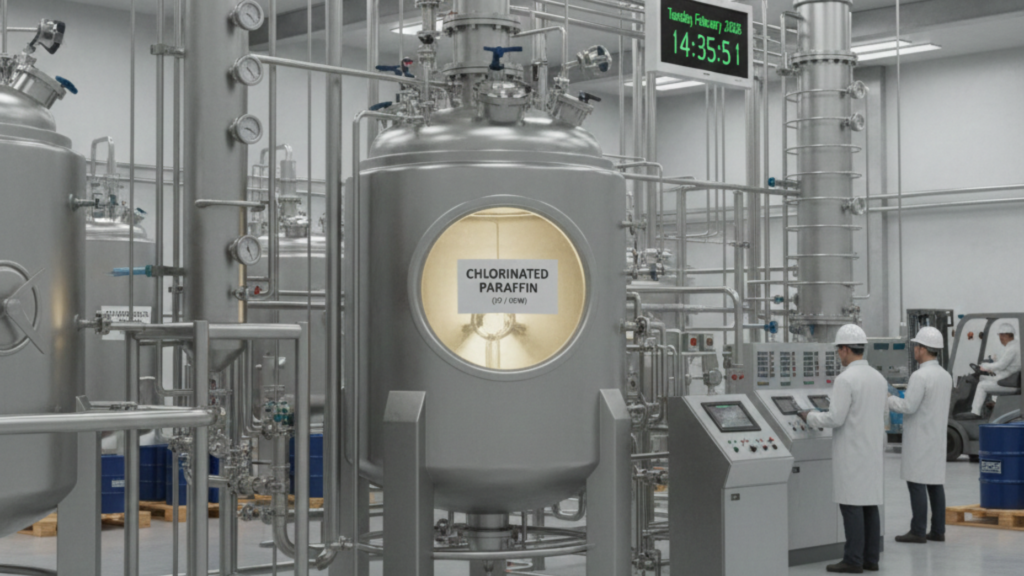
HS Code: 38249900
CAS No.: 63449-39-8
Chemical Formula: Approx. C24H44Cl6
Chlorinated Paraffin (CP), or Chlorinated Paraffin Wax (CPW), is a versatile chemical common in industries as a flame retardant, secondary plasticizer and extreme pressure additive.
Pursuit Industries is a reputable Surat, Gujarat based manufacturer and supplier of CP/CPW, making available to its clients in more than 80 countries.
What is Chlorinated Paraffin?
Chlorinated paraffin is made by chlorinating straight-chain paraffin hydrocarbon.
It comes in the form of a semi-solid or viscous liquid and is classified as either low, medium or high chlorinated paraffins which are compatible with PVC and rubber among other polymers.
Key Properties
- Excellent flame retardant
- High chlorine content
- Plasticizing PVC.
- Water, acid and alkali-resistant.
- Harsh conditions performance.
- Low thermal stability and volatility.
Manufacturing Process by Pursuit Industries
CPW is made by Pursuit Industries of paraffin wax and chlorine under controlled chlorination:
- Melt paraffin wax in a steam-jacketed vessel
- Introduce chlorine gas in a glass-lined chlorinator at 100°C for 18–20 hours
- Packed column HCl in water.
- Mixed additives that are filtered, cooled, and packed in HDPE drums, IBC, Flexitanks and ISO Tanks.
This guarantees a steady quality and content of chlorine to industrial uses.
Applications & Industrial Uses
- PVC & Plastics: Plasticizer in wires, cables, PVC windows, flooring, sheets, footwear
- Rubber: Flame retardant for conveyor belts, V-belts, molded goods
- Paints & Coatings: Fire-retardant paints including swimming pool coatings
- Sealants & Adhesives: Polyurethane & polysulfide-based sealants
- Metalworking Fluids: Extreme pressure additives for cutting and forming fluids
Safety & Toxicity
- Basically not toxic to human beings in an industrial dose.
- Potential for bioaccumulation and aquatic toxicity
- Always refer to MSDS and follow local regulations
Packing Options
- 250/265 kg HDPE Drums
- IBC Totes, Flexitanks, ISO Tanks
Related Products
- Di Butyl Phthalate (DBP)
- Di Octyl Phthalate (DOP)
- Di Octyl Maleate (DOM)
- Di Isononyl Phthalate (DINP)
- Epoxidized Soybean Oil (ESBO)
Why Choose Pursuit Industries?
- Constant chlorine level and quality.
- ISO-compliant manufacturing
- Export-ready packaging
- Serving over 83+ countries with trusted logistics
- Manufacturer and Supplier: Pursuit Industries
FAQ Schema
Q1: Where can I buy high-quality Chlorinated Paraffin (CP/CPW)?
A: Pursuit industries is a reputable manufacturer and supplier of high quality CP/CPW. We are suppliers of bulk consumption of PVC, rubber, paints, adhesives and metalworking fluids in industries.
Q2: Why should I choose Pursuit Industries as my chlorinated paraffin supplier?
A: Pursuit industries guarantee regular chlorine content, ISO certified production, export packaging, and worldwide logistical services. Manufacturers globally use our CP/CPW in order to have credible performance.
Q3: What applications of CP/CPW can I source from Pursuit?
A: You may get chlorinated paraffin to PVC plasticizers, rubber flame retardants, paint additives, sealants, adhesives, and extreme pressure additives to metalworking fluids, directly at Pursuit Industries.
Q4: What packing options are available for industrial purchase?
A: A offers chlorinated paraffin in 250/265 kg HDPE drums, IBC Totes, Flexitanks, and ISO Tanks, which can be used in domestic and export purposes.
Q5: Is it safe to buy and use CP/CPW from Pursuit Industries?
A: Yes. Our products have a full MSDS and are in regulations with safety. In your industrial preparations, our technical group is able to assist you on safe use.
Q6: Can Pursuit Industries supply CP/CPW internationally?
A: Absolutely. Our global network of more than 80 countries allows us to provide chlorinated paraffin all over the world and achieve good logistics and documentation services.
Suggestions
- Link Plasticizers page:
https://en.wikipedia.org/wiki/Plasticizer - Link PVC applications page:
https://en.wikipedia.org/wiki/Polyvinyl_chloride