
What is an agro company? Complete guide — meaning, types, services & 2026 trends in India
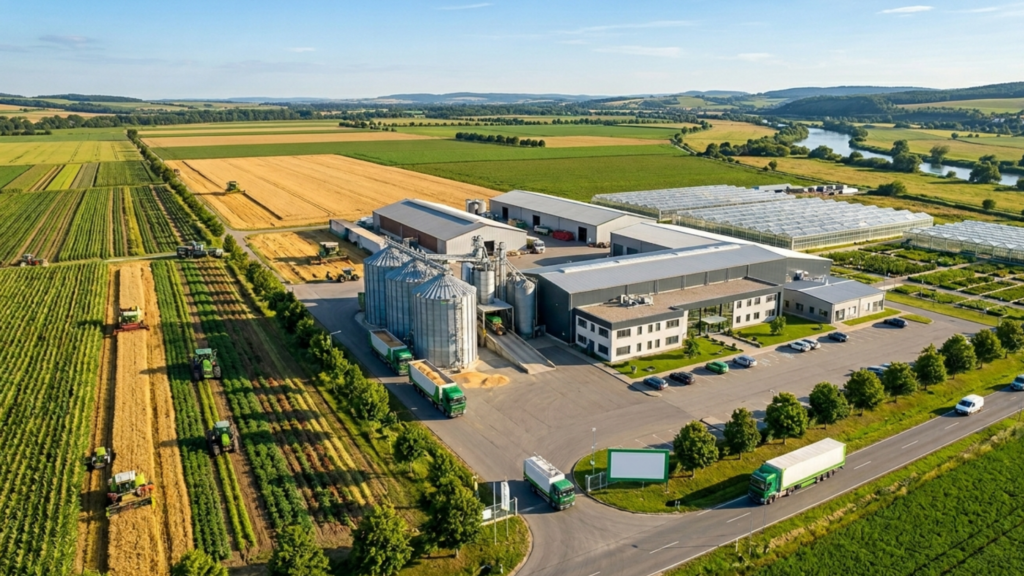
In case you have ever typed an agro company into a search engine, then chances are that you are a farmer seeking a good input, a business person seeking a business partner or an investor seeking information on this booming industry.
Whatever your purpose, this guide will provide you with a clear, candid and current response – seven years of direct work with Indian agricultural enterprises.
Quick Answer: An agro company is any company dealing in the production, processing, distribution or supply of goods and services related to agriculture – seeds and fertilizers to crop technology and farm machinery.
What is an Agro Company?
An agro company or agricultural company or agribusiness is any business directly or indirectly engaged in the agricultural sector, food production, or the supply chains involved.
The term is general – it is used to refer to a small village level seed dealer and also the giant multinational crop protection business like Bayer or Syngenta.
In India, the agro industry forms one of the largest sources of employment with almost 18 per cent of GDP of the nation.
Agro companies are at the centre of closing the gap that exists between farmers and the market- through provision of inputs, technology, credit and buyer access.
In the current dynamic agricultural ecosystem, the source of agro products of high quality is as important as the appropriate input or technology.
Consistency, quality and timely delivery are guaranteed by reliable suppliers and all of them have direct influence on business profitability and supply chain efficiency.
Pursuit Industries is a reputable production and export company that has a wide range of agro commodities to meet the demands of both the domestic and global markets.
The company offers a large variety of agro products such as:
- Spices
- Oil seeds
- Pulses & beans
- Raisins
- Mango pulp
- Fruit jams
- Peanut butter
- Other agro commodities
Besides these, the company also distributes basic agricultural foodstuffs like rice, wheat, onion, garlic, millets and maize- serving bulk purchasers, distributors and international importers.
The major distinction of Pursuit industries is that it has a keen consideration of quality control, global standards and stable supply chains.
All the products are well sourced and subjected to stringent inspection measures to make sure that they are pure, consistent and have a long shelf life.
The company has an obligation to deliver its products on time and at prices that are cost effective, therefore, enabling agro businesses to sustain their operations, even during the most unpredictable market conditions.
The years of industry experience and export experience globally have given Pursuit Industries a reputation of reliability as a business partner with regards to quality agro commodities in large quantities.
Key Statistics at a Glance (2025-2026)
| Rs. 24 Billion+ | India agtech market size by 2025 |
| 3,839 | Active agritech companies in India (Jan 2026) |
| $6.44 Billion | Total funding raised by Indian agtech firms |
| 50% | Indian workforce employed in agriculture |
Why Are Agro Companies Important?
The food security depends on agro companies. In their absence, farmers are unable to get good seeds, modern machines, crop insurance, and good prices. The reason they are important is as follows:
- They enhance productivity in the farms – through delivering the newest seeds, fertilisers and crop protection goods right at their doors, they enable them to produce more using the same land.
- They generate rural employment – both in the field and logistics as well as in processing, agro companies generate millions of rural jobs in India.
- They minimize food waste – businesses such as Ninjacart rely on data and direct supply chains to minimize post-harvest losses, delivering over 1,400 tonnes of fresh goods each day with little spoilage.
- They strengthen the interests of the Indian export objectives – agro companies assist to process and certify produce to the international markets, which assist in the Indian agricultural export industry worth billions of dollars each year.
Types of Agro Companies in India
All agro companies do not do the same thing. The major categories are as follows:
Type 1: Agro Input Companies
These firms provide the basic supplies that farmers require- seeds, fertilizers, pesticides, herbicides and crop protection chemicals.
Rallis India (a Tata company), UPL, and PI Industries are well-known Indian examples. Rallis is the only company with over 80% India coverage by 6,000+ dealers and 70,000+ retailers.
Type 2: Agritech Companies
Technology (AI, IoT, satellite images, data analytics) is applied to enhance agricultural performance by Agritech firms.
Farming apps such as AgroStar, DeHaat, and Farmonaut are available to farmers to receive real-time crop advisories, weather, and market prices. AgroStar has a digital network of over 9 million farmers.
Type 3: Agro Processing Companies
These industries convert raw agricultural products to consumer products- food processing, dairy, poultry, and oil palm industries.
Godrej Agrovet has five verticals; animal feed (its biggest segment at 51% of revenue), crop protection, oil palm, dairy and poultry.
Type 4: Agro Logistics and Supply Chain Companies
These firms specialize in agricultural goods cold chain, warehousing, and transportation.
The country leader in this sector, Arya.ag, has 5,500+ warehouses in 21 states, a total storage capacity of 5 million tonnes which assists farmers and aggregators to prevent losses after the harvest.
Type 5: Agro Finance and Insurance Companies
These offer credit, insurance and financial service to the farming fraternity.
The credit gap that has traditionally restricted the ability to invest in farms across India is being bridged by institutions linked to NABARD, as well as, newer agri-fintech startups.
Top 2026 Trends Shaping the Agro Company Sector
The agricultural industry is changing at a high rate. The following are the biggest trends that will have an impact on the way agro firms will run in 2026, based on the current research on the industry:
Trend 1: AI-Powered Decision Support
By 2026, AI in agriculture has progressed past the concept of backend analytics – it can now speak to farmers directly, interpreting suggestions and defining the further steps in plain language.
Generative AI tools are being used to do crop planning, identify pests, and determine nutrient schedules.
This year, more than 70 percent of Indian agro tech companies are projected to employ AI to make farm decisions.
Trend 2: Precision Farming and Satellite Monitoring
Monitoring with satellites enables agro companies to monitor the health of crops at the field level, identify deficiencies and automatically control irrigation.
This is particularly revolutionary to small and medium sized farms in India that are unable to pay the high prices charged by agronomists.
Trend 3: Agri Robotics and Automation
Autonomous tractors, AI-controlled drones and harvest robots are becoming part of the workflow, as, with a farm labor shortfall of 2.4 million every year, the world has a global workforce shortage that these technologies aim to fill, rather than being a novelty.
This trend is critical for seasonal operations facing acute labor shortages.
Trend 4: Biological Crop Protection (Biologicals)
Farmers are abandoning synthetic chemicals in favor of biological fertilizers, biostimulants and biocontrols.
Agri distributors Market estimates indicate that this segment is growing 10 to 14% annually, and that 86% of agri distributors intend to increase their biological products in 2026.
Trend 5: Carbon Farming and Sustainability
Agro companies have come in to assist farmers to earn more with certified carbon credits.
AI-powered applications can integrate satellite observations, drone and ground sensing, and soil sampling to measure carbon sequestration with precision – transforming sustainable agriculture into a quantifiable enterprise.
Trend 6: Blockchain Traceability
There is a growing demand among consumers and regulators to have transparent supply chains.
Agro businesses are already using blockchain to authenticate the food origin, its cultivation, and compliance with safety and ethics sourcing methods, straight to the business of trust with buyers and exporters.
Key Insight: Mobile app usage by farmers is expected to reach over 95% across major Indian agricultural states by 2026, allowing supply chain to be fully digital.
How to Choose the Right Agro Company
Are you a farmer, investor or business partner, here is what to consider when considering an agro company:
- Track record and field experience — Find companies that have actual on-ground impact. DeHaat, as an example, has already accessed 1.5 million farmers by using a proven system of local agronomist in India.
- Technology integration — Digital solutions, including mobile apps, IoT sensors, or real-time dashboards, should be available in modern agro companies so that you can see what is happening in your operations.
- Regulatory compliance — Determine whether company has all the required licenses with the state agriculture department, and whether their products have been approved by the agencies such as the Central Insecticides Board.
- Farmer reviews and trust signals – Good reviews by farmers, agri dealers and publication in newspapers such as Krishi Jagran or AgriMoney are good indicators of trust.
- Financial stability- In long term relations determine whether the company has had established investors or whether it has been assisted by well established institutions such as NABARD, Omnivore or BIRAC.
Frequently Asked Questions
Q1. What is the difference between an agro company and an agritech company?
An agro firm is a loose term which applies to any agricultural business including the traditional sellers of seed, fertilizer sellers, food processors and so on.
Technology, in particular, AI, IoT, satellite data, or mobile platforms to improve the outcome of farming are of particular interest to Agritech companies.
An agro company is an agrotech company but not all agro companies are agrotech.
Q2. How do agro companies earn money?
Agro companies generate diverse revenues: selling inputs (seeds, fertilizers, pesticides), subscriptions (agronomy advisory services), commissions on deals between farmers and buyers in the markets and processing and packaging food value-added products to the retail markets.
Q3. Which is the largest agro company in India?
One of the agritech startups that have raised the highest funds is Ninjacart with a total amount of $508 million (as of January 2026).
In the case of well-established companies, Godrej Agrovet and Rallis India (Tata Group) are the largest in terms of revenues and national coverage.
This is a yes or no answer depending on the metrics used to measure it; funding, revenue or size of the farmer network.
Q4. Is starting an agro company profitable in India?
Yes, but profitability is very dependent on the segment. The agtech market of India is estimated to be more than 24 billion which is generating true potential.
Input supply margins are thin and success depends on farmer trust and last-mile distribution. SaaS or subscription based agritech platforms are more likely to scale more effectively and will attract investment.
Q5. What services does an agro company provide?
Types of services will vary, but generally they consist of: seed supply, fertilizer supply, pesticide supply; crop advisory and farm management services; post-harvest storage and logistics; agricultural produce processing and packaging; agri-finance and crop insurance; and digital tools that aid in precision farming.
Conclusion
An agro company is a crucial part of the food system in India – not only delivering seeds to a farmer in Rajasthan, but also delivering certified organic foodstuff to overseas consumers.
The most successful agro companies in the future, in 2026, will be those that will integrate a strong farming experience with technology such as AI, satellite data and digital supply chains.
You want to partner with one, invest in one or start your own agro business, your first step is to know this industry well in order to make the right choice.
