
Is Polyurethane Toxic? Safety, Health Risks, and Everything You Should Know
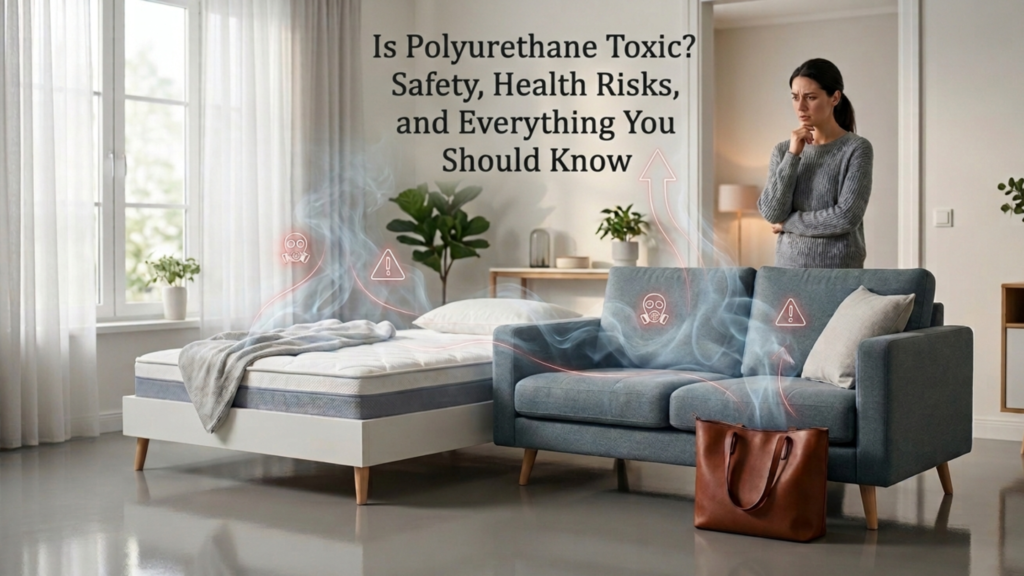
Polyurethane is a common synthetic material that is used frequently in the contemporary industries. It is present in furniture fill, mattresses, cloth, finishes, adhesives, insulation and synthetic leather.
Due to its common usage in daily products, this is a question that many individuals pose; is polyurethane toxic?
The questions of the polyurethane safety usually appear when individuals are able to notice acute smell of new furniture, mattresses or floor paints.
Some also fear that polyurethane foam, coating and fabrics may be damaging to human beings, pets and environment.
The truth is more nuanced. Polyurethane in its purest form may be generally harmless in its fully cured form but the chemicals used in its production or use may be dangerous to human health unless properly maintained.
Here, we will discuss the fact about the toxicity of polyurethane, whether polyurethane foams and mattresses are safe, and what dangers are likely to be encountered when it is exposed.
What Is Polyurethane?
Polyurethane is an artificially produced synthetic polymer and is purchased as a mixture of polyols and isocyanates.
The chemical processes produce long strands of polymers that give rise to materials that have extremely numerous varying properties, including soft foams and hard finishes.
Polyurethane finds application in numerous industries due to its versatility such as:
- Furniture manufacturing
- Mattress and bedding production
- Construction insulation
- Protective coatings and varnishes
- Automotive parts
- Textiles and synthetic leather
- Adhesives and sealants
Polyurethane materials may be divided into four types:
Flexible Polyurethane Foam
Placed on mattresses, cushions, pillows and used in upholstered furniture.
Rigid Polyurethane Foam
Applied in the construction materials, in the refrigeration room and in panels of insulation.
Thermoplastic Polyurethane (TPU)
Visa-plastic a very versatile type of plastic utilized in clothes, medical, electronics and shoes.
Polyurethane Coatings and Finishes
Applied to guard furniture, metal, and in wood floors.
Considering polyurethane is found in a significant proportion of products, many people have been inclined to express doubts about the harmfulness or the safety of polyurethane material that can be used on a day-to-day basis.
Is Polyurethane Toxic to Humans?
One of the most common questions people ask is “is polyurethane toxic to humans?”
This is determined by the level of the material and the exposure.
Uncured Polyurethane Chemicals
Polyurethane contains some of the chemicals used in its manufacture or use including isocyanates which may be harmful when inhaled or when they come in direct contact with the skin.
Breaches of the following chemicals can result in exposure:
- Eye irritation
- Skin irritation
- Breathing difficulties
- Allergic reactions
- Asthma-like symptoms in sensitive individuals
Individuals that deal with polyurethane during production or installation process should use adequate protective measures such as gloves, respirators and protective clothing.
Fully Cured Polyurethane
The full cure and solidification of polyurethane make the polymer structure to be solid. At this point polyurethane is usually said to be non-toxic and can be safely used in the regular consumer goods.
As such, polyurethane items such as furniture, mattress or coating are generally safe upon completion of the curing process.
Is Polyurethane Toxic After It Dries?
Another frequently asked question is “is polyurethane toxic after it dries?”
Polyurethane is a stable polymer network formed as the polyols and isocyanates chemical reaction proceeds to the drying or curing stages.
In this process the reactive chemicals are bound into a solid structure.
After Curing
Once cured, polyurethane usually becomes:
- Chemically stable
- Low in emissions
- Safe for everyday contact
This is the reason why cured polyurethane finds extensive application in household products which include:
- Wood finishes
- Floor coatings
- Furniture foam
- Adhesives
Nevertheless, the length of time of curing depends on the kind of polyurethane.
Typical Curing Times
| Type | Dry Time | Full Cure |
| Water-based polyurethane | 24 hours | 3–7 days |
| Oil-based polyurethane | 24–48 hours | up to 30 days |
There is also the capability of volatile organic compounds (VOC) to be released in minute amounts during the curing process and this is why ventilation is a good practice to promote.
Is Polyurethane Toxic to Skin?
Many people ask “is polyurethane toxic to skin?”
Contact With Uncured Polyurethane
Uncured polyurethane chemicals can cause:
- Skin irritation
- Redness
- Allergic reactions
- Dermatitis
Protective gloves need to be worn by workers who are exposed to polyurethane resin, adhesives, or coatings through skin contacts.
Contact With Cured Polyurethane
After polyurethane has hardened, it is in general safe to touch. Polycured polyurethane products that have been cured like furniture foam, coated surfaces, or synthetic leather hardly develop skin problems.
However, sensitive skin individuals are not uncommon as some of the products may be contaminated by the additives or dyes.
Is Thermoplastic Polyurethane Toxic?
Thermoplastic polyurethane (TPU) is a polyurethane with plastic behaviors which can melt and remelt.
TPU is commonly used in:
- Phone cases
- Footwear
- Medical tubing
- Protective clothing
- Sports equipment
Many people ask “is thermoplastic polyurethane toxic?”
TPU is regarded as non-toxic and safe in most of the applications after its production. Even medical equipment and food-contact products are made using it due to its flexibility and durability.
Just as in case of other polyurethane products; any danger that it causes is mostly associated with exposure during its production and not the finished product.
Is Polyurethane Foam Toxic?
Polyurethane foam is a substance that has extensive application in furniture, bedding and packaging among others.
People are much concerned with the toxicity of polyurethane foam.
Polyurethane Foam Safety
Polyurethane foam per se is not very toxic in the finished products, however, some circumstances influence its safety:
- Flame retardants added during production
- VOC emissions in new foam
- Dust particles from damaged foam
Foam can also emit small quantities of gases during the initial stages when it is new, this process is referred to as off-gassing.
How Toxic Is Polyurethane Foam?
Polyurethane foam is toxic upon the type of foam and the additives.
Fire safety requirements would have flame retardant chemicals in some foams. These substances can also be associated with indoor air pollution when they are applied in multi-volumes.
Nevertheless, the majority of contemporary foam products are being developed to address the rigorous safety and emission laws.
Overall, polyurethane foam is said to be safe in the daily use, however, there are sensitive people who are likely to be affected by odors in new products with mild cases.
Is Polyurethane Foam Mattress Toxic?
Among the most used sources of polyurethane foam in households are mattresses. Such makes many consumers pose the question is polyurethane foam mattress toxic?
The polyurethane foam, memory foam, or viscoelastic foam layers are used in most of the modern mattresses.
Possible Concerns
Some people worry about:
- VOC emissions from new mattresses
- Flame retardants in foam
- Chemical sensitivity
What Research Shows
Most studies claim that polyurethane foam mattresses release chemicals at low levels when they are no longer off-gassing, or after the initial off-gassing is done.
Odors can be reduced by letting a new mattress air overnight, between 24 and 72 hours.
Is Polyurethane Memory Foam Toxic?
Viscoelastic polyurethane foam is what is technically referred to as memory foam. It is normally used in cushions, pillows and mattresses.
People often ask:
- is polyurethane memory foam toxic
- is viscoelastic polyurethane foam toxic
Memory foam can emit very low levels of VOCs when new, but such emissions almost always decline rapidly.
Majority of the current memory foams are produced based on the low emission standards and therefore they are safe to use on a daily basis.
Is Polyurethane Toxic in Furniture and Pillows?
Polyurethane foam is widely used in:
- sofas
- chairs
- cushions
- pillows
Polyurethane foam in furniture is a subject of a lot of questions, as many wonder whether it is toxic.
Polyurethane foam furniture is regarded as safe in the majority of cases. The foam is also wrapped in fabric or upholstery which minimizes exposure.
But when foam degrades or decomposes it may give out foam dust, this must be prevented.
Safety can be maintained by replacing damaged cushions or pillows.
Is Polyurethane Toxic in Clothing and Fabric?
Polyurethane is also used as a finish or overlay in the garments to make them waterproof or hardy.
Examples include:
- rain jackets
- sportswear
- artificial leather clothing
- waterproof bags
People often ask “is polyurethane clothing toxic?”
Polyurethane fabrics when coated can be considered safe to contact skin after being produced. Its material is durable and cannot easily shed poisonous chemicals in the course of everyday use.
Is Polyurethane Leather Toxic?
Polyurethane leather (also known as PU leather or faux leather) is used as furniture, shoes, bags, and clothing.
Polyurethane leather compared to the PVC one is regarded to be more environmentally-friendly and safer.
Manufactured products of finished PU leathers are normally non-toxic and can be used daily.
Is Polyurethane Coating or Paint Toxic?
Polyurethane coatings are widely used for:
- wood furniture
- hardwood floors
- cabinets
- metal surfaces
A lot of house owners are asking questions on whether polyurethane finish or varnish is toxic.
During Application
In the application of polyurethane coating particularly oil-based polyurethane, vapors can have VOCs that can cause:
- headaches
- dizziness
- respiratory irritation
After Curing
Polyurethane coats are quite harmless and permanent after complete drying.
Polyurethane coatings in water are generally low in VOC, and hence they are least harmful to apply to a house.
Is Polyurethane Spray Foam Toxic?
Spray polyurethane foam is commonly known as an insulator of buildings.
When installing, there are vapors that are released by chemicals, which can be irritating to the eyes, skin, and lung.
For this reason:
- installers wear protective equipment
- buildings are ventilated
- occupants avoid the area during application
After curing, spray foam insulation is usually safe and inert.
Is Polyurethane Toxic If Ingested?
Polyurethane materials are not edible. When ingested, they can be a cause of:
- choking hazards
- digestive irritation
Polyurethane foam or plastic in small bits may pose danger when consumed by children or pets.
In case of ingestion, the medical attention should be sought.
Is Polyurethane Toxic to Pets and Animals?
Pet owners often ask:
- is polyurethane toxic to dogs
- is polyurethane toxic to cats
- is polyurethane foam toxic to dogs
Polyurethane in itself is not very toxic but should pets chewing foam or furniture until they ingest little pieces which may cause digestive obstruction.
It is advisable to store the damaged foam products in places where pets cannot reach.
Is Polyurethane Smell Toxic?
The new polyurethane products have unwanted smell.
This odor is normally caused by volatile organic compounds (VOCs) emitted during the curing process.
Also, these odors are normally low but the levels are also short term.
Reduction of the smell is achievable through ventilation of the rooms and allowing the products to dry air.
Is Water-Based Polyurethane Toxic?
The manufacturing of water-based polyurethane products is done in a manner that reduces VOC as compared to the oil-based products.
Advantages include:
- lower odor
- faster drying
- reduced emissions
Due to this fact, outdoor polyurethane which is based on water is usually believed to be safer to use indoors.
How Long Is Polyurethane Toxic?
Polyurethane is most likely to be other products that emit emissions during application and curing.
Common off-gassing times are:
- 24–48 hours for most coatings
- several days for some foam products
- Some oil-based finishes require up to the few weeks.
Polyurethane is safe and chemically stable after this period of time has passed.
Safety Tips When Using Polyurethane Products
To minimize the potential risks of the work with polyurethane:
- Use proper ventilation
- Wear gloves and protective equipment
- Avoid inhaling fumes during application
- Allow sufficient curing time
- Follow manufacturer safety guidelines
These measures greatly decrease the contact with the potentially dangerous chemicals.
Is Polyurethane Non-Toxic?
Polyurethane in its purest cured form is not regarded as very toxic. The majority of the polyurethane products that are utilized in homes, furniture, mattresses, and clothes are safe to be used on a daily basis.
Nevertheless, health impacts or irritation may take place when exposed to uncured polyurethane chemicals or vapors during application.
Polyurethane products are harmless and can be used extensively with the right manufacturing standards, and ventilation.
Conclusion
So, is polyurethane toxic?
The solution will be based on the material state.
- Polyurethane chemicals can be uncured and cause irritation and health hazards when used or produced.
- Fully cured polyurethane that is used in most consumer products is usually considered safe and stable.
Polyurethane remains very popular in the industries due to its flexibility, durability and versatility.
Polyurethane products are not hazardous when used wisely and with ample time to heal when used in the majority of daily applications.