
What Is PU Material? A Complete Guide to Polyurethane (PU)
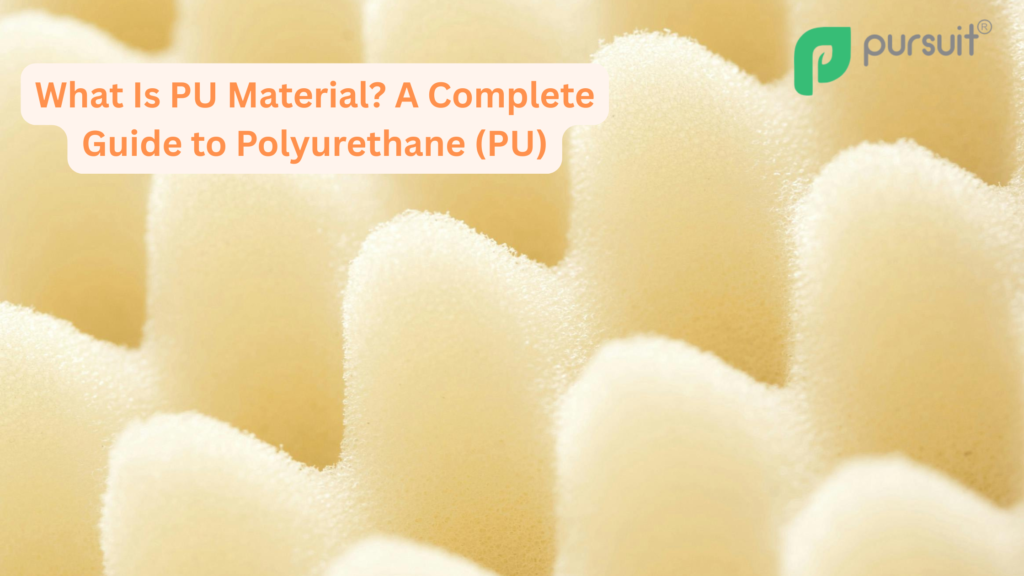
PU material is a synthetic polymer that is formed by combining a polyol with a diisocyanate to create a flexible or rigid plastic-like material.
Depending on the formulation, PU can have various properties — it can be a foam, a coating, an adhesive, or even a leather-like fabric — that’s why it’s used in shoes, bags, furniture, mattresses, car interiors and for industrial adhesives.
This guide explores the nature of PU material, its various forms, how it is different from real leather and PVC and where it is produced on an industrial scale.
What Is PU Material Made Of?
PU material is made by combining two core chemical components:
- Polyol — a chemical compound rich in hydroxyl (-OH) groups, available as standard polyols, polyester polyols, or blended polyols depending on the desired flexibility, density, and durability.
- Diisocyanate — the reactive component that bonds with the polyol to form polymer chains.
When mixed under controlled conditions, these react to form polyurethane — and additives (colorants, stabilizers, flame retardants) are blended in depending on the end application.
What Is PU Leather Material?
PU leather — also called “faux leather” or “synthetic leather” — is fabric (usually polyester or cotton) coated with a layer of polyurethane and embossed to mimic the texture and grain of genuine leather.
It’s the most popular explanation for people looking for “PU material” as it’s featured in fashion and furniture items.
How PU leather is made:
A woven or knit fabric base is coated with a polyurethane layer, then textured with heat and pressure to replicate a leather-like grain — giving it a similar look and feel at a lower cost and with more consistent quality control than natural hides.
What Is PU Material in Shoes?
In footwear, PU material usually appears in two forms:
- PU leather uppers — a synthetic alternative to leather, used for the visible outer part of the shoe.
- PU foam soles – lightweight, cushioned polyurethane foam in midsoles and insoles to absorb shock and provide comfort.
PU-soled shoes are popular because polyurethane foam is lighter and more flexible than rubber, while still offering good durability and slip resistance for everyday and industrial footwear.
What Is PU Material in Bags, Wallets, and Belts?
For bags, wallets, and belts, PU material refers to PU leather — a coated synthetic fabric used as a leather substitute. It’s widely used because it’s:
- Lighter than genuine leather
- More water-resistant out of the box
- More consistent in color, texture, and thickness across a production batch
- Lower cost per unit at scale
This makes it a practical choice for mass-produced accessories where uniform quality across thousands of units matters more than the natural variation of genuine leather.
What Is PU Material in Furniture and Sandals?
- Furniture: PU is used as a leather-like upholstery covering (PU leather sofas/chairs) and as the cushioning foam within seating — PU foam is the soft material in sofas, mattresses and car seats, providing support and recovery.
- Sandals/Footwear sole: PU foam soles are commonly used in sandals and footwear such as casual shoe, industrial shoe for its light weight and cushioning.
PU Material vs Leather: What’s the Difference?
| Factor | PU Material (Synthetic) | Genuine Leather |
|---|---|---|
| Source | Manufactured polymer coating on fabric | Natural animal hide |
| Cost | Lower | Higher |
| Consistency | Uniform texture, color, and thickness | Natural variation between hides |
| Water resistance | Higher (inherent to the coating) | Lower (needs treatment) |
| Breathability | Lower | Higher |
| Durability over time | Can crack/peel after extended wear | Ages and develops patina, generally longer-lasting if maintained |
| Maintenance | Wipe-clean, low maintenance | Requires conditioning |
Neither is strictly “better” — the right choice depends on the application, budget, and durability requirements.
Is PU Material the Same as PVC?
No — although both are synthetic leather substitutes, they have very different characteristics and make.
| Factor | PU Material | PVC (Vinyl) |
|---|---|---|
| Base | Polyurethane coating | Polyvinyl chloride coating |
| Feel | Softer, more flexible, closer to real leather | Stiffer, more plastic-like |
| Breathability | Better | Poor |
| Eco-impact | Generally lower environmental concern than PVC | Contains chlorine; harder to recycle |
Is PU Material Durable and Safe?
Depending on quality and finish, PU material can last 2-5 years with regular use, but lower grades of PU coatings may crack or peel in heat or sunlight.
Polyurethane is non-toxic in the final products for consumer use but isocyanates used in manufacture should be handled with care, and that is why industrial systems for PU production are manufactured in regulated manufacturing facilities and not in informal facilities.
Industrial & Manufacturing Applications of PU Material
Beyond consumer goods, polyurethane is a major industrial material used in:
- Rigid and flexible foams — insulation panels, packaging, mattresses
- Polyurethane adhesives — strong bonding solutions for construction, automotive, and furniture assembly
- Coatings — protective and decorative surface finishes
- Blended and polyester polyols — the base chemical inputs that determine the foam’s density, flexibility, and performance characteristics
Industrial buyers sourcing PU material at scale typically work directly with polyurethane systems manufacturers rather than finished-goods suppliers, since formulation (polyol type, density, curing time) needs to be customized to the end application — whether that’s furniture foam, insulation, or adhesive bonding strength.
At Pursuit Industries, we manufacture blended polyols, polyester polyols, and polyurethane adhesives at a 48,000 MT annual capacity, supplying industrial buyers across 86+ countries.
If you’re sourcing PU raw materials for manufacturing — not finished PU leather goods — explore our polyurethane systems and adhesive solutions (link: https://pursuitind.com/polyurethane/).
Frequently Asked Questions
What does PU material mean?
PU material means polyurethane — a synthetic polymer formed from a polyol and a diisocyanate, used in forms ranging from foam to coated synthetic leather.
Is PU material waterproof?
The water-resistance of pu coated material will be high due to the presence of polyurethane coating, but the material will not be waterproof unless treated or laminated with a waterproofing agent.
Is PU material good or bad for the environment?
While not as toxic as PVC, the use of PU material is generally regarded as less environmentally harmful, as it does not contain chlorine, and it is not biodegradable like PVC.
Can PU material be recycled?
While there are PU products that can be mechanically recycled or reused, more commonly, chemical recycling of PU is not widespread and is not yet common on the consumer scale.
What is the difference between PU and bonded leather?
There is the PU leather and the bonded leather. PU leather is a fabric treated with polyurethane and bonded leather is leather shredded into pieces, bonded with a coating of polyurethane or latex — genuine leather fibers are present in bonded leather, but not in the PU leather.
Who manufactures polyurethane chemicals for industrial use?
Polyurethane chemicals — including blended polyols, polyester polyols, and PU adhesives — are manufactured by specialized chemical producers.
Pursuit Industries Pvt Ltd, a Government-recognized 2 Star Export House based in Surat, Gujarat, manufactures and exports these to 86+ countries.
Sources
1. Polyurethane chemistry & industry overview
To support the explanation of PU material’s chemistry and global applications, reference the American Chemistry Council’s Center for the Polyurethanes Industry:
https://www.americanchemistry.com/industry-groups/center-for-the-polyurethanes-industry-cpi/about-our-industry
2. Isocyanate safety in PU manufacturing
For the durability/safety section discussing industrial handling of isocyanates in PU manufacturing, reference OSHA’s official isocyanates safety page:
https://www.osha.gov/isocyanates
3. PVC environmental impact (chlorine content & recycling challenges)
For the “PU vs PVC” comparison table’s environmental-impact claim, reference ECHA’s regulatory substance record for PVC:
https://echa.europa.eu/substance-information/-/substanceinfo/100.003.829
