
FIBC Jumbo Bag Manufacturer: Complete Guide to Finding the Right Supplier in 2026
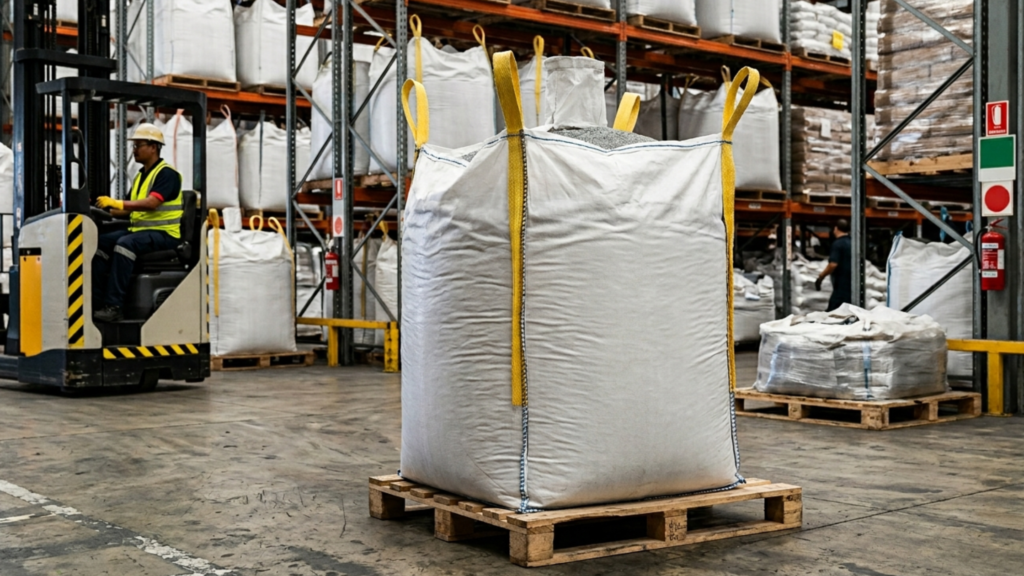
If you are looking for a dependable FIBC jumbo bag manufacturer, then yep you are in the right place.
FIBC bags, I mean Flexible Intermediate Bulk Containers , sometimes also called bulk bags, super sacks, or jumbo bags — get used across agriculture, chemicals, construction, food processing, and pharmaceuticals too, for storing and transporting bulk materials in a safe way.
Picking the right maker is not some small thing, it really affects product safety, the whole regulatory compliance side, and even how smoothly your supply chain runs.
In this guide you’ll get the full picture, like how to find and properly vet suppliers, which certifications actually matter, what materials are used, and roughly which lead times to expect.
How to Find a Reliable FIBC Jumbo Bag Manufacturer
Now, finding a trustworthy FIBC jumbo bags manufacturer is more than just doing a quick online search. Here is a step by step approach that tends to work, even when the market is messy.
Check Industry Directories and B2B Platforms
The most reliable places to begin sourcing verified manufacturers are , kinda like:
- Alibaba and IndiaMART — check for Gold Supplier badges and those verified buyer reviews
- TradeIndia — often a really good fit for India-based FIBC manufacturers
- ThomasNet — well suited for North America suppliers
- EFIBCA (European FIBC Association) — keeps a directory with certified European members
- FIBCA (Flexible Intermediate Bulk Container Association) — global member directory, for more reach
Key Factors to Vet Any FIBC Manufacturer
After that, if you are shortlisting a fibc jumbo bag manufacturing company, you should weigh these five things quite carefully, not just a quick look:
- Industry experience — aim for at least five or more years involved in FIBC production
- Production capacity — it needs to match your order volume and your minimum order quantity
- In-house testing laboratory — this is essential, for stable quality control results
- Export track record — it matters a lot if your shipments will go international
- Customer references — always ask for existing client contacts and then follow up, no skipping this
Request a Factory Audit or Virtual Tour
Before you finalize any supplier, ask for a factory audit— either physical or virtual, doesn’t really matter.
You want to see, kind of firsthand, how the production line is set up , how worker safety is handled, what the storage conditions look like, and how quality control is done in practice.
Place a Sample Order First
Also don’t lock in a bulk order before you evaluate samples. When the samples arrive, take a close look at:
- Stitching quality , and the fabric density
- Documentation for load-bearing results
- UV stabilization , especially if it will sit outdoors or in sun-exposed storage
- Print accuracy and color uniformity, if custom branding is part of the deal
Clarify Contract Terms in Writing
And make sure everything is in writing before production starts: delivery timelines, defect replacement rules, penalty clauses, and payment milestones.
What Certifications Should a FIBC Jumbo Bag Manufacturer Have?
Certifications are one of the most objective proofs of a manufacturer’s quality standards and their regulatory compliance.
The Most Common Quality Certifications for FIBC Jumbo Bags
| Certification | What It Covers | Who Needs It |
|---|---|---|
| ISO 9001:2015 | Quality Management System | All industries |
| ISO 22000 | Food Safety Management | Food-grade FIBC bags |
| BRC/IOP Packaging Standard | Packaging safety for food contact | Food and pharma sectors |
| UN Certification (UN 13H3) | Hazardous material transport | Chemicals, dangerous goods |
| REACH Compliance | Chemical safety for EU markets | European exports |
| OEKO-TEX Standard 100 | Free from harmful substances | Textile and food contact |
| ISO 21898 | FIBC-specific design, testing, marking | All FIBC applications |
Certifications Required for Food-Grade and Pharmaceutical FIBC Bags
If your application touches food products, nutraceuticals or pharmaceutical materials, your manufacturer usually has to hold some specific stuff, basically certs and proofs.
- For the US market , FDA Compliance is mandatory.
- For Europe , EU Food Contact Regulation (EC 1935/2004) is required especially for food packaging.
- And for pharmaceutical-grade bags, GMP (Good Manufacturing Practices) is the usual standard.
- In the broader food supply world , the BRC Global Standard for Packaging is internationally recognized.
Important: Also, make sure certifications are still current and really valid. Don’t just ask for a scan that looks recent, always request the latest certificate copies and then cross-check them on the issuing body ’s official website, not from a forwarding email.
International Standards — ISO and UN Certifications Explained
- Now for FIBC bags specifically, ISO 21898 is the international standard made specifically for them, it covers design requirements, testing procedures and the required marking.
- UN 13H3 is the global standard used when FIBCs are meant to transport hazardous dry materials internationally.
- ASTM D6049 is another one, it covers mechanical performance testing for FIBC bags, and it matters a lot for the US market.
How Certifications Affect Cost and Lead Time
Certified FIBC bags typically cost 10 to 25 percent more than uncertified alternatives.
However, they reduce the risk of regulatory penalties, accelerate customs clearance, and build long-term buyer trust.
For certified batches, add two to four weeks to your standard lead time due to mandatory pre-shipment testing and documentation.
To find a list of certified manufacturers , look through the EFIBCA or FIBCA member directories, or ask your shortlisted suppliers to share their certification documentation directly.
What Are the Common Materials Used by FIBC Jumbo Bag Manufacturers?
Material selection kind of directly decides a bag’s strength, its safety profile, and whether it fits the job, or rather specific applications.
Primary Types of Fabric Used in FIBC Jumbo Bags
1. Woven Polypropylene (PP) Fabric — the industry standard
- You get high tensile strength and, honestly, excellent load carrying ability
- It’s naturally moisture resistant
- It stays lightweight but still handles roughly 500 kg up to 2,000+ kg loads without much fuss
- There are UV-stabilized versions, so outdoor storage , sun exposure , all that is covered
2. Circular Woven PP Fabric — seamless construction
- No vertical seams. Meaning these usual weak points are removed
- The load is spread in a fairly even way across the whole bag body
- It tends to be chosen for premium heavy duty use cases
3. Cross-Corner Baffle Fabric — specialized design
- Also it holds a square form when it’s filled, which makes stacking easier , and more efficient
- Less product waste too, and reduced spillage chances
- It’s commonly used in warehousing and intermodal transport, in general
How Material Choice Affects Strength and Durability
| Property | Polypropylene (PP) | Jute | HDPE |
|---|---|---|---|
| Tensile Strength | Very High | Medium | High |
| Moisture Resistance | Excellent | Poor | Good |
| UV Resistance | Good (when treated) | Poor | Moderate |
| Food Safety Compliance | Yes (virgin grade only) | Limited | Yes |
| Cost | Low to Medium | Medium | Medium |
| Recyclability | High | High | High |
Why Polypropylene Is the Industry Standard
Polypropylene stays the dominant material for FIBC production for a pretty straightforward reason.
It brings the best mix of strength and weight, plus chemical resistance, and cost efficiency.
Virgin PP FIBC bags are food-safe , fully recyclable, and they work with most dry bulk materials.
When they’re UV-stabilized, they perform in outdoor and sun exposed settings quite reliably.
Material Requirements for Food-Grade and Pharmaceutical Applications
- Virgin PP only—, and recycled polypropylene is not allowed for food contact situations
- Anti-static lining or coating — this is mandatory for flammable powders, and for some certain chemical products
- Polyethylene , PE inner liner — needed for moisture sensitive materials like sugar, salt, or pharmaceutical powders
- Food-safe, non toxic inks — FDA-approved inks must be used for any printing on food-contact bags
Can FIBC Bags Be Made from Recycled Materials?
Yes, but only when it’s non-food and non-pharmaceutical usage. FIBC bags made from recycled PP are usually
- About 15 to 30 percent cheaper than virgin PP equivalents
- A bit lower tensile strength than virgin variants
- Not permitted for direct food contact
- Increasing in demand with firms that have sustainability goals and ESG commitments, you know how it goes
Why Do Lead Times Vary Between FIBC Jumbo Bag Manufacturers?
Lead times can kinda range from two weeks to twelve weeks, depending on a bunch of things that stack up on each other.
Key Factors That Drive Lead Time Variation
- Order quantity — if you go with smaller orders, like 500 bags, they usually ship in two to three weeks. But for bulk quantities around 50,000+ bags, it can stretch to eight to twelve weeks, no big surprise.
- Customization level — plain standard bags move faster. However, custom printing, lamination, or special closures add extra time, sometimes quite noticeably
- Raw material availability — PP granule pricing and supply tends to shift seasonally, so production scheduling gets nudged around accordingly
- Certification requirements — specially certified production batches need pre-shipment testing, plus third party inspection too, which adds days
- Export documentation — international shipments also require extra testing reports, packing declarations, and customs paperwork that has to be complete before anything can roll
- Factory capacity — peak seasons (harvest periods or year end) can create production backlogs, so even ready material may sit longer
- Shipping transit time — sea freight from India to Europe or the US typically adds 25 to 40 days on top of production time
Typical Lead Time Reference Table
| Order Type | Estimated Lead Time |
|---|---|
| Standard in-stock bags | 1–2 weeks |
| Custom printed, small order | 3–4 weeks |
| Custom design, bulk order | 6–8 weeks |
| Certified (food/pharma grade) bags | 8–12 weeks |
| First international order (India to US/EU) | 10–16 weeks total |
Why Choose a FIBC Jumbo Bags Manufacturer in India?
India is one of the worlds largest hubs for FIBC jumbo bag manufacturing, and honestly for good reason
- Cost advantage — India based manufacturers often price 30 to 50 percent lower than European or North American alternatives
- High production capacity — they can manage very large volume orders, without collapsing
- Export experience — exports are regular to the US, EU, Australia, Middle East, and Southeast Asia, so the workflow is more established
- International certifications — ISO, BRC, REACH, and FDA-compliant manufacturers are widely available
- Key manufacturing hubs — Ahmedabad, Surat, Kolkata, Hyderabad, and Mumbai
Typical minimum order quantities (MOQ) from Indian manufacturers range from 1,000 to 5,000 bags depending on customization requirements.
FAQ — Common Questions About FIBC Jumbo Bag Manufacturers
How Do I Verify the Quality Certifications of an FIBC Bag Supplier?
Ask the manufacturer for the original certificate paperwork, like the actual docs in full, then check verify them straight on the issuing organization official site.
For ISO certifications, go through the IAF CertSearch database. For BRC, use the BRC Directory.
And make sure you always confirm the certificate status is current, as in not expired, and that it really matches the specific product scope you need.
Are There Specific Certifications Required for Food-Grade FIBC Bags?
Also, for food-grade FIBC bags you typically need proof such as ISO 22000 , BRC Global Standard for Packaging , plus FDA compliance if you’re selling into the US.
For the European side, you should confirm EU Food Contact compliance like EC 1935/2004. The bags should be built only from virgin polypropylene, and use food-safe inks and liners, not recyclate blends or anything similar.
What Is the Safe Working Load (SWL) of a Standard FIBC Bag?
Standard FIBC bags are rated from 500 kg to 2,000 kg safe working load. The standard safety factor is 5:1 or 6:1, meaning a bag with a 1,000 kg SWL is tested to withstand 5,000 to 6,000 kg before failure.
What Is the Typical Minimum Order Quantity for FIBC Bags?
Most manufacturers have a minimum order quantity of 500 to 2,000 bags for standard plain designs. Custom printed or specialized bags typically require a higher MOQ of 2,000 to 5,000 bags.
Can FIBC Bags Be Reused?
Yes. Type A, B, C, and D FIBC bags are designed for multiple uses provided they show no physical damage such as tears, broken seams, or weakened fabric.
However, for food-grade and pharmaceutical applications, single-use is strongly recommended to eliminate the risk of cross-contamination.
How Long Does It Take to Import FIBC Bags from India?
The timeline usually blends several parts. First there’s production lead time (about three to eight weeks). Then sea freight transit, roughly 25 to 40 days to Europe or the US.
After that, customs clearance can add three to seven business days. If it’s your first order, a practical plan is eight to sixteen weeks from order confirmation to delivery.
When Are Anti-Static FIBC Bags Required?
Anti-static bags are required when handling flammable powders, materials that create combustible dust, or anything that’s sensitive to electrostatic discharge.
Industry practice says Type C bags are conductive, with grounding cables, while Type D bags are static-dissipative and don’t need grounding.
Conclusion — Choosing the Right FIBC Jumbo Bag Manufacturer
Picking the right FIBC jumbo bag manufacturer isn’t only about grabbing the cheapest number.
It is more like, you need to check certifications, confirm the fabric or material fits your actual product, set up believable lead times, and then honestly evaluate whether the maker has real production ability plus solid quality systems.
India actually hosts quite a few world class FIBC jumbo bag manufacturing companies, and many of them supply global customers while meeting the full compliance expectations of international standards.
If you run the search properly, and keep your needs clear, you’ll usually end up with a supplier that can keep quality steady, ship on time consistently, and give you long term value not just short term promises.
Ready to find your ideal FIBC supplier? Use the checklist above, request samples, and always verify certifications before placing your first bulk order.
