
Industrial Bags and Sacks: Types, Uses & How to Choose the Right One (2026 Guide)
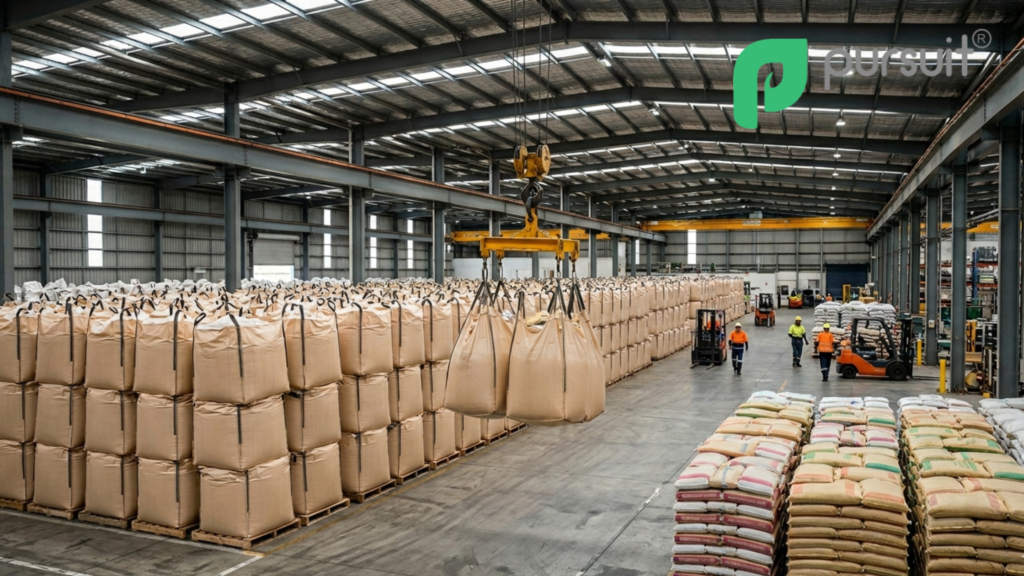
Heavy duty bags and sacks are used for bulk goods packaging like chemicals, agro goods, minerals, construction goods, and so on, storage, transport and protection.
They come in various sizes from large 1 ton FIBC (jumbo) bags to smaller woven and paper bags and the best one to use will depend on the material being placed, the weight of the load and the method of transportation.
This guide explains the key types, materials and selection factors to consider, allowing you to select the right industrial bag for your product before you order.
What Are Industrial Bags and Sacks?
Flexible or semi-rigid packages for bulk storage and transportation of dry, granular or powdered materials.
Unlike retail packaging, they’re designed to be strong, stackable and forklift, crane or conveyor handling — and are the choice of packaging for chemicals, agriculture, construction and minerals industries.
What Are the Main Types of Industrial Bags and Sacks?
There are 5 common types available, each for a variety of load sizes and materials.
1. FIBC Bags (Jumbo Bags / Bulk Bags) Large bags with capacity of 500kg to 2000kg commonly known as Jumbo Bags / Bulk Bags, are woven polypropylene bags.
For bulk chemicals, agro commodities, minerals and powders. Rated for Type A, B, C and D static discharge requirements for handling flammable or combustible materials.
2. Woven PP Sacks Smaller bags (25-50kg) made of woven PP fabric which is usually laminated to make it moisture-proof. Typical feed for animal feed, grain, cement and fertilizers.
3. Multi-Wall Paper Sacks Layered kraft paper sacks with breathability or regulatory packaging requirements for food grade products, chemicals, cement.
4. Valve Bags Sacks with pressure loading, not open top, and self closing valve opening. Typical application is fine powders, such as cement, plaster or industrial chemicals where dust control is important.
5. Liner Bags Inner liners, frequently polyethylene, are fitted inside the FIBC or container to give moisture or contamination protection – particularly for hygroscopic and food products.
What Materials Are Industrial Bags and Sacks Made From?
Most industrial bags are made from woven polypropylene (PP), chosen for its strength, tear resistance, and low cost. Variants include:
- Laminated PP — Provides Moisture barrier, Materials with hygroscopic properties or weather sensitive materials.
- A woven material that is BOPP laminated (when high quality printing is required on the outside of the bag)
- Laminated PP — Provides Moisture barrier, Materials with hygroscopic properties or weather sensitive materials.
- Polyethylene (PE) liners — used inside FIBCs for moisture or contamination control
How Do You Choose the Right Industrial Bag for Your Material?
There are 3 determining factors in selecting a right bag: load weight, material hazard class and handling method.
| Bag Type | Typical Load | Best For | Static Protection |
|---|---|---|---|
| FIBC Type A | 500–2,000 kg | General dry bulk, non-hazardous | None |
| FIBC Type B | 500–2,000 kg | Combustible dust, controlled environments | Limited |
| FIBC Type C | 500–2,000 kg | Flammable powders, near ignition sources | Conductive (must be grounded) |
| FIBC Type D | 500–2,000 kg | Highest-risk hazardous materials | Fully static-dissipative |
| Woven PP Sack | 25–50 kg | Cement, fertilizer, grains | N/A |
| Valve Bag | 25–50 kg | Fine powders (cement, chemicals) | N/A |
Remember, the rule of thumb is that if you are shipping over 500 kg per unit load and you want to reduce handling, you should choose an FIBC.
For smaller amounts that are sold in retail shops, woven sacks or valve sacks are more convenient for packing.
What Industries Use Industrial Bags and Sacks?
- Chemicals & Pharmaceuticals — bulk powders, intermediates, and active ingredients where contamination control and static-dissipative packaging is required in some instances
- Agro Commodities — grains, seeds, animal feed and fertilizers, primarily needing moisture resistant liners.
- Construction Materials — cement, bitumen and aggregates (usually packed in valve bags or FIBCs)
- Minerals & Industrial Powders — Sand and minerals, processed powder for export, bulk handling sand and minerals.
What Should You Look for in an Industrial Bags and Sacks Supplier?
When considering a supplier, particularly for an export order, check for:
- Export experience and certifications — Export House status is a sign of export experience;
- Customization options — liner type, UV stabilization, printing, and loop/discharge spout configurations
- Quality testing — tensile strength, safe working load (SWL), and static-control compliance for hazardous materials
- Manufacturing capacity — the capacity to process mass or repeat export volumes in a timely way
Frequently Asked Questions
What is the difference between FIBC bags and woven sacks?
FIBC bags handle bulk loads of 500 kg or more and are used with forklifts or cranes, while woven sacks typically hold 25–50 kg and are handled manually.
FIBCs are suited to industrial bulk transport; woven sacks are better for retail-adjacent or smaller-batch packaging.
Are there any hazardous or flammable materials that can be used in industrial bags?
Yes, but it must have the proper static-protection rating.
Type C and Type D FIBC bags are used for flammable powders and should be grounded or must be static-dissipative, otherwise it is a safety hazard if used for hazardous material.
How long does it take for export orders for industrial bags?
Established exporters that have a specific manufacturing capacity can usually guarantee specific production and shipment periods for regular bulk orders, depending on the volume of orders and the level of customisation.
Is there any food grade industrial bag available?
Yes — industrial bags used for food products are lined and fabricated to different standards than industrial bags used for the chemical or construction industry where hygiene and contamination control are not considered.
Which countries can industrial bags and sacks be exported to?
Export House manufacturers are normally established manufacturers that export to various countries worldwide; for instance, Pursuit Industries now exports to 86+ countries in six continents.
Source:
ISO 21898:2024 — international standard for FIBCs (non-dangerous goods): https://www.iso.org/standard/83014.html
IEC 61340-4-4:2018 — official electrostatic classification standard for FIBCs: https://webstore.iec.ch/en/publication/30443
Bureau of Indian Standards (BIS) — National Standards Body of India:
https://www.bis.gov.in/?lang=en
