
What Is Polypropylene (PP)? Properties, Uses, Safety & Complete Material Guide
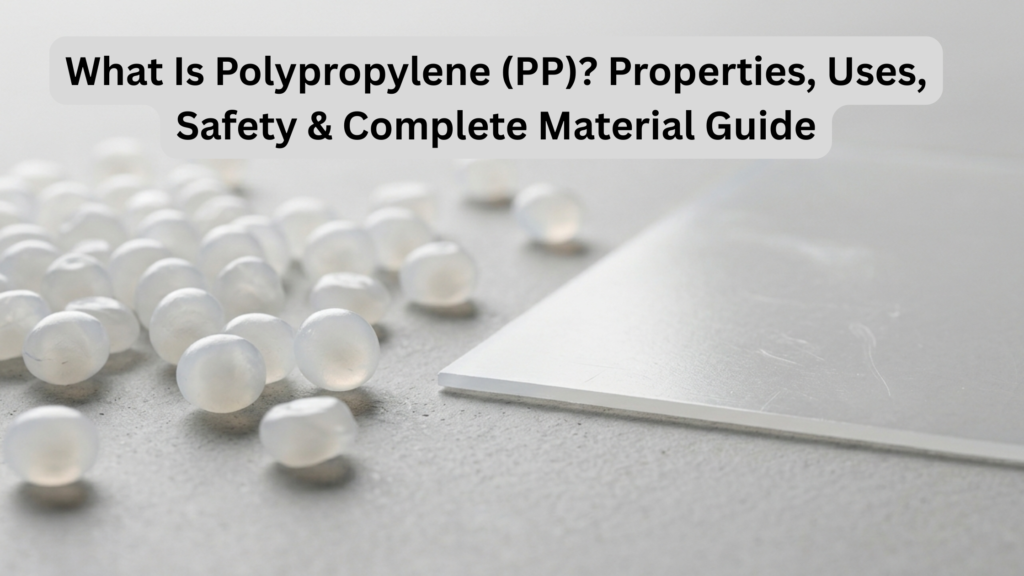
Have you ever noticed the letters “PP” or the number 5 inside the recycling symbol on a plastic container? PP stands for polypropylene, a versatile thermoplastic used in packaging, automotive components, textiles, medical products, household items, and many industrial applications.
But what exactly is polypropylene? What is PP material made of? Is polypropylene safe, waterproof, recyclable, or biodegradable? And how is it different from other plastics?
This guide explains what polypropylene is, its meaning, chemical formula, properties, uses, safety considerations, and differences from other common plastics.
What Is Polypropylene? Definition & Meaning
Polypropylene (PP) is a thermoplastic polymer made from propylene, also known as propene. It belongs to the polyolefin family of plastics and is widely used because of its low density, chemical resistance, durability, and versatility.
In simple terms, polypropylene is a type of plastic that can be heated, shaped, cooled, and reheated for different manufacturing processes.
Polypropylene is also commonly referred to as:
- PP plastic
- PP material
- Polypropene
- Plastic PP
Products made from polypropylene may carry the resin identification code #5 (PP), although the presence of the code depends on the product and its labeling requirements.
Polypropylene in Simple Terms
Polypropylene is a lightweight, durable plastic material that offers good chemical resistance, low moisture absorption, and useful heat resistance.
These characteristics make it suitable for everything from food containers and packaging to woven bags, automotive parts, laboratory equipment, and industrial products.
Quick answer: Polypropylene is a thermoplastic polymer produced from propylene monomers, with the chemical formula (C₃H₆)ₙ.
What Is the Full Form of PP in Plastic?
The PP full form in plastic is Polypropylene.
PP is the standard abbreviation used for polypropylene in manufacturing, packaging, product labeling, engineering, and the plastics industry.
Depending on the application, you may also come across terms such as:
- PP-H – Polypropylene Homopolymer
- PP-C – Polypropylene Copolymer
- BOPP – Biaxially Oriented Polypropylene
So, when a product label says PP material, it generally means that polypropylene is the primary plastic material used in that product.
Is Polypropylene the Same as Plastic?
Polypropylene is a type of plastic, but plastic is a much broader category.
The term “plastic” describes a large group of polymer-based materials. Polypropylene is one specific thermoplastic within that group.
For example:
| Material | Full Name | Common Applications |
|---|---|---|
| PP | Polypropylene | Packaging, woven bags, containers, automotive parts |
| PE | Polyethylene | Films, bottles, bags, pipes |
| PET | Polyethylene Terephthalate | Beverage bottles, food packaging |
| PVC | Polyvinyl Chloride | Pipes, cables, flooring |
| PC | Polycarbonate | Safety equipment, lenses, engineering products |
Therefore, polypropylene and plastic are not two completely different materials. Polypropylene is one specific type of plastic.
What Is Polypropylene Made Of?
Polypropylene is produced from propylene (propene), a hydrocarbon feedstock primarily obtained through petroleum refining and natural gas processing.
During manufacturing, propylene molecules are chemically joined through a polymerization process to create long molecular chains. These chains form the polypropylene polymer.
In simplified form:
Propylene → Polymerization → Polypropylene
The properties of the final PP material can vary depending on its molecular structure, grade, additives, and manufacturing process.
What Is the Chemical Formula of Polypropylene?
The chemical formula of polypropylene is:
(C₃H₆)ₙ
The “n” represents the number of repeating molecular units in the polymer chain.
Polypropylene is formed when propylene monomers join together during polymerization. The resulting polymer has a carbon-based backbone with methyl groups attached to it.
Types of Polypropylene Structure
Polypropylene can be produced with different molecular arrangements, including:
- Isotactic polypropylene: Methyl groups are arranged in a regular pattern and the material generally has higher crystallinity and stiffness.
- Syndiotactic polypropylene: Methyl groups follow an alternating arrangement, which can provide different flexibility and clarity characteristics.
- Atactic polypropylene: Methyl groups are arranged more randomly, resulting in a softer material that is generally used in specialized applications.
What Does Polypropylene Look and Feel Like?
Polypropylene is generally lightweight and can have a smooth or slightly waxy surface.
Its appearance depends on the grade and manufacturing process. It can be:
- Transparent or translucent
- Opaque
- Smooth or textured
- Flexible or rigid
- Available in many colors
Thin PP films and fabrics can be flexible, while molded or thicker PP components can be relatively rigid.
Key Properties of Polypropylene
Polypropylene is widely used because it combines several useful material properties.
1. Lightweight
PP has a relatively low density, making it lighter than many commonly used plastics and metals.
2. Good Chemical Resistance
Polypropylene has good resistance to many acids, bases, and other chemicals, which makes it useful in industrial and chemical-handling applications.
3. Low Moisture Absorption
PP absorbs very little water compared with many other materials. This makes it useful for products that need resistance to moisture.
4. Good Fatigue Resistance
Polypropylene can withstand repeated bending and flexing, making it useful for living hinges, closures, lids, and certain flexible components.
5. Heat Resistance
Polypropylene generally has better heat resistance than polyethylene, although its actual temperature performance depends on the specific PP grade and application.
6. Electrical Insulation
PP has useful electrical insulating properties, which is one reason it is used in certain electrical and electronic applications.
7. Recyclability
Polypropylene is identified by recycling code #5 and can be mechanically recycled where suitable collection and processing facilities are available.
Is Polypropylene Waterproof?
Polypropylene has very low water absorption, so it provides good resistance to moisture and water.
This property makes PP useful for:
- Packaging
- Outdoor products
- Containers
- Woven bags
- Ropes
- Industrial components
- Certain waterproofing applications
However, the water resistance of a finished product depends not only on the PP material but also on its design, seams, coatings, closures, and construction.
Is Polypropylene Strong?
Polypropylene offers a useful combination of strength, low weight, flexibility, and fatigue resistance.
Its exact strength depends on the grade, processing method, additives, temperature, and product design.
For example, PP can be manufactured into rigid molded components as well as flexible films, woven fabrics, and bags.
This versatility is one of the reasons polypropylene is widely used in packaging and industrial applications.
Is Polypropylene Flammable?
Polypropylene is a combustible thermoplastic, meaning it can burn when exposed to sufficient heat or an ignition source.
It should therefore be kept away from uncontrolled sources of heat and flame.
Special flame-retardant PP grades can be developed for applications where additional fire-performance characteristics are required.
Is Polypropylene a Thermoplastic?
Yes. Polypropylene is a thermoplastic.
Thermoplastics soften when heated and can be shaped through processes such as:
- Injection molding
- Extrusion
- Blow molding
- Thermoforming
- Film production
- Fiber and fabric manufacturing
Once cooled, the material becomes solid again. This processing behavior makes PP suitable for a wide range of manufactured products.
What Is Polypropylene Used For?
Polypropylene is used across numerous industries because it is lightweight, chemically resistant, moisture resistant, and relatively easy to process.
1. Food Packaging
PP is commonly used in food-contact products such as:
- Food containers
- Yogurt containers
- Bottle caps
- Reusable food-storage products
- Packaging components
- Certain food-grade bags and films
The suitability of polypropylene for food contact depends on the specific grade, additives, manufacturing process, and applicable regulatory requirements.
2. PP Bags and Industrial Packaging
Polypropylene is widely used to manufacture woven bags and industrial packaging products.
Applications include:
- Rice bags
- Grain bags
- Fertilizer bags
- Chemical packaging
- Feed bags
- Woven sacks
- FIBC-related packaging
- Heavy-duty industrial bags
PP woven fabric can be converted into different packaging formats depending on the product being packed and the required performance characteristics.
3. Automotive Components
PP is used in automotive applications such as:
- Bumpers
- Interior panels
- Door components
- Battery cases
- Trim components
- Underbody parts
Its relatively low weight can help manufacturers reduce vehicle component weight.
4. Medical and Laboratory Products
Certain PP grades are used in:
- Laboratory containers
- Specimen containers
- Syringes
- Medical packaging
- Autoclavable laboratory products
- Selected medical components
For medical applications, the appropriate grade and regulatory compliance are essential.
5. Construction
Polypropylene can be found in:
- Pipes and fittings
- Geotextiles
- Protective sheets
- Corrugated panels
- Membranes
- Construction-related fabrics
Its chemical resistance and low moisture absorption can be valuable in selected construction applications.
6. Textiles and Fabrics
PP can be processed into fibers and fabrics used for:
- Geotextiles
- Woven materials
- Nonwoven products
- Reusable bags
- Filtration media
- Hygiene products
- Industrial fabrics
7. Ropes and Webbing
Polypropylene rope is lightweight and has good resistance to water, making it useful for selected marine, agricultural, packaging, and general-purpose applications.
8. Household Products
Common household products made partly or entirely from polypropylene include:
- Storage containers
- Food containers
- Bottle caps
- Household organizers
- Furniture components
- Toys
- Buckets
- Kitchen products
PP Uses in Everyday Life
You may encounter polypropylene more often than you realize.
Some everyday examples include:
- Food-storage containers
- Yogurt cups
- Bottle caps
- Reusable containers
- Household storage products
- Packaging
- Automotive components
- Rugs and carpets
- Woven shopping bags
- Toys
- Laboratory products
The combination of low weight, durability, chemical resistance, and relatively low cost makes PP useful in both consumer and industrial products.
Polypropylene vs Polyethylene
Polypropylene and polyethylene are both polyolefin plastics, but they have different structures and performance characteristics.
| Property | Polypropylene (PP) | Polyethylene (PE) |
|---|---|---|
| Monomer | Propylene | Ethylene |
| Formula | (C₃H₆)ₙ | (C₂H₄)ₙ |
| Density | Generally lower | Varies by grade |
| Heat resistance | Generally higher | Generally lower |
| Flexibility | Moderate | Often higher |
| Chemical resistance | Excellent | Excellent |
| Common uses | Woven bags, packaging, containers, automotive | Films, bottles, bags, pipes |
| Recycling code | #5 | #2 or #4 depending on grade |
Neither material is universally better. The appropriate choice depends on the application, temperature, flexibility, chemical exposure, mechanical requirements, and regulatory requirements.
Polypropylene vs Other Plastics
Polypropylene vs Polyester
Polypropylene and polyester are both used in fibers and fabrics, but they have different chemical structures and properties.
PP is lightweight and has low moisture absorption, while polyester generally offers stronger UV resistance and is widely used in apparel and other textile applications.
Polypropylene vs Polycarbonate
Polycarbonate generally provides higher impact resistance and is used in applications such as safety equipment and protective components.
Polypropylene is lighter and offers good chemical resistance, making it preferable for many packaging and industrial applications.
Polypropylene vs PVC
PVC and PP are different thermoplastics with different chemical compositions and application profiles.
PP is widely used for food-contact products, packaging, pipes, fabrics, and industrial components, while PVC is commonly used for pipes, cables, flooring, and construction products.
The appropriate material depends on the required performance and application.
Is Polypropylene Safe?
Polypropylene is widely used in consumer, food-contact, medical, and industrial products. However, safety depends on the specific grade, additives, manufacturing process, intended use, and applicable regulations.
Is Polypropylene Food Safe?
Certain polypropylene grades are suitable for food-contact applications when they meet applicable food-contact requirements.
If you are purchasing PP food packaging, look for products specifically identified as food-grade or suitable for food contact rather than assuming that every polypropylene product is automatically appropriate for food use.
Is Polypropylene BPA-Free?
Polypropylene itself is not made using BPA (bisphenol A).
However, product safety depends on the complete formulation and manufacturing process. For food or consumer applications where BPA-free status matters, check the manufacturer’s product specifications and compliance documentation.
Is Polypropylene Toxic?
Finished polypropylene is generally considered suitable for its intended applications when manufactured and used according to applicable safety requirements.
However, burning or improperly overheating polypropylene can produce smoke and potentially harmful combustion products, so PP should never be intentionally burned.
Does Polypropylene Contain PFAS?
Pure polypropylene is not itself a PFAS material.
However, additives, coatings, treatments, or other components used in a finished product can vary. If PFAS-free status is important for a particular application, verify the manufacturer’s specifications or relevant compliance documentation.
Can Polypropylene Release Microplastics?
Like other plastic materials, polypropylene products can potentially contribute to microplastic particles as they undergo abrasion, weathering, or degradation.
The extent depends on the product, environment, usage conditions, and degradation process.
Using products according to their intended purpose and replacing heavily damaged or degraded items can help reduce unnecessary material degradation.
Is Polypropylene Recyclable?
Yes. Polypropylene is technically recyclable and is identified by recycling code #5.
However, the availability of recycling depends on local collection systems and recycling facilities. Not every recycling program accepts every type of PP product.
How Is Polypropylene Recycled?
Mechanical recycling generally involves several stages:
- Collection
- Sorting
- Cleaning
- Shredding
- Melting
- Reprocessing
- Pelletizing
The resulting recycled PP can be used in selected applications, depending on its quality and the requirements of the final product.
Is Polypropylene Biodegradable?
Conventional polypropylene is not biodegradable.
It does not naturally break down quickly like organic materials. Over long periods, exposure to sunlight, oxygen, heat, and mechanical forces can cause plastic degradation and fragmentation.
This is different from biodegradation, where microorganisms break a material down biologically.
Therefore, proper collection, reuse, recycling, and responsible disposal are important for reducing the environmental impact of PP products.
What Are the Advantages of Polypropylene?
Some of the key advantages of PP include:
- Lightweight
- Good chemical resistance
- Low moisture absorption
- Good fatigue resistance
- Useful heat resistance
- Easy to process
- Versatile
- Available in many grades
- Recyclable where facilities are available
- Suitable for a wide range of packaging and industrial applications
What Are the Disadvantages of Polypropylene?
Polypropylene also has limitations.
These may include:
- Limited UV resistance without stabilizers
- Combustibility
- Lower high-temperature performance than some engineering plastics
- Potential brittleness at low temperatures depending on grade
- Difficulty bonding with conventional adhesives
- Conventional PP is not biodegradable
Choosing the correct grade and design is therefore important for achieving the required performance.
Frequently Asked Questions About Polypropylene
What is polypropylene in simple words?
Polypropylene is a lightweight thermoplastic plastic made from propylene. It is used in packaging, bags, containers, automotive parts, fabrics, medical products, and many industrial applications.
What is the full form of PP?
The full form of PP is Polypropylene.
What is PP material?
PP material means polypropylene material, a thermoplastic polymer known for its low weight, chemical resistance, moisture resistance, and versatility.
What is polypropylene made of?
Polypropylene is made by polymerizing propylene, also called propene, into long polymer chains.
What is the chemical formula of polypropylene?
The chemical formula of polypropylene is (C₃H₆)ₙ.
Is polypropylene plastic?
Yes. Polypropylene is a type of plastic, specifically a thermoplastic polymer.
Is polypropylene waterproof?
Polypropylene has very low water absorption and provides good resistance to moisture, although the water resistance of a finished product depends on its overall construction.
Is polypropylene strong?
Polypropylene provides a useful combination of strength, toughness, flexibility, and low weight. Its exact performance depends on the grade and application.
Is polypropylene safe?
Polypropylene is widely used in consumer, food-contact, medical, and industrial applications. Safety depends on the specific grade, formulation, intended use, and applicable regulations.
Is polypropylene biodegradable?
No. Conventional polypropylene is not biodegradable.
Can polypropylene be recycled?
Yes. Polypropylene is recyclable where appropriate collection and processing facilities are available and is commonly identified by recycling code #5.
What products are made from polypropylene?
Products made from PP include food containers, bottle caps, woven bags, packaging materials, automotive components, laboratory products, household items, fabrics, ropes, and many industrial products.
Final Takeaway
Polypropylene (PP) is a versatile thermoplastic plastic used across packaging, manufacturing, automotive, medical, textile, household, and industrial applications.
Its combination of low weight, chemical resistance, low moisture absorption, durability, processability, and recyclability makes it suitable for a wide range of products.
For businesses choosing polypropylene for a specific application, the most important factors are not simply whether a product is “PP,” but which PP grade is being used, how it is processed, what additives are present, and whether it meets the required performance and regulatory standards.
Understanding these factors can help manufacturers, buyers, and end users choose the right polypropylene material for their specific needs.
