

Sodium Laureth Sulfate (SLES) vs Sodium Lauryl Sulfate (SLS): Key Differences Explained
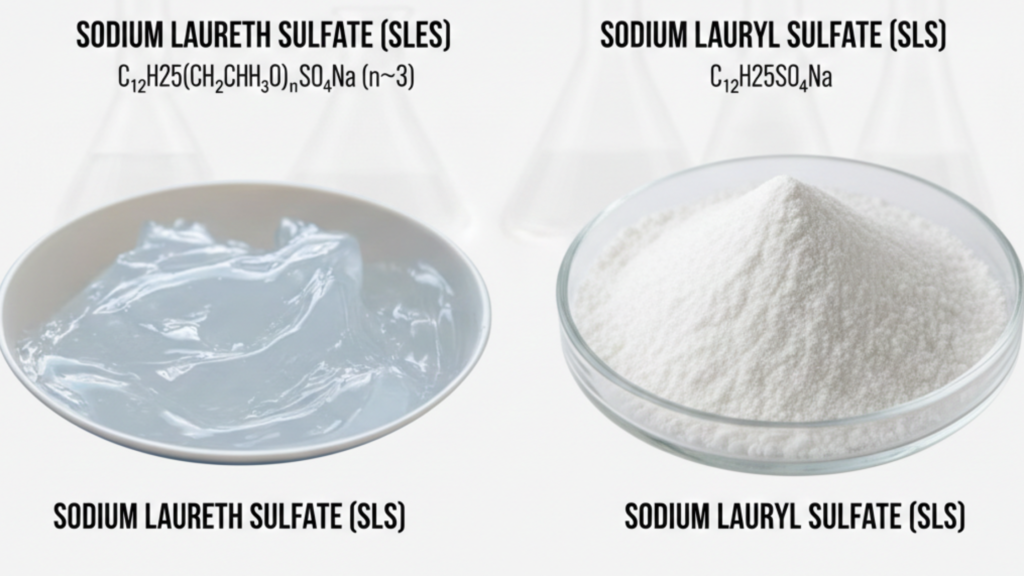
Then have you ever wondered what is the difference between Sodium Laureth Sulfate (SLES) vs Sodium Lauryl Sulfate (SLS)? Both are common surfactants that have high cleansing and foaming ability though their chemical structure, level of skin sensitivity, and uses in industries vary greatly.
Under this guide, we will be subdividing the key distinctions between SLES and SLS, including safety, uses, performance, and which one of them is more applicable to cosmetics, personal care, and industrial compounding’s.
What Is Sodium Laureth Sulfate (SLES)?
Sodium Laureth Sulfate (SLES) (also called sodium laureth sulphate) is an anionic surfactant widely used in personal care products.
Key Characteristics:
- Derived from ethoxylated lauryl alcohol
- Produces rich foam
- Milder compared to SLS
- Effective cleanser with reduced irritation potential
Common Uses:
- Sodium laureth sulfate in shampoo
- Sodium laureth sulfate in face wash
- Body wash and liquid hand soap
- Baby care products (in controlled concentrations)
What Is Sodium Lauryl Ether Sulfate?
Sodium laureth sulfate is also commonly known as lauryl ether sulfate. They are in reality the same with different names.
What Is Sodium Lauryl Sulfate (SLS)?
Sodium Lauryl Sulfate (SLS) is a stronger surfactant that is well-known because of its deep cleansing property.
Key Characteristics:
- Non-ethoxylated surfactant
- High foaming agent
- Strong oil-removal capacity
- More likely to cause dryness
Common Uses:
- Sodium lauryl sulfate in shampoo
- Sodium lauryl sulphate in face wash
- Toothpaste
- Industrial cleaners
- Degreasers
Because of its aggressive cleansing action, SLS is commonly used when strong oil removal is required.
Visit: Chemicals & Pharmaceutical Manufacturers, Exporters, and Suppliers
Sodium Laureth Sulfate vs SLS – Key Chemical Differences
1. Manufacturing Process
- SLS is manufactured directly using lauryl alcohol.
- SLES passes through another procedure referred to as ethoxylation that renders it milder.
This additional measure minimises the potential of being annoyed.
2. Cleansing Strength
Is SLS stronger than SLES?
Yes. SLS is a more powerful detergent and it is more aggressive in taking away oil.
SLES is a good cleanser that is milder to the skin and scalp.
3. Irritation Potential
- SLS: Higher risk of dryness and irritation
- SLES: Lower irritation when properly formulated
Concentration and formulation play a critical role.
4. Foam Production
Both form foam, however, SLS forms a foam of slightly greater density. However, foam does not equal better cleaning.
Sodium Laureth Sulfate vs SLS for Hair
This is one of the most searched questions online.
Is Sodium Laureth Sulfate Good for Hair?
Yes — for most hair types. It cleans effectively without stripping natural oils excessively.
Is Sodium Laureth Sulfate Bad for Hair?
It can cause dryness in:
- Very dry hair
- Chemically treated hair
- Keratin-treated hair
Is Sodium Lauryl Sulfate Bad for Hair?
SLS can:
- Strip natural oils
- Fade hair color faster
- Cause scalp dryness
Sodium Lauryl Sulfate vs Sodium Laureth Sulfate for Hair
| Hair Type | Better Option |
|---|---|
| Oily Hair | SLS or SLES |
| Normal Hair | SLES |
| Dry/Damaged Hair | Mild SLES formulation |
| Sensitive Scalp | Avoid high SLS |
Skin Safety & Side Effects
SLS and SLES Side Effects
Possible effects include:
- Dryness
- Redness
- Irritation
- Eye sensitivity
Is SLS Bad for Skin?
SLS may disrupt the skin barrier at high concentrations.
Is Sodium Laureth Sulfate Bad for Skin?
Usually regarded as safe compared to SLS at cosmetic levels (usually lower than irritation limit).
Regulatory authorities allow both ingredients within safe concentration limits.
SLES vs SLS in Shampoo – Which Is Better?
Which is better sodium laureth sulfate or sodium lauryl sulfate?
It depends on your need:
- For daily use → SLES
- For deep cleansing → SLS
- For sensitive skin → SLES
- For heavy oil buildup → SLS
If you are looking for a sulfate-free shampoo, neither will be present.
Sodium Laureth Sulfate vs Sodium Lauryl Ether Sulfate
There is often confusion here.
Is sodium laureth sulfate and sodium lauryl ether sulfate the same?
Yes — sodium laureth sulfate is simply another name for sodium lauryl ether sulfate.
Quick Comparison Table
| Feature | SLES | SLS |
|---|---|---|
| Cleansing Strength | Moderate | Strong |
| Irritation Risk | Lower | Higher |
| Foam | High | Very High |
| Best For | Daily shampoo | Deep cleaning |
| Sensitive Skin | More suitable | Less suitable |
Frequently Asked Questions
What is the difference between Sodium Lauryl Sulfate (SLS) and Sodium Laureth Sulfate (SLES)?
SLES is a less irritating possible ethoxylated and milder form of SLS.
Is SLS stronger than SLES?
Yes, SLS has more powerful cleansing ability.
Is SLS or SLES worse?
SLS can be more irritating. SLES is generally milder.
Is sodium lauryl sulfate harmful for hair?
It has the effect of drying some type of hair, particularly color treated hair or dry hair.
Is sodium laureth sulfate harmful?
It is said to be safe when used in controlled amounts of cosmetics.
Conclusion: Should You Choose SLES or SLS?
To be more cleansing, SLS can be appropriate. In case you want a softer, more everyday clean, it is generally SLES that you want.
It is the quality and concentration of formulations that matter and not the name of the ingredient.