

Polyurethane Coating: Benefits, Types and Industrial Uses
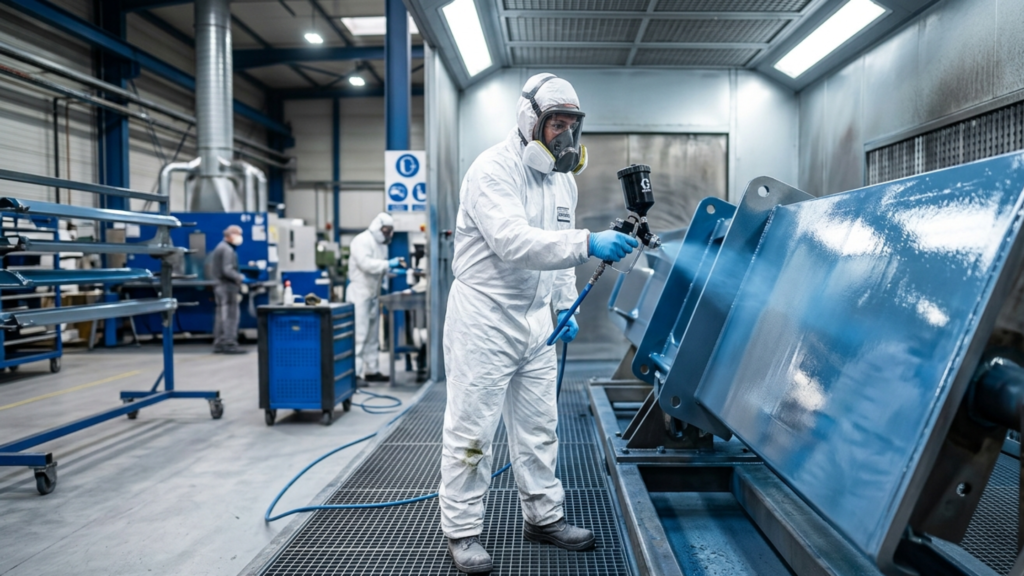
The polyurethane coating enjoys extensive application in the construction sector, automobile sector, infrastructure sector and manufacturing sector due to the high quality of durability, chemical resistance and aesthetic finish.
This step-by-step guide outlines all the particulars of polyurethane coating solutions such as types, benefits, and uses in the industry, as you avert to the best practices and technical requirements of the industry.
What is Polyurethane Coating
Polyurethane coating refers to a protective coating which is a chemical combination of polyols and isocyanates to form a tough polymer film.
This coating is coated on metal, concrete, wood and plastics surfaces to prevent:
- Corrosion
- Chemicals
- Moisture
- UV radiation
- Abrasion and impact
Polyurethane (PU) coats have a history of being powerful with the capability to be flexible, hence suitable in challenging industrial settings.
Regarding industrial applications, the PU coating is applied as:
- Protective coatings
- Decorative topcoats
- Floor coatings
- Waterproofing systems
- Automotive finishes
The development of these coatings is in varying chemistries, depending on performance requirements.
Types of PU Coatings
Polyurethane coating can be generally divided into two categories by their formulation and curing system. The two most used ones are:
- Water Based PU Coating
- Solvent Based PU Coating
Both types have distinct benefits in respect to the application setup and mandates.
Water Based PU Coating
The polyurethane coatings on water are water based, meaning water is the carrier used instead of organic solvents.
Key Features:
- Low VOC (Volatile Organic Compounds)
- Environment-friendly
- Minimal odor
- Easy application
- Drying at a faster rate under controlled conditions.
Where It Is Used:
- Interior flooring
- Wooden furniture
- Ornamental building finishes
- Households and industrial structures
- Floors that need to be low-emission
Technical Advantages:
- Good flexibility
- UV resistance
- Suitable for indoor environments
- Compliance with environmental regulations
Water-based PU finishes are being increasingly useable in a project where indoor air quality and sustainability are essential aspects.
Solvent Based PU Coating
Polyurethane coatings Solvents Polyurethane based coatings employ organic solvents as carriers and are generally regarded as being of superior mechanical strength.
Key Features:
- Superior adhesion
- High chemical resistance
- Increased performance in adverse conditions.
- Strong gloss retention
Where It Is Used:
- The industrial structures are heavy-duty
- Automotive coatings
- Marine applications
- Steel structures
- Machinery and equipment
Technical Advantages:
- Excellent abrasion resistance
- Strong film build
- The durability in the outdoor environment is high.
- Suitable for extreme environments
These coating is also popular in industries that demand structural protection of the structure over a long period.
Industrial Applications
Polyurethane finishing is applied in various sectors because of its numerous uses and effectiveness.
1. Construction Industry
- Concrete floor protection
- Roof waterproofing
- Steel structure coating
- Bridges and infrastructure
2. Automotive Industry
- Vehicle topcoats
- Clear coats
- Interior trim protection
3. Manufacturing & Machinery
- Equipment protection
- Storage tanks
- Pipelines
4. Marine Industry
- Ship decks
- Offshore platforms
- Corrosion protection systems
5. Wood & Furniture
- High-gloss finishes
- Scratch-resistant surface protection
Polyurethane coatings are an ideal choice to protect assets on the long run since they can be applied to various surfaces.
Advantages
Polyurethane coating has a number of technical and commercial benefits:
1. Excellent Durability
Extensive service life lowers the maintenance expenses.
2. Chemical Resistance
Oil-, solvent-, acid-, and industrial chemical-resistant.
3. UV Stability
Holds the colour and shiny even when exposed to the sun.
4. Flexibility
Stops cracking caused by thermal expansion or motion of the substrate.
5. Abrasion & Impact Resistance
Suited to applicable in factories and in areas with high traffic.
6. Aesthetic Appeal
Available in matte, satin, and high-gloss finishes.
Because of these advantages, polyurethane coatings are widely used in both decorative and heavy-duty protective applications.
Comparison with Epoxy
Polyurethane coating and epoxy coating are some of the ones commonly compared in industrial applications. They are both high-performance systems and have varied uses.
| Feature | Polyurethane Coating | Epoxy Coating |
|---|---|---|
| UV Resistance | Excellent | Poor (can yellow) |
| Flexibility | High | Low |
| Chemical Resistance | High | Very High |
| Abrasion Resistance | Excellent | Excellent |
| Outdoor Use | Highly suitable | Needs PU topcoat |
| Gloss Retention | Excellent | Moderate |
Practical Industry Insight:
- The epoxy is normally applied on the walls as a primer or a base coating because it has high adhesion and chemical resistance.
- Polyurethane can be used as a top coat due to its ability to stay UV stable and provide a cosmetic finish.
Epoxy + polyurethane combination is the most suitable in most industrial systems which require long term operation.
Why Choosing the Right Polyurethane Coating Matters
The choice of the right PU coating will be dependent on:
- Substrate type
- Environmental exposure
- Chemical exposure
- Mechanical stress
- Regulatory requirements
The collaboration with the manufacturers of polyurethane systems with a long history of work will guarantee the correct formulation, application instructions, and durability.
Conclusion
Polyurethane coatings can be listed as one of the most versatile and durable protective solutions that are provided in the modern industry.
They provide whether in construction, automotive, manufacturing, and infrastructure:
- Long-lasting protection
- Excellent aesthetics
- Chemical and UV resistance
- Cost-effective lifecycle performance
The knowledge of the kinds and advantages and uses of polyurethane coating systems will enable industries to make wise choices and use the most appropriate polyurethane coating system in their project.