

Food-Grade FIBC Manufacturers in India — Complete Guide
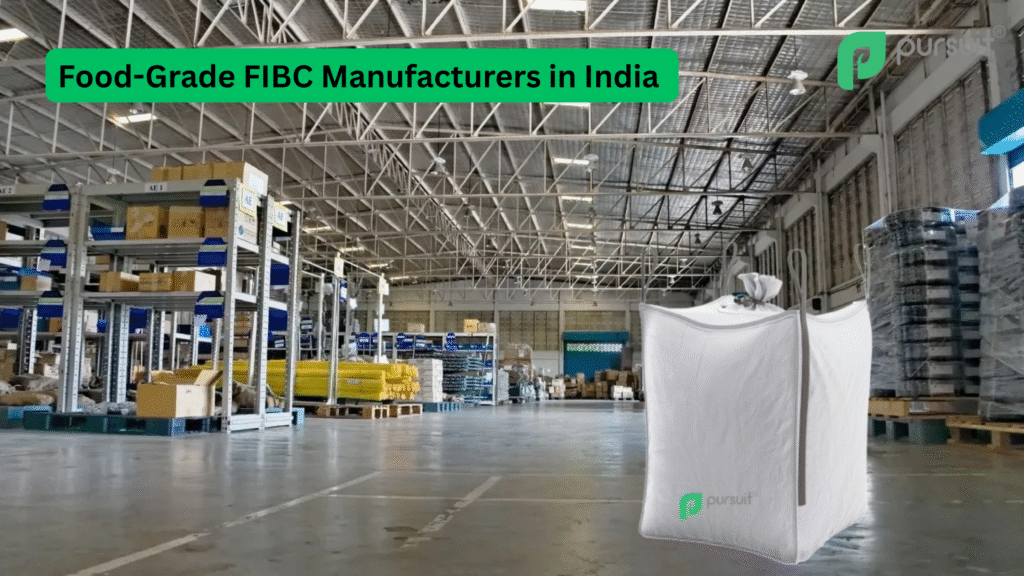
The world food supply chain is supported by safe packaging.
Whether exporting and/ or storing food ingredients (grains, sugar, salt, flour, starch, pulses, spices and edible powders) you will need to make sure your packaging requires zero contamination, zero exposure to moisture and one hundred percent hygiene.
This is where Food-Grade FIBC Bags become the No.1 choice globally.
India is a most reputable and largest food-grade FIBC manufacturer that supplies industries in USA, UAE, Europe, Australia and Africa with quality jumbo bags that are certified and meet the safety requirements ensuring export.
What Are Food-Grade FIBC Bags?
Food-grade FIBC bags are bulk packaging bags manufactured specifically for safe handling, transport, and storage of edible and food-related materials.
They are produced in clean, controlled environments to prevent:
- Contamination
- Dust & dirt exposure
- Microbial risks
- Foreign particles
- Odors or chemical contact
Companies that export food items require these bags for product safety and compliance with global regulations.
Why Food-Grade FIBC Bags Are Essential for Edible Products
Food products are extremely sensitive to:
- Humidity
- Bacteria
- Cross-contamination
- Packaging residue
- Insects
- Temperature
- Dust
A slight drop in hygiene can cause:
- Spoilage
- Infections
- Customer complaints
- Legal issues
- Shipment rejection
Jumbo bags with food grade are a barrier, keeping your product clean and exportable.
Key Features of High-Quality Food-Grade FIBC Bags
1. Manufactured in Hygienic Clean-Room Facilities
Quality manufacturers use:
- HEPA-filtered air control
- Pest-free controlled rooms
- Metal detection systems
- Cleaning & de-dusting stations
- Sanitized sewing zones
👉 To see examples of standard FIBC bags, visit: https://pursuitind.com/fibc-bags/
2. Compliant With Global Food Safety Standards
Reliable manufacturers follow:
- BRCGS (Food Safety Standard)
- ISO 22000 / HACCP
- GMP (Good Manufacturing Practices)
- FDA-compliant production processes
These certifications guarantee safe handling of edible goods.
3. Safe-contact fabric & components
The fabric, stitching, printing, loops, liners, and every component are selected to ensure:
- No chemical interference
- No odor transfer
- No contamination risk
4. Customization for Any Food Product
Foods have different handling requirements.
Manufacturers provide:
- Custom sizes
- Top & bottom options (spout, duffle, flap)
- Loops (side-seam, cross-corner, single loop)
- Liners for moisture-sensitive items
- Printing options
- Baffles for space optimization
Explore customizable bag options at: https://pursuitind.com/fibc-bags/
5. Strong for export handling
Food-grade bulk bags go through:
- Strength testing
- UV testing
- Lift test
- Drop test
- Seam inspection
This ensures safe transport across long distances.
Why India Is a Global Leader in Food-Grade FIBC Manufacturing
1. High-Quality Standards
Modern machines are used in Indian FIBC factories and they observe strict quality checks.
2. Competitive Pricing
India has cost-effective manufacturing which does not compromise on quality compared to USA and Europe.
3. Massive Export Network
Indian manufacturers export to:
- USA
- UK & Europe
- UAE
- Africa
- Australia
- South America
- Southeast Asia
4. Large Manufacturing Capacity
India has the world’s largest FIBC production zones, capable of supporting bulk and urgent orders.
5. Skilled Workforce
Manufacturing teams are trained in:
- Food hygiene
- Clean-room operation
- Quality inspections
- Packaging standards
Industries That Use Food-Grade FIBC Bags
Food-grade jumbo bags are used by:
- Rice mills & grain exporters
- Sugar manufacturing units
- Spices processors
- Salt manufacturers
- Flour mills
- Pulses exporters
- Coffee & cocoa industries
- Starch & powder businesses
- Animal feed suppliers
- Dairy powder companies
For industry-specific solutions, visit: https://pursuitind.com/industries-we-serve/
Types of Food-Grade FIBC Bag
1. Standard Food-Grade Bags
For grains, pulses, sugar, spices.
2. Baffle Bags
Ideal when you need shape stability and container optimization.
3. Bags With Liners
Appropriate to items that are sensitive to moisture such as starch or milk powder.
4. Conductive Type C Bags
Prevents static charge during handling.
5. Anti-static Type D Bags
Best for explosive and dust-prone environments.
Step-by-Step Manufacturing Process of Food-Grade FIBC Bags
A top-quality manufacturer follows this complete process:
Step 1: Material Preparation
To prevent contamination of the fabric, it is made according to food-safe guidelines.
Step 2: Yarn Extrusion & Weaving
Yarns are prepared and woven into fabric rolls used for bag body.
Step 3: Cutting & Printing
The cloth is cut to desired dimensions. Food-compliant safe inks are used in printing.
Step 4: Clean-Room Sewing Process
This includes:
- Air cleaning
- Dust removal
- Sanitized sewing machines
- Skilled workers wearing protective gear
This is the most important step in producing food-safe FIBC bags.
Step 5: Liner Fabrication (If Required)
Salt, starch, dairy powders and moisture sensitive food products are optional liners.
Step 6: Metal Detection & Quality Checks
Bags undergo:
- Metal detection
- Load test
- UV test
- Cleanliness check
- Visual inspection
Step 7: Final Packing
The bags are packed in uncontaminated containers that are well sealed to ensure that they are not contaminated in the process of transportation.
How to Choose the Best Food-Grade FIBC Manufacturer in India
1. Check Certifications
Prefer manufacturers with:
- BRCGS
- ISO 22000
- HACCP
- GMP
2. Inspect Manufacturing Environment
Ensure they have:
- Clean-room sewing
- Air filtration
- Pest control
- Metal detection systems
- Traceability records
3. Ask About Customization Options
Your manufacturer should offer:
- Custom dimensions
- Printing
- Loops
- Liners
- Baffles
- Safe working load options
4. Check Global Export Experience
A good manufacturer must understand export documentation & compliance.
5. Evaluate Communication & Support
Companies like Pursuit Industries offer excellent customer support and quick response times.
Know more: https://pursuitind.com/about-us/
Benefits of Food-Grade FIBC Bags
1. Ideal for Food Safety
Protects from impurities, microbial exposure, and dust.
2. Reduces Handling Costs
One bag can carry large volumes.
3. Easy to Transport
Forklift-friendly loops make stacking and movement simple.
4. Space-Saving & Efficient
Baffle bags help load more material in containers.
5. Eco-Friendly & Recyclable
Made from recyclable materials.
Applications of Food-Grade FIBC Bags
These bags are perfect for storing and exporting:
- Rice
- Wheat
- Sugar
- Salt
- Pulses
- Spices
- Coffee beans
- Cocoa powder
- Dry fruits
- Food-grade starch
- Dairy powders
- Additives & food ingredients
Why Importers Prefer Indian Manufacturers
- High-quality standards
- Better hygiene compliance
- Export-friendly documentation
- Competitive pricing
- Timely deliveries
- Advanced machinery
- Expertise in bulk manufacturing
FAQs
1. Are food-grade FIBC bags safe for direct food contact?
Yes, when produced under certified food-safe environments.
2. Can I request customized sizes and printing?
Yes, customization is available for all food-grade bags.
3. Which industries are the biggest users?
Rice, spices, grains, sugar, flour, salt, and powders.
4. Do Indian manufacturers export worldwide?
Yes, India exports to more than 30+ countries.
5. Are liners compulsory?
They are optional but recommended for moisture-sensitive items.
Conclusion
The production methods, clean room, world safety standards and competitive pricing have made India one of the most desired destinations of food grade FIBC bags in the world.
In need of a good supplier, Pursuit Industries is one of the reputable manufacturers in the provision of:
- High-quality FIBC bags
- Food-safe production
- Clean-room facility
- Custom packaging solutions
- Global export support