
What Is a Flexible Intermediate Bulk Container (FIBC)?
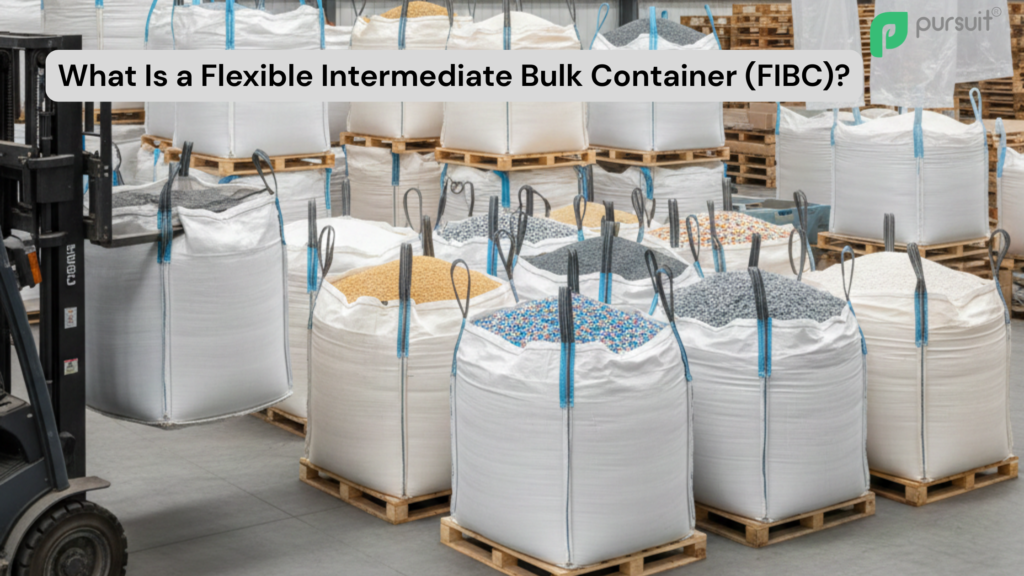
A Flexible Intermediate Bulk Container (FIBC) is an oversized and flexible container which is used to hold as well as transport dry, flowing bulk material in a safe and efficient manner.
Also referred to as the FIBC bags, bulk bags or jumbo bags, the bags are widely applied in agricultural, chemical, food processing, pharmaceutical, construction, and international trade industries.
At Pursuit Industries, we utilize the close collaboration with domestic and international buyers in order to deliver high quality FIBC bags that address international safety, quality and exporting standards.
This guide will tell you all you need to know about flexible intermediate bulk containers including types and materials, use, cost, and compliance so that procurement managers and importers can make informed choices.
What Are Flexible Intermediate Bulk Containers?
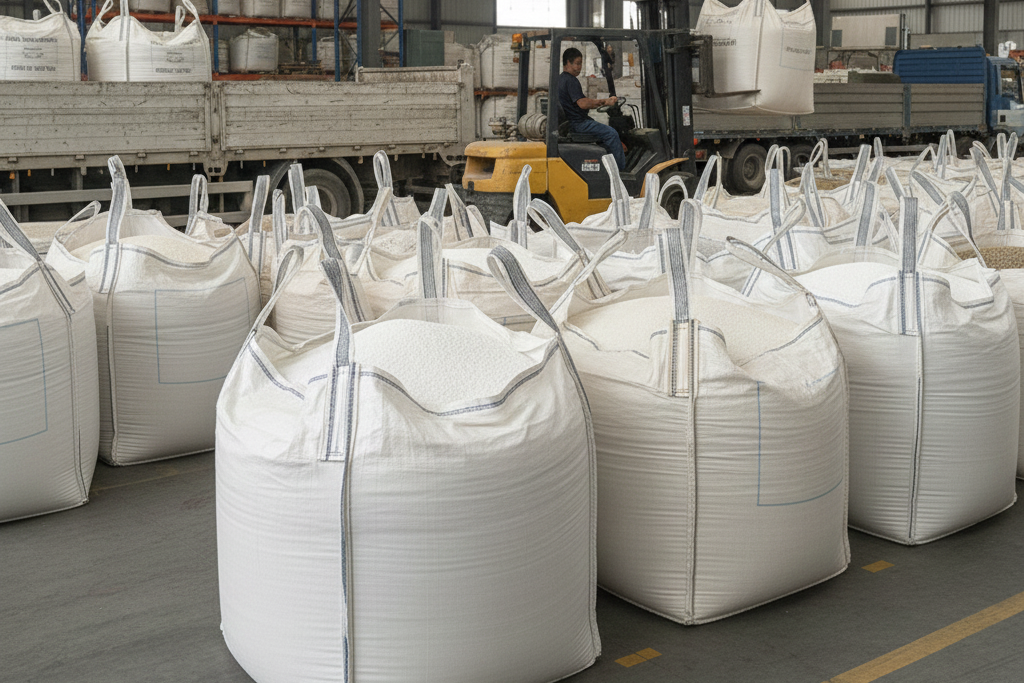
Flexible Intermediate Bulk Containers are industrial grade bags that are made of woven polypropylene (PP) fabric, meant to transport bulk materials of between 500 kg-2000 kg.
These are referred to as intermediate since they fill the gap between small bags (25-50 kg) and large bulk transport systems.
FIBCs are light but very robust thus can be easily handled during transportation with forklifts or cranes without compromising the safety of the products.
FIBC Full Form
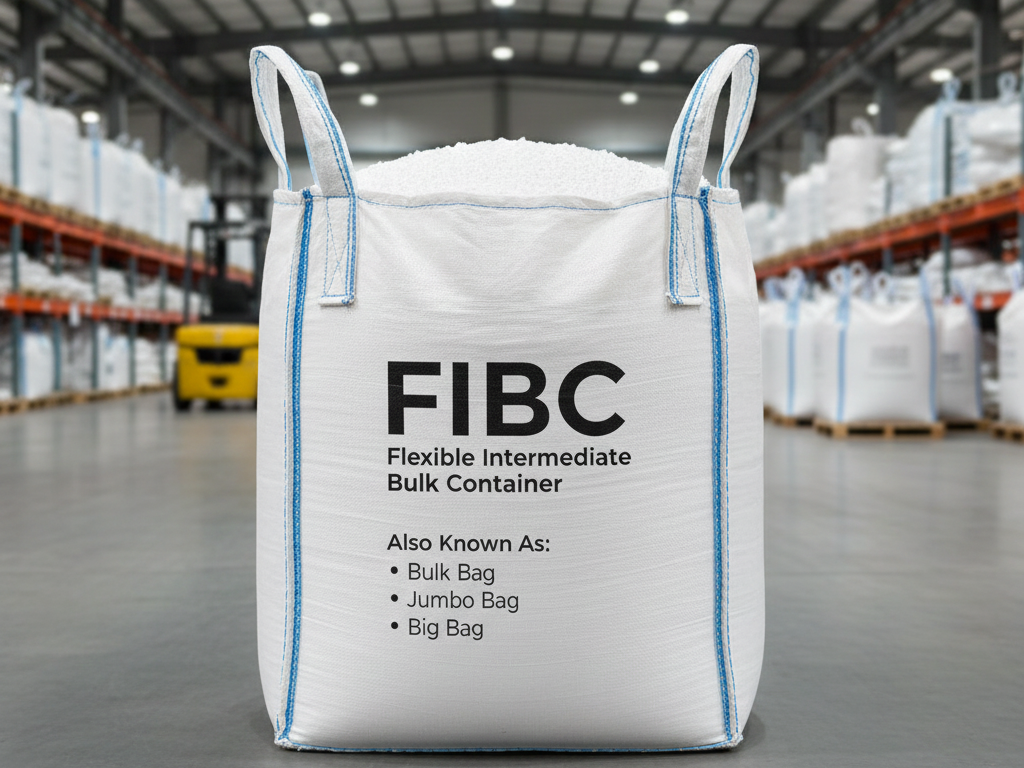
FIBC stands for Flexible Intermediate Bulk Container.
These bags are also referred to as:
- Bulk bags
- Jumbo bags
- Big bags
All these terms describe the same category of flexible bulk packaging solutions.
What Is an Intermediate Bulk Container?

An Intermediate Bulk Container is a reusable container that is applied in the storage and transportation of bulk liquids and solids. IBCs are widely classified into:
- Rigid IBCs – Rigid type made of plastic, metal, or composite (usually of liquid) material.
- Flexible IBCs (FIBC) – These are developed of woven PP (dry bulk materials).
FIBCs of the two are preferred when it comes to dry goods as they are cost effective, space saving, and easy to handle.
Difference Between IBC and FIBC
| Feature | IBC | FIBC |
|---|---|---|
| Structure | Rigid | Flexible |
| Material | Plastic / Metal | Woven Polypropylene |
| Ideal For | Liquids | Dry bulk materials |
| Storage | Requires more space | Foldable & space-saving |
| Cost | Higher | Economical |
Materials Used to Construct Flexible Intermediate Bulk Containers
FIBCs are mostly made of 100 per cent Pure polypropylene (PP) fabric. They can also consist of:
- UV-stabilized woven PP fabric
- LDPE / HDPE inner liners
- Food-grade materials (FDA compliant)
- Anti-static or conductive yarns for hazardous environments
PP has a high tensile strength, resists moisture and is durable which makes it the best material to choose in the manufacture of the FIBCs.
Types of FIBC Bags

The proper type of FIBC is important to the safety and compliance.
Type A FIBC Bags
- No static protection
- Suitable for non-flammable products
Type B FIBC Bags
- Prevents propagating brush discharges
- Used for dry, flammable powders
Type C Conductive FIBC Bags
- Groundable
- Designed for hazardous and explosive environments
Type D Anti-Static FIBC Bags
- Dissipates static without grounding
- Safe for combustible dusts
Flexible Intermediate Bulk Container Bags – Design Options
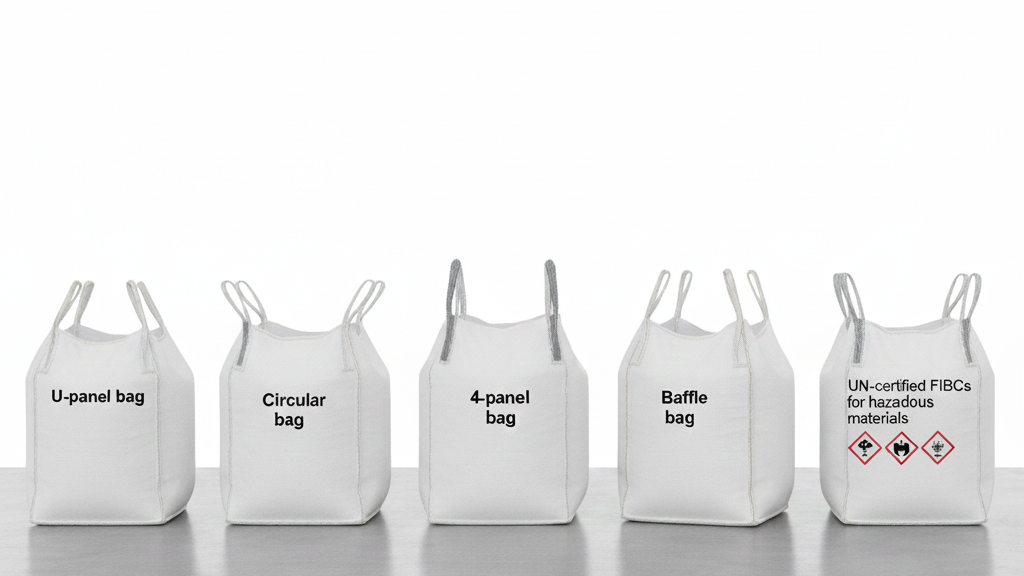
FIBC bags come in different designs to meet the needs of the different material flow and handling requirements:
- U-panel bags
- Circular bags
- 4-panel bags
- Baffle bags
- UN-certified FIBCs for hazardous materials
It also has custom filling spouts, discharge spouts, liners and lifting loop configurations.
Applications of Flexible Intermediate Bulk Containers
The applications of FIBC bags are seen in several industries:
- Agriculture: grains, seeds, fertilizers
- Food Industry: sugar, flour, rice, starch
- Chemicals: powders, polymers, minerals
- Building: cement, sand, additives.
- Pharmaceuticals: APIs and intermediates
- Exports & Logistics: bulk shipping and storage
Flexible Intermediate Bulk Container Sizes & Dimensions
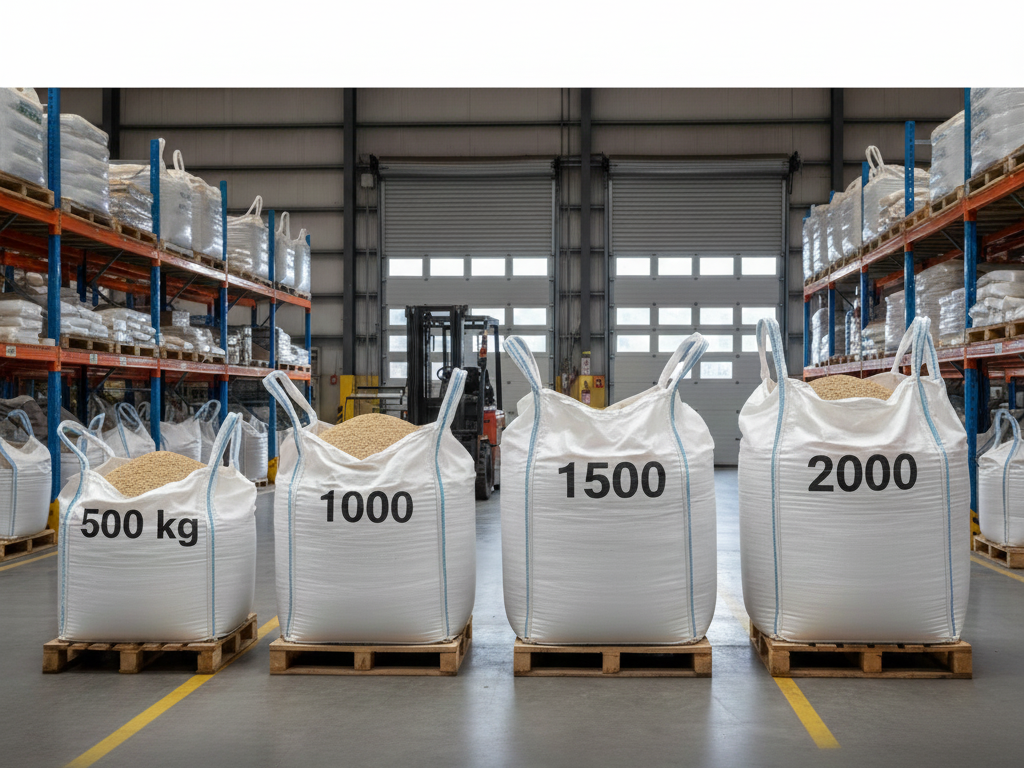
Standard FIBC sizes will maximize the use of containers and logistics. Typical capacities include:
- 500 kg
- 1000 kg
- 1500 kg
- 2000 kg
The density and size of products and the handling needs can be tailored into dimensions and specifications.
Price of Flexible Intermediate Bulk Container
Price of flexible intermediate bulk containers is dependent on a number of factors:
- Fabric GSM and construction
- Type of FIBC (A, B, C, or D)
- Certifications (UN, food-grade, pharma)
- Quantity ordered
- Customization requirements
FIBCs in India have prices ranging between 800 to 2500 rupees depending on the specifications and quantity ordered.
Flexible Intermediate Bulk Container HS Code
FIBC bags are normally categorized as:
- HS Code: 63053200
Proper HS classification is paramount to the customs clearance, GST, and international trade documentation.
Flexible Intermediate Bulk Container Manufacturers

In choosing the manufacturer of flexible intermediate bulk container, consider:
- ISO, BRC, FSSC, and UN certifications
- Export experience
- Quality control processes
- Customization and supply capacity
India is also one of the largest manufacturing centers of the world in terms of manufacturing of high quality bulk bags which are sold all over the world.
Pursuit industries is an enterprise that deals with the production and exportation of superior FIBC bags to suit the needs of international purchasers.
Flexible Intermediate Bulk Container Associations
Organizations: Industry associations are important in ensuring quality and safety standards:
- Indian Flexible Intermediate Bulk Container Association (FIBCA)
- EFIBCA European Flexible Intermediate Bulk Container Association.
- Australian Flexible Intermediate Bulk Container Association
These organizations assist in the maintenance of international compliance, safety and optimum production.
Advantages of Flexible Intermediate Bulk Containers
- Cost-effective bulk packaging
- Lightweight yet strong
- Space-saving and foldable
- Easy handling and transportation
- Reusable and recyclable
- Customizable for various industries
Which Is Better – PP or PE for FIBC?
FIBC bags use polypropylene (PP) as it is very strong and durable. Polyethylene (PE) is usually applied as a moisture protective inner liner and is not the recommended to be used as the main structural material.
Frequently Asked Questions (FAQs)
What are flexible containers?
Packaging solutions, which are currently developed to be versatile (that is, made of pliable materials such as woven PP) to ensure efficient bulk storage and transportation.
What is the difference between IBC and FIBC?
IBCs are hard-sided containers whereas the FIBCs are soft fabric-coated ones or containers used in mostly dry bulk products.
What materials are applied to make flexible intermediate bulk containers?
FIBCs can be constructed of woven polypropylene material with an optional liner and protective elements.
Are FIBC bags reusable?
Yes, numerous FIBG bags are constructed in a way that they can be used in numerous applications with regard to construction and safety requirements.
Conclusion
Flexible Intermediate Bulk Container (FIBC) is an effective, economical, and international approved bulk packaging system.
FIBC bags provide safety, logistics and regulatory compliance of the product with the right material, design and certification.
Pursuit Industries is a manufacturer of a flexible intermediate bulk container that is customized and export-ready. Call us today about the price, specifications or bulk quote.