

FIBC Jumbo Bag – Complete Guide, Types & Specifications
What Is an FIBC Jumbo Bag?
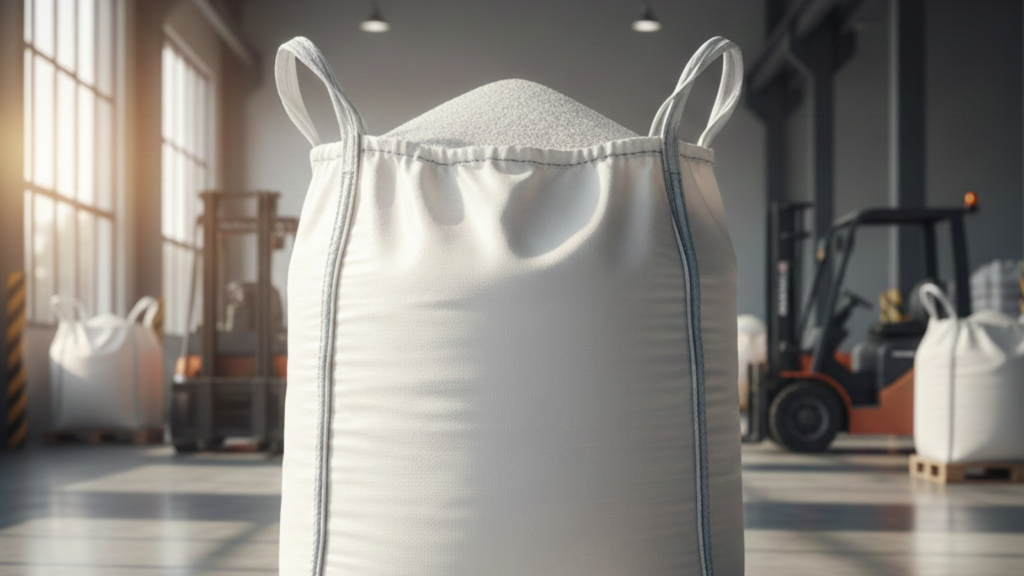
The jumbo bag or the bulk bag or flexible intermediate bulk container (FIBC Jumbo Bag) is one of the most efficient, cost effective and versatile forms of packaging used to transport the dry bulk materials.
The maximum and minimum weight that can be transferred through these woven polypropylene bags is 500 kg to 2000 kg; this is why such bags are vital in agriculture, chemicals, construction, mining, food processing industries among others.
As demand is rising across the globe, particularly with the manufacture of the FIBC bags, jumbo bags, and so on, the buyer would have to know the specifications, types, safety concerns, and test requirements before making a purchase.
This point-by-point guide will ensure that you select the appropriate FIBC jumbo bag in business.
FIBC jumbo bag is a huge but flexible bag constructed out of a woven polypropylene (PP) fabric.
These bags will have the ability to store, lift and safely transport the bulk materials of heavy weight.
Technical definition:
A Flexible Intermediate Bulk Container (FIBC) is a polypropylene woven container of 500 to 2000 kg, that has been designed to be mechanically handled using lifting loops mounted on forklifts or cranes.
Common names globally:
- Jumbo bag
- Bulk bag
- FIBC bag
- Big bag
- Super sack
Why FIBC Bags Are Used
Companies choose FIBC jumbo bags because they are:
- Lightweight yet high-strength
- Reusable and recyclable
- Weather-resistant
- Cost-effective vs drums or cartons
- Safe for storing powders, granules, flakes, and fertilizers
FIBC Jumbo Bag vs Regular Jumbo Bags
Although they are both employed to store large quantities, the FIBC Jumbo Bags are not similar to the conventional jumbo bags in their durability, compliance and handling capabilities.
Frequent bags can be easily torn during the heavy loading, but in the case of the FIBC bags, they are UN-certified, and they are tested under loads that assure safety of industrial materials.
Comparison Table:
| Feature | FIBC Jumbo Bag | Regular Jumbo Bag |
|---|---|---|
| Material Strength | High-density woven polypropylene | Standard polypropylene or fabric |
| Load Capacity | 500–2,000+ kg | Up to 1,000 kg |
| Safety Standards | UN Certified | Usually no certification |
| Reusability | Can be reused multiple times | Limited reuse |
| Customization | High (liners, loops, discharge spouts) | Low |
Components of an FIBC Jumbo Bag
An FIBC jumbo bag consists of several critical components. Each part impacts the bag’s safety, load capacity, and performance.
1 Woven Polypropylene Fabric
- Made from high-strength PP tapes
- Fabric weight typically 160–240 GSM
- UV-stabilized for outdoor use
- Can be coated (laminated) or uncoated
Coated fabric: Protects from moisture and fine-powder leakage
Uncoated fabric: Used for grains, stones, fertilizers
2 Lifting Loops
These are essential for loading and unloading.
Popular loop configurations:
- 4-loop bags (most common)
- 2-loop bags
- 1-loop bags (used for cement, fertilizer industry)
- Stevedore straps (extra lifting option for containers)
Loop materials:
- Polypropylene multifilament yarn
- High-tenacity polyester
3 Filling Options (Top Construction)
Different industries need different filling methods:
Open Top
- Basic design
- For products not requiring sealing
Spout Top
- Circular spout for controlled filling
- Used for powders, resins, fine chemicals
Duffel Top / Skirt Top
- Full opening
- Easy filling
- Can be tied or closed with a rope
Flap Top
- Full cover sheet
- Protects materials from dust and moisture
4 Discharge Options (Bottom Construction)
Flat Bottom
- Most economical
- Product must be manually removed
Spout Bottom
- Easy drainage
- Used for sand, flour, sugar, powders
Full Discharge / Conical Bottom
- For sticky materials
- No wastage
5 Inner Liners
A liner provides:
- Moisture protection
- Air tightness
- Contamination prevention
Types of liners:
- LDPE liners
- Aluminum liners (for moisture-sensitive products)
- EVOH barrier liners
3. Types of FIBC Jumbo Bags (A, B, C & D)
Electrostatic safety matters—especially when handling powders.
Here is an in-depth understanding:
1 Type A FIBC Bags
- Standard, non-conductive bags
- No electrostatic protection
- Made from plain PP fabric
Use for:
Materials that do not cause sparks, such as:
✔ Sand
✔ Gravel
✔ Rice
✔ Fertilizers
✔ Limestone
Avoid using for: flammable powders or gases.
2 Type B FIBC Bags
- Similar to Type A
- Do not ignite explosive dust clouds
- BUT cannot dissipate static electricity
Use for:
✔ Dry powders that do not produce flammable vapors
✔ Food grains
Do not use for:
Flammable environments.
3 Type C FIBC Bags (Conductive Bags)
- Made with conductive threads
- Must be grounded during filling/discharging
- Prevent electrostatic buildup
Use for:
✔ Chemicals
✔ Pharmaceutical powders
✔ Combustible materials
Safety note:
Ungrounded Type C bags can cause explosions.
4 Type D FIBC Bags (Anti-Static Bags)
- No grounding required
- Prevent brush discharges
- Most advanced and safest
Use for:
✔ Petrochemical powders
✔ Hazardous materials
✔ Fine flammable dust
4. FIBC Jumbo Bag Specifications Explained
Knowing specs helps you choose the right bag for your application.
1 Fabric GSM
Common range: 140–240 GSM
Higher GSM = stronger bag.
2 SWL (Safe Working Load)
Standard weight categories:
- 500 kg
- 1000 kg
- 1500 kg
- 2000 kg
Choose SWL based on:
- Product density
- Handling method
- Stack height
3 Safety Factor (SF)
Measures the strength of the bag.
- 5:1 → Single use
- 6:1 → Multi-trip / Reusable
- 8:1 → Heavy-duty, special applications
International standards often require:
- ISO 21898
- UN certification
4 Shape Options
- U-panel bags
- Circular bags
- 4-panel bags
- Baffle bags (ideal for maximizing container space)
5 Printing & Branding Options
FIBC bags can be printed with:
- Company logo
- Product information
- Safety warnings
- UN certification numbers
FIBC Jumbo Bag Applications (Industry-Wise Use Cases)
FIBC jumbo bags are used across 20+ industries. Here are the main sectors:
1 Agriculture
- Seeds
- Pulses
- Wheat
- Rice
- Grains
- Fertilizers
Benefits:
- Prevents external contamination
- Fast loading & unloading
- Ideal for exports
2 Food Industry
- Flour
- Sugar
- Salt
- Spices
- Starch
- Edible powders
Need:
Food-grade certified FIBC with cleanroom manufacturing.
3 Chemical Industry
- Plastic granules
- Resins
- Polymers
- Petrochemicals
- Fertilizer powders
Often need Type C or Type D bags.
4 Construction
- Sand
- Cement
- Aggregates
- Crushed stones
Best choice:
High-strength 4-loop, 1-ton jumbo bags
5 Pharmaceuticals
- Fine powders
- Active pharmaceutical ingredients
Needs:
- Anti-static (Type C or D)
- Cleanroom production
6 Mining
- Ores
- Minerals
- Limestone
- Silica sand
Needs:
- Strong SWL (up to 2000 kg)
- UV protection
FIBC Bag Testing & Quality Standards
Manufacturers follow strict international testing procedures.
1 Top Lift Test
Bag is filled to SWL and lifted for 5 minutes.
2 Drop Test
Filled bag dropped from 30 cm height.
3 Tear Test
Ensures fabric resists ripping under load.
4 UV Testing
Simulates sunlight exposure.
5 Cyclic Load Test
Repeated lifting cycles to check durability.
6 UN Certification
Required for:
- Dangerous goods
- Hazardous chemicals
Ensures the bag meets global safety standards.
Why Choose an FIBC Bags Manufacturer in India?
India is the largest exporter of jumbo bags due to:
1 High-quality polypropylene
Indian PP is known for strength and consistency.
2 Cost-effectiveness
Prices are 30–40% lower than Europe/USA.
3 Advanced manufacturing
- Cutting
- Weaving
- Lamination
- Printing
- Liner insertion
- UN testing
4 Custom designs
Manufacturers provide:
- Size customization
- Logo printing
- SWL variations
- Industry-specific designs
How to Choose the Right FIBC Jumbo Bag (Buyer’s Checklist)
Before ordering, evaluate:
✔ Product type
Powder, granule, flakes, food, chemical?
✔ Weight per bag (SWL)
500 kg, 1 ton, 1.5 ton?
✔ Safety factor
5:1? 6:1? 8:1?
✔ Electrostatic safety
✔ Weather conditions
Outdoor storage needs UV protection.
✔ Liner requirement
Moisture-sensitive materials need liners.
✔ Top & bottom design
Spout, duffel, flap, open?
FAQs About FIBC Jumbo Bags
1. What is the full form of FIBC?
Flexible Intermediate Bulk Container.
2. How much weight can a jumbo bag carry?
450 kg to 2000 kg depending on fabric GSM and design.
3. What are jumbo bags used for?
To store and transport bulk materials like grains, sand, chemicals, powders, minerals, fertilizers, resins, etc.
4. Can FIBC bags be reused?
Yes — 6:1 safety factor bags are reusable.
5. Which FIBC type is best for powders?
Type C or Type D bags according to the requirements of electrostatic safety.
6. Are FIBC bags waterproof?
Not by default.
For moisture protection → Use coated fabric + liners.
7. Are FIBC bags recyclable?
Yes, they are made of 100% PP material.
Conclusion
FIBC Jumbo Bag is very crucial in every industry that requires bulk handling of materials in a safe and effective manner. Such bags have unparalleled strength, flexibility, cost and safety over drums, sacks or wooden crates.
Do you require jumbo bags, bulk bags, FIBC bags, or manufacturer of FIBC bags in India? And you do not have a clear picture of the types, specifications, safety aspects and scope of application to make the right purchase decisions.
An appropriate chosen FIBC jumbo bag will:
- Reduce packaging cost
- Improve handling efficiency
- Ensure safe transport
- Protect materials
- Increase profitability