

What Are FIBC Bags? Types, Uses, and Advantages Explained
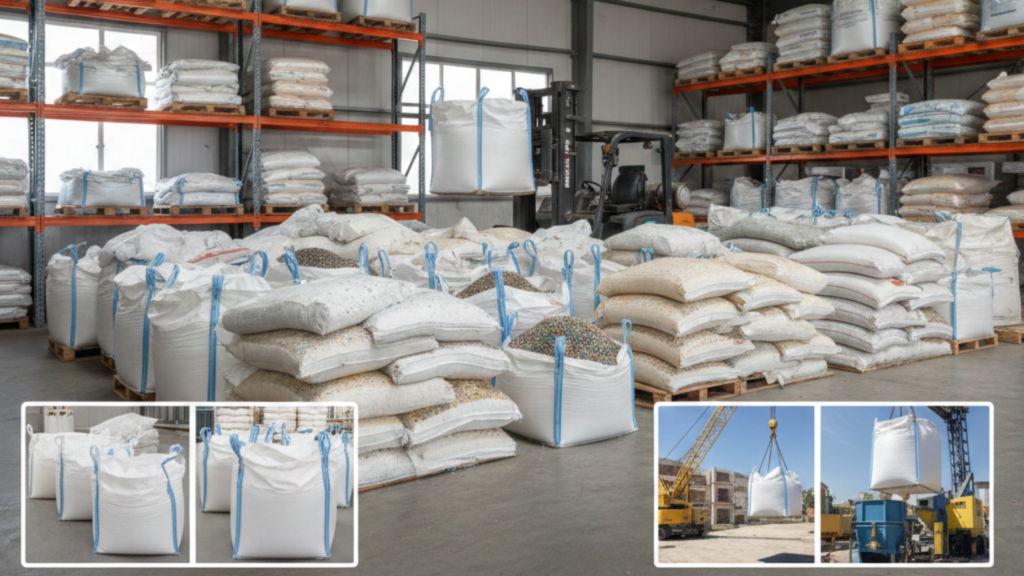
In the sectors where large volumes of materials require to be stored, transported to secured places, making an appropriate packaging choice is of high importance.
FIBC bags are essential in this. FIBC bags have become the bulk of choice in the world starting with agriculture and chemicals and proceeding to construction and food processing.
In this blog, we shall describe the definition of the FIBC bags, their complete form, types, applications, benefits and the process of selecting the appropriate manufacturer of the FIBC bags in India.
What Are FIBC Bags?

Flexible Intermediate Bulk Containers or FIBC bags are large and flexible bag containers with the purpose of holding and carrying dry and flowable bulk-quantity products.
Such bags are often known as bulk bags or jumbo bags.
Woven polypropylene (PP) fabric is the commonly used material of FIBC bags and offers them with high strength, durability and ability to resist moisture.
They can be fitted with coatings, liners as well as other safety features depending on the application.
What are FIBC bags made of?
- Woven polypropylene (PP)
- Moisture protection optional inner liners.
- Outdoor storage protection (UV).
- Edible products material.
Looking for Reliable FIBC Bags Manufacturer in India?
Get high-quality FIBC jumbo bags, bulk bags, and customized packaging solutions at competitive prices.
Get a Quote for FIBC BagsWhat Does FIBC Stand For? (FIBC Full Form)
The FIBC full form is Flexible Intermediate Bulk Container.
FIBC packaging is widely used because it allows industries to transport heavy loads—often ranging from 500 kg to 2000 kg—in a single bag.
The complete name of these machines is also questioned by many people; they are machines that produce and sew the bags of FIBC when manufacturing them.
Difference Between IBC and FIBC

Although IBC and FIBC are both used in bulk packaging, the two are very different:
- IBC (Intermediate Bulk Container): Rigid containers, typically liquid containers, which are made out of plastic or metal materials.
- FIBC (Flexible Intermediate Bulk Container): Soft and flexible bags that primarily deal with dry and flowable products.
The jumbo bags made out of FIBC are cheaper, occupy less space and can be transported easily than the rigid IBC containers, and this has made their use in most industries a choice.
Types of FIBC Bags

Classification by Bag Construction
- U-Panel FIBC Bags: These bags are fabricated using U shaped fabrics they are used in heavy load transportation.
- Circular FIBC Bags: Tubular shaped with even distribution of strength.
- Baffle FIBC Bags: Bags that have been constructed to be square-shaped and provide maximum storage space.
- Single Loop FIBC Bags: This is easy to handle and has a single lifting point.
Classification by Safety Type
- Type A FIBC Bags: When the goods are non-flammable.
- FIBC Bags Type B: Stops the spread of brush discharges.
- Type C FIBC Bags: Grounding bags.
- Type D FIBC Bags: Non-grounded antistatic bags.
- UN FIBC Bags: Approved in the transportation of dangerous goods.
Read For More: Types of FIBC Bags: Complete Guide to FIBC Bag Types, Uses & Specifications
Classification by Coating & Liner
- FIBC bags with liner
- FIBC bags without liner
- Coated FIBC bags
- Uncoated FIBC bags
Specialized FIBC Bags
- Food grade FIBC bags
- Antistatic FIBC bags
- Ventilated FIBC bags
- PP woven FIBC bags
- White FIBC bags
FIBC Bag Sizes & Weight Capacity
FIBC bags can be of size and capacity depending on the requirement:
- 1 ton FIBC bags – These are suitable to use with normal bulk materials.
- 2 ton FIBC bags – implement heavier industrial products.
Customers can also have customized sizes, loop design and filling/discharge options as desired by the manufacturers.
Uses of FIBC Bags Across Industries

FIBC bags are used in multiple industries due to their versatility:
- Agriculture (grains, seeds, fertilizers)
- Chemicals and pharmaceuticals
- Food processing (sugar, flour, starch)
- Construction (cement, sand)
- Minerals and mining
- Polymers and resins
Bulk FIBC bags are safe to handle, less product is lost, and logistics are effective.
Advantages of Using FIBC Bags
- High load-bearing capacity
- Bulk packaging solution that is cost effective.
- Handling and transportation are easy.
- Space-saving and stackable
- Recyclable and environmentally friendly
- Customizable for specific industry needs
FIBC Bags Manufacturers in India
One of the top centers of manufacturing and exporting of the FIBC bags is India.
The manufacturers of the FIBC bags in India and particularly in Gujarat are well known in manufacturing good quality jumbo bags, which are of international standards.
Why Choose Indian FIBC Bag Manufacturers?
- Competitive pricing
- Advanced manufacturing facilities
- Compliance with global quality certifications
- Strong export capability
Certifications, the quality of materials used, customization, and capacity are some of the aspects to be checked when choosing a supplier of FIBC bags.
FIBC Bags Price, HS Code & HSN Code
FIBC Bags Price
The price of FIBC bags depends on:
- Bag size and capacity
- Type of fabric and coating
- Liners and safety features
- Order quantity
FIBC Bags HS Code & HSN Code
- FIBC bags HS code and HSN code are used for customs and GST classification in India. These codes help in smooth domestic and international trade.
Looking for Reliable FIBC Bags Manufacturer in India?
Get high-quality FIBC jumbo bags, bulk bags, and customized packaging solutions at competitive prices.
Get a Quote for FIBC BagsConclusion
FIBC bags constitute a basic bulk packaging method in any industry involving the management of huge amounts of dry goods.
Knowledge of what are the FIBC bags, their types, applications and benefits will assist businesses to make the right choice of the bag.
By collaborating with an Indian based manufacturer of reliable and high quality, safe, and cost effective, in terms of bulk packaging, FIBC bags.
Need to get high-quality FIBC jumbo bags or bulk bags? Get individualized solutions to your industry by getting connected with a reliable manufacturer today.