FIBC Bag Manufacturers: A Complete People‑First Guide for Buyers & Businesses
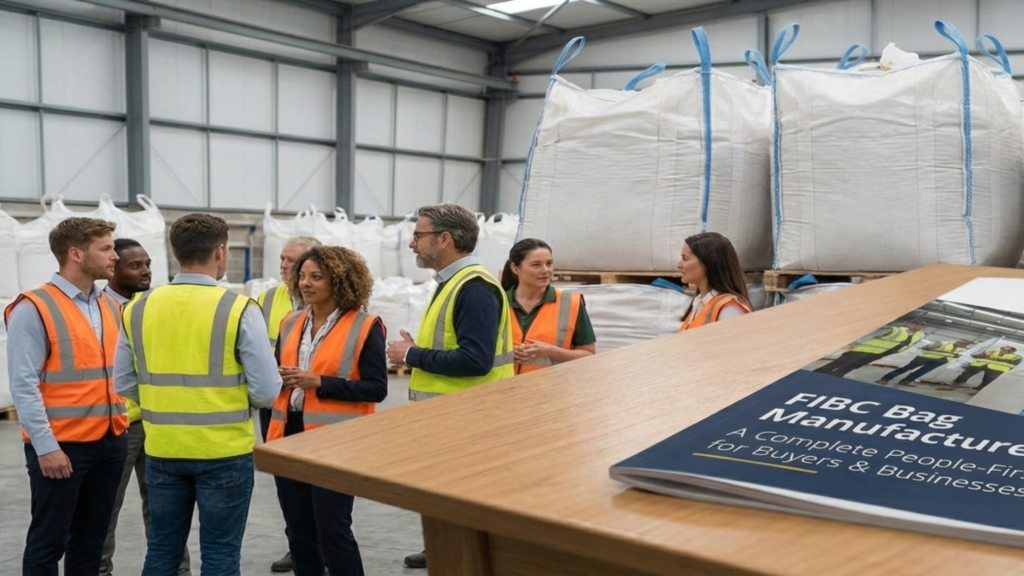
In case you are in search of manufacturers of FIBC bags, then there are high chances that you have been in need of bulk packaging services that are safe, durable, and cost effective in terms of your products.
It could be agriculture, chemicals, construction materials or food grains, and the selection of the manufacturer results in direct influence on the product safety, the efficiency of logistics, and the final costs.
This is a guide written to real buyers, the procurement managers, exporters, the head of the plants, and business owners, and hence you can make a sound decision in a non technical manner.
What Are FIBC Bags?
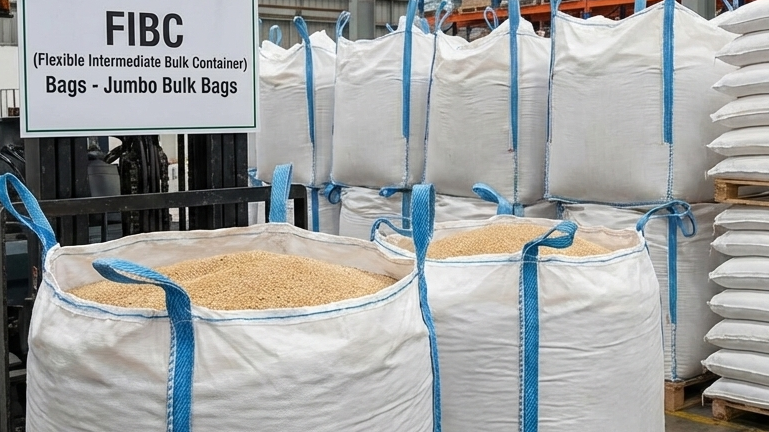
FIBC (Flexible Intermediate Bulk Container) bags also referred to as jumbo bags or bulk bags are industrial packaging containers that are used to transport dry flowable materials in large volumes-typically between 500 kg and 2000 kg.
Their use is extensive as they are:
- Portable but highly powerful.
- Easy to store and transport
- Less expensive than flexible packaging.
- Different industries customizable.
Why Choosing the Right FIBC Bag Manufacturer Matters
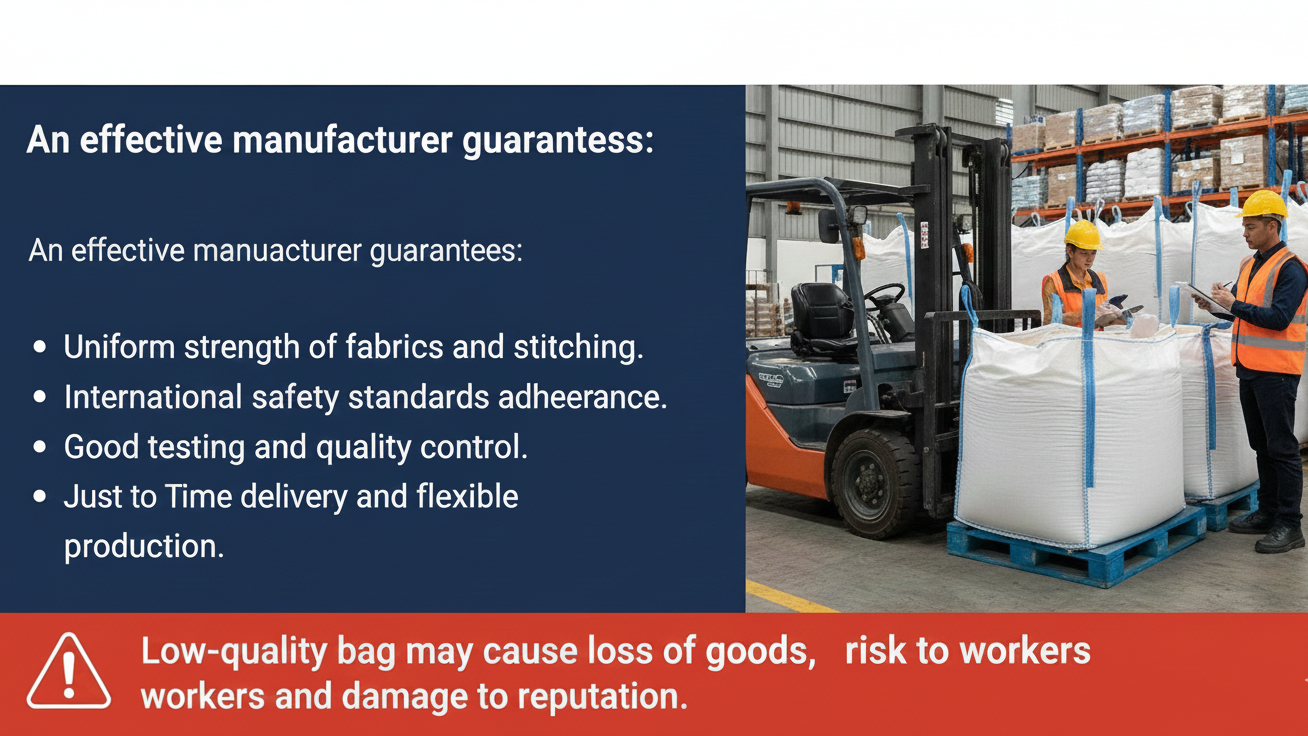
Not every manufacturer of the FIBC bag is of similar quality. An effective manufacturer guarantees:
- Uniform strength of fabrics and stitching.
- International safety standards adherence.
- Good testing and quality control.
- Just in Time delivery and flexible production.
Low-quality bag may cause loss of goods, risk to the lives of customers and loss of reputation- particularly in the foreign markets.
Types of FIBC Bags Offered by Manufacturers

The manufacturers of the highest quality of the FIBC bags normally provide a broad variety of selections to accommodate various uses:
1. Standard FIBC Bags
Applications Because of general industrial products like sand, fertilizers and minerals.
2. U‑Panel FIBC Bags
Constructed of a u-shaped piece of fabric to improve the distribution of loads and shape retention.
3. Circular / Tubular FIBC Bags
Floating sides offer greater leakage and moisture proofing.
4. Baffle (Q‑Bag) FIBC Bags
They were made square and aimed at enhancing the use of containers in the course of transport.
5. Food‑Grade FIBC Bags
Produced in sanitary conditions of food grains, sugar, flour and starch.
6. UN‑Certified FIBC Bags
Necessary so as to transport hazardous chemicals and materials safely.
Not sure which FIBC type suits your product? Talk to our packaging expert
Also Read: Types Of FIBC Bags
Industries That Depend on FIBC Bag Manufacturers
Clients to which the trusted manufacturers of FIBC bags cater to are numerous and may include:
- Agriculture: rice, wheat, maize, seeds
- Chemicals: resins, powders, pigments
- Construction: cement, sand, aggregates
- Processing Food: sugar, flour, salt.
- Mining & Minerals: concentrates, ores.
- Pharmaceuticals: regulated bulk materials.
In every industry, there are bag specifications that are required and therefore, the expertise of manufacturers is important.
Key Factors to Consider When Selecting FIBC Bag Manufacturers
When settling on a supplier, consider the vendor on the following critical parameters:
1. Quality Certifications
Search manufacturers qualified with:
- ISO standards
- Compliance with food-grade (where applicable)
- Hazardous goods certification by the UN.
2. Customization Capability
An excellent manufacturer must provide:
- Custom sizes and capacities
- Printing and branding options
- Special liners or coatings
3. Raw Material Quality
Polypropylene fabric of high-grade renders it strong, UV resistant, and durable.
4. Manufacturing Capacity
Mass producers are able to make bulk purchases without jeopardizing their delivery schedules.
5. Export Experience
When exporting internationally, select suppliers that have dealt with international logistics and documentation.
Sustainability & Eco‑Friendly Manufacturing
Some of the sustainable practices that modern manufacturers of FIBC bags are taking include:
- Recyclable polypropylene materials
- Reduced fabric wastage
- Emission less energy-consuming production.
- Reusable FIBC bag designs
The identification of a sustainability-oriented supplier facilitates the minimization of the adverse impact on the environment and is consistent with international compliance standards.
Benefits of Working With Reliable FIBC Bag Manufacturers
Collaborating with a reliable manufacturer is long-term benefits:
- Lower packaging failures and losses
- Improved supply chain efficiency
- Consistent product quality
- Better brand reputation in global markets
It is not only about purchasing bags but also about establishing a reliable packaging alliance.
Frequently Asked Questions (FAQs)
Q1. What is the average load capacity of FIBC bags?
Most FIBC bags carry between 500 kg to 2000 kg, depending on design and fabric strength.
Q2. Are FIBC bags safe for food products?
Yes, the food-grade FIBC bags produced in hygienic conditions are safe in storage and transportation of food.
Q3. Can FIBC bags be reused?
Most of the FIBC bags can be re-used when they are used on numerous trips and they are used properly.
Q4. Do FIBC bag manufacturers offer export‑ready packaging?
Reputed manufacturers provide export‑compliant packaging with proper labeling and certifications.
Final Thoughts
The correct selection of the manufacturers of the FIBC bags is a strategic move which influences product safety, efficiency in logistics and business expansion.
You can be confident with quality, certifications, customization and sustainability of bulk packaging solutions to your industry.
When sourcing on a long term basis, you should always deal with suppliers whose values are people, performance and product integrity and not price.
Seeking reliable manufacturing alternatives of FIBC bags? The step to take is an established manufacturer who knows what you require in your industry and can provide it at scale.