Blog
Gulfood 2026 Dates, Timings & Exhibitor List – Complete Guide

Gulfood 2026 the largest food and beverage trade exhibition in the world? Gulfood 2026 is the world’s largest food and beverage trade exhibition, bringing together global buyers, importers, exporters, and manufacturers.
The event will take place from 26th to 30th January 2026 at the Dubai Exhibition Centre (DEC).
Pursuit is officially participating in Gulfood 2026 and will be showcasing its products at Stand N6-D61, North Hall 6.
It is the final reference to Gulfood 2026 and everything you need to know: dates and opening hours, exhibitors and reason of being there to get the best of the world food trade in Dubai.
What Is Gulfood 2026?
Overview of the Gulfood Exhibition
Gulfood is one of the largest food and beverage fairs that are conducted annually in Dubai, UAE. It brings altogether thousands of foreign food brands, producers, distributors and buyers under one roof.
Why Gulfood 2026 Is Important
- Linking international procurement to international consumers.
- Demonstrates gastronomic novelties and tendencies.
- It is one of the key sourcing platforms to the Middle East, Africa, and Asia.
Gulfood 2026 Dates
Official Gulfood 2026 Event Dates
- Event Year: 2026
- Expected Duration: 5 days
- Gulfood 2026 Dates:
- 📅 26th – 30th January, 2026
📌The event will run for five days at the Dubai Exhibition Centre, welcoming global food and beverage professionals.
Gulfood 2026 Timings & Opening Hours
Daily Gulfood 2026 Timings
- Opening Time: Morning hours
- Closing Time: Evening hours
Best Time to Visit Gulfood 2026
- Business meetings in the morning hours which are serious.
- Noon lunch to make connections and learn about products.
- No need to rush around in the time of high traffic.
Gulfood 2026 Venue & Location
Where Is Gulfood 2026 Held?
- Venue: Dubai World Trade Centre (DWTC)
- City: Dubai, United Arab Emirates
Dubai Exhibition Centre offers modern halls, easy transport access, and business facilities for global trade visitors.
Venue Facilities
- Multiple exhibition halls
- Easy access via metro and road
- Business lounges, food courts, and meeting areas
Gulfood 2026 Exhibitor List
Overview of Gulfood 2026 Exhibitors
The Gulfood 2026 exhibitor list will include:
- Food & beverage manufacturers
- Agricultural producers
- Packaging industries and food processing industries.
- Beverage brands and ingredients suppliers
Click to view the full official Gulfood 2026 exhibitor list: https://exhibitors.gulfood.com/gulfood-2026/Exhibitor
Pursuit at Gulfood 2026
Exhibitor Name: Pursuit
Stand Number: N6-D61
Hall: North Hall 6
Venue: Dubai Exhibition Centre
Visitors can meet the Pursuit team to explore export-focused products and discuss sourcing, private label, and bulk supply opportunities.
Gulfood 2026 Product Categories
Major Sectors at Gulfood 2026
- Processed & packaged foods
- Beverages & dairy products
- Meat, poultry & seafood
- Grains, pulses & agricultural products
- Processing and packaging solutions of food.
Who Should Attend Gulfood 2026?
Business Visitors & Buyers
- Importers and exporters
- Wholesalers and distributors
- Retail chains and HoReCa professionals
Exhibitors & Manufacturers
- Food and beverage brands
- Private label manufacturers
- Packaging and food-tech companies
How to Participate in Gulfood 2026
Visitor Registration
- Registration is obligatory online.
- It might be necessary to have business credentials.
- Early registration helps avoid last-minute issues
How to Exhibit at Gulfood 2026
- Reservation of the stalls by the official channel.
- Early reservation will provide better place and visibility.
- Exhibitors are exposed to international buyers and distributors.
Benefits of Attending Gulfood 2026
Business & Networking Advantages
- Meet thousands of global buyers
- Explore export and private-label opportunities
- Strengthen international partnerships
Market & Industry Insights
- Discover food trends and innovations
- Analyze competitor offerings
- Understand emerging global markets
Gulfood 2026 FAQs
When Is Gulfood 2026?
Gulfood 2026 will be held from 26th to 30th January 2026.
Where Is Gulfood 2026 Held?
At the Dubai Exhibition Centre (DEC), Dubai.
Is Gulfood 2026 Open to the Public?
No, Gulfood is primarily a trade-only exhibition for business professionals.
How Can I Get the Gulfood 2026 Exhibitor List?
The official exhibitor list is usually released online before the event.
Is Pursuit exhibiting at Gulfood 2026?
Yes, Pursuit will be exhibiting at Stand N6-D61, North Hall 6.
Conclusion & Call to Action
Gulfood 2026 is a must-attend event for anyone involved in the global food and beverage industry. With proper planning around dates, venue, and exhibitor selection, businesses can unlock valuable sourcing opportunities.
👉 Visit Pursuit at Stand N6-D61, North Hall 6 during Gulfood 2026 to explore reliable export and trade solutions.
Gulfood 2026: Meet Pursuit Industries at Dubai World Trade Centre
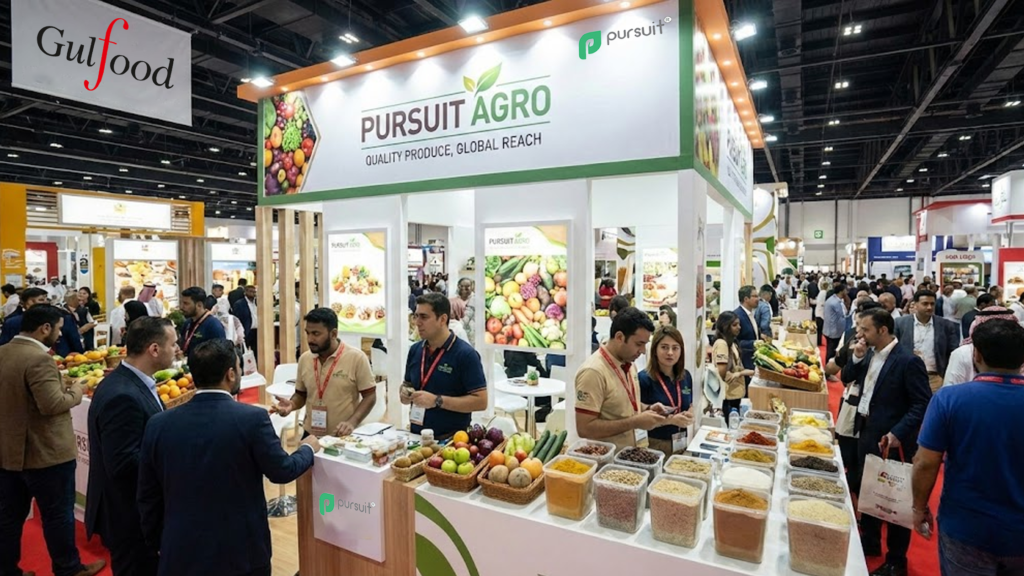
The largest international food and beverage exhibition in the world: Gulfood 2026 will unite international manufacturers, exporters, distributors, buyers in a single framework.
Pursuit Industries is pleased to inform that we will be attending Gulfood 2026 where we will be exhibiting our products and solutions before a global audience.
This blog provides all the details of the Gulfood Dubai 2026 event, as well as the location and methods of meeting the Pursuit Industries team at the event.
Pursuit Industries at Gulfood 2026
Pursuit Industries is officially participating as an exhibitor at Gulfood 2026, Dubai.
📍 Our Stall Details

- Exhibition: Gulfood 2026
- Venue: Dubai World Trade Centre (DWTC), Dubai, UAE
- Hall: North Hall 6 India
- Stall / Stand Number: N6-D61
We have a stall where people can browse through our product line, talk about business, and learn how Pursuit Industries holds the global trade through the friendly and quality solutions.
What is Gulfood 2026?
Gulfood 2026 is the 31st edition of the world’s leading food and beverage trade exhibition.
The event features thousands of exhibitors across categories such as packaged food, beverages, grains, spices, dairy, frozen foods, and food-related supply chain solutions.
Gulfood has turned into one of the primary areas of finding new suppliers, establishing connections, and monitoring trends in the world of food with the involvement of 190+ countries.
Where is Gulfood 2026 Held?
Gulfood 2026 will be held at the Dubai World Trade Centre (DWTC), one of the most prestigious exhibition venues in the Middle East.
The positioning of Dubai between Asia, Europe, and Africa also influences it to be a global food trade, exports and logistics hub.
Gulfood 2026 Dates & Timings
Gulfood 2026, the world’s largest food & beverage trade exhibition, will be held from 26 January to 30 January 2026.
Expected Gulfood 2026 Schedule:
- Dates: 26–30 January 2026
- Duration: 5 Days
- Timings: 10:00 AM – 6:00 PM (timings may vary on the last day)
Why Dubai for Gulfood 2026?
Dubai is one of the world’s fastest-growing food trading hubs. Key reasons include:
- Good international connections.
- Modern exhibition and logistic facilities.
- Vibrant import and export industry.
- Availability of foreign customers and companies.
- Business-friendly policies
All these contribute to the great value of Gulfood Dubai 2026 to both exhibitors and visitors.
Gulfood 2026 Exhibitor List – What to Expect
The Gulfood list of exhibitors 2026 will comprise those companies that work in the field of:
- Food & Beverage Manufacturing
- Agricultural Commodities
- Rice, Pulses & Grains
- Spices & Seasonings
- Dairy & Frozen Foods
- Packaging & Processing Solutions
India, UAE, USA, Turkey, Brazil, Germany and Italy are expected to participate on the major.
Why Visit the Pursuit Industries Stall?
By visiting Pursuit Industries at Gulfood 2026, you can:
- Explore our product offerings
- Discuss export and supply opportunities
- Understand our quality standards and capabilities
- Build long-term business relationships
Our team will be available throughout the exhibition to assist visitors and buyers.
Who Should Attend Gulfood 2026?
Gulfood 2026 is ideal for:
- Importers & Exporters
- Distributors & Wholesalers
- Retail Chains
- HORECA Businesses
- Private Label Buyers
- Global Food Brands
Why Gulfood 2026 Matters for Indian Businesses
Gulfood 2026 is the best opportunity that Indian exporters have to get in terms of exposure to international buyers. Categories like rice, spices, pulse, packages food, bulk commodities are given a lot of interest.
By attending Gulfood, Indian companies can benefit as follows:
- Enter new global markets
- Meet verified international buyers
- Strengthen brand credibility
- Stay updated with global trends
Plan Your Visit
- Register early for the event
- Schedule meetings in advance
- Visit the Pursuit Industries stall during the exhibition
- Follow up with connections post-event
Final Words
Gulfood 2026 is a food trade and networking exhibition on a grand scale. Participation in Gulfood 2026, Dubai, by Pursuit industries indicates our desire to increase our presence in the world market and cater to the needs of international market.
Single Loop FIBC Bags: Features, Types, and Applications for Efficient Bulk Material Handling
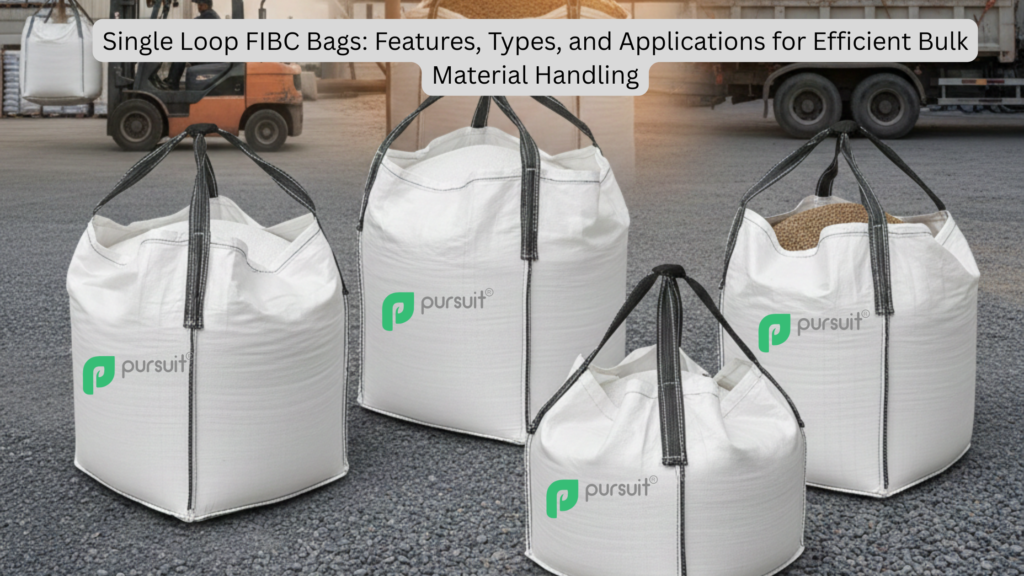
The processing of bulk materials safely and effectively is a challenge to most industries including agriculture and construction. It is here that FIBC bags come in.
The Flexible Intermediate Bulk Containers, also known as FIBC, are flexible, durable and affordable in terms of transporting and storing bulk materials.
Single loop FIBC bags are one of the most popular types of a bag since they are simple to use, strong, and to handle.
These bags have much to tell you in this article and we will cover all these details about these bags, their types, uses, and how to go about getting the right bag.
What Are Single Loop FIBC Bags?
FIBC bags, also referred to as bulk bags, are huge, flexible bags that are used to store and transport dry and flowable materials of sand, fertilizers, and grains.
FIBC is Flexible Intermediate Bulk Container in the entire form.
A single loop FIBC bag is a kind of FIBC that is planned with a single lifting loop, which is typically in the middle of the bag.
Single loop bags are lifted in the middle unlike any other bag, that is, the double loop bags, which have four loops around the corners of the bag and hence it suits some material-handling systems.
Other terms used for these bags include:
- Single loop bag
- One loop bags
- Single loop big bag
- Circular FIBC bag
Their construction allows them to be easier to use in a machine with a central lifting hook and less load on the material during transportation.
Key Features of Single Loop FIBC Bags
Single loop FIBC bags are fitted with a number of features that render them very viable when it comes to bulk handling:
- Single lifting loop: This type is used to be lifted using a hook in the middle.
- Sturdy construction: Construction is of high quality polypropylene woven material that is durable.
- Large capacity: Has large capacity, normally ranging between 500 to 2000 kg based on the design.
- Space-saving and stackable: The single loop design can be compactly stored.
- Modular: Can be configured to be circular or square based to fit special materials.
These characteristics render single loop bags suitable to be used in the chemicals, agriculture, and construction industries.
Types of FIBC Bags
The bags of FIBC come in various designs based on handling material requirements. The knowledge of the types of FIBC bags can assist the businesses select the appropriate solution:
- Single Loop FIBC Bags: Lifted using a single loop.
- Double Loop FIBC Bags: Two loops are in the form of corners which are lifted.
- Baffle FIBC Bags: Holds its shape when filled, suitable to fine powders.
- Conductive FIBC Bags: These are used to avert the accumulation of static electricity, and are applicable to flammable materials.
- Circular FIBC Bags: It is shaped in the form of a bag that some granular products can be easily filled.
Comparison Table: Single Loop vs Double Loop FIBC Bags
| Feature | Single Loop Bag | Double Loop Bag |
|---|---|---|
| Number of lifting loops | 1 | 4 |
| Ease of handling | Easy for central lifting | Requires corner hooks |
| Material stress | Low | Moderate |
| Ideal for | Round hook lifting systems | Forklift or crane lifting |
Applications of Single Loop FIBC Bags
Single loop FIBC bag is flexible and is used in various industries:
- Agriculture: Agricultural products include the transportation of grains, seeds, animal food, and fertilizers.
- Chemicals: The transportation of powdered or granular chemicals.
- Construction: Transport of sand, cement and other bulk construction materials.
- Food Industry: Keeping of bulk food like sugar, flour or salt.
These bags are not heavy, yet they are very durable; hence they are good when it comes to transportation of bulk bags.
Advantages of Single Loop FIBC Bags
Single loop FIBC bagging has the following advantages:
- Durability: It is made of woven polypropylene which is of high quality and can hold heavy loads.
- Reusable: It can be washed and used several times, which will save money.
- Space-efficient: Single loop design can be stacked and stored small.
- Cost-efficient: Less expensive than certain double loop or specialized bags of the FIBC.
- Safe Handling: Minimizes the chances of spillage of the material during lifting.
The single loop FIBC bags provide a cost effective, efficient and reliable solution to bulk material transportation by the business.
How to Choose the Right Single Loop FIBC Bag
Choosing a single loop FIBC bag, it should be taken into account the following factors:
- Capacity: Decision on the weight of the material to select the appropriate size.
- Type of Material: Select whether the material is abrasive, chemical or food grade.
- Design: Circular or square base depending on storage and filling systems.
- Lining: Select a moisture or chemical lining.
- Industry Compliance: Ensure the bag meets industry safety standards.
Checklist for choosing the right bag:
- Material compatibility
- Lifting system compatibility
- Load capacity
- Safety compliance
Maintenance and Safety Tips
Owing to proper maintenance, single loop FIBC bags have a long life span and are safe:
- Storage: Keep in a dry, shaded area to prevent UV damage.
- Handling: Avoid dragging the bag on rough surfaces to prevent tears.
- Cleaning: Wipe clean or use compressed air for dust; avoid harsh chemicals.
- Inspection: Regularly check for any damage, frayed loops, or fabric tears.
Following these tips ensures your FIBC bags remain durable, safe, and reusable.
FAQs
1. What is the full form of FIBC?
Ans: FIBC stands for Flexible Intermediate Bulk Container.
2. What is a single loop FIBC bag?
Ans: It is an FIBC bag that has a single lifting loop, which is applied in the lifting and transportation of bulk materials.
3. How is a single loop bag different from double loop bags?
Ans: Single loop bags are lifted on one loop unlike the four corner loops on the double loop bags.
4. Where are single loop FIBC bags mostly used?
Ans: These find extensive application in agriculture, chemicals, construction, and food.
5. Are single loop FIBC bags reusable?
Ans: Yes, they are strong and can be used in several times provided that they are kept in good condition.
Conclusion
Single loop FIBC bags are economical, a secure and an all-purpose model of handling bulk materials.
Their distinctive design, simplicity of use and ability to fit in any industry makes them the favorite of any business in all countries.
Knowing the types, applications, and maintenance of single loop FIBC bags, you will be able to choose the appropriate one that fits your operations.
Jumbo Bags from Pursuit: Reliable Bulk Packaging Solutions for Global Industries
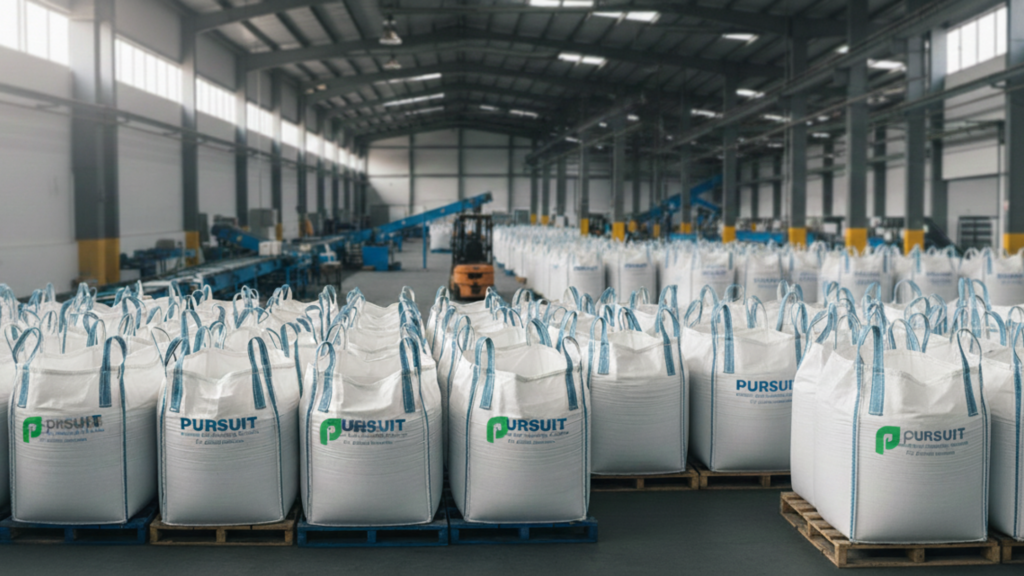
Safe and efficient bulk packaging is essential in the current global supply chain that is fast moving as well as offering protection to the goods and minimizing logistics expenses.
The use of jumbo bags or flexible intermediate bulk containers (FIBC) has become popular in the industries in relation to transportation and storage of bulk materials.
Jumbo bags provided by Pursuit are a reliable solution when it comes to quality, reliability, global standards, and doing business globally.
Having decades of manufacturing experience and a powerful export base, Pursuit Industries provides bulk packaging solutions aimed at performance, safety, and consistency.
What Are Jumbo Bags?
Jumbo bags are huge, elastic bags of woven polypropylene fabric, which carry dry flowable products in large volumes. They can take a load of up to 2000 kg or 500 kg depending on the design.
The reason why these bags are very popular is that they:
- Lightweight yet extremely strong
- Easy to store, handle, and transport
- Cost-effective for bulk logistics
Jumbo bags are mostly applied in the transportation of grains, fertilizers, chemicals, minerals, construction materials and pharmaceutical raw materials.
Why Choose Jumbo Bags from Pursuit?
It is equally important to pick the appropriate manufacturer as it is to pick the appropriate packaging.
The Jumbo bags manufactured by Pursuit are designed to fulfill the global quality expectations and the industrial demands.
Proven Manufacturing Experience
Pursuit Industries, established in 2016, brings strong experience in international trade and production.
This expertise is reflected across all stages of the production process—from careful selection of raw materials to the final dispatch stage.
Global Quality Standards
The jumbo bags are produced in terms of the rigorous quality control measures and the international standards.
Every batch is subject to numerous tests which are designed to help it to be strong, durable and safe during its transportation.
Customization for Business Needs
Pursuit provides wholly customized jumbo bags according to:
- Load capacity
- Bag dimensions
- Loop design
- Fabric type
- Printing and branding requirements
Such flexibility enables the businesses to select packaging that suits their purpose of operation and branding.
Types of Jumbo Bags Offered by Pursuit
In order to satisfy the needs of the industry, Pursuit Industries produces a variety of jumbo bags such as:
- U-Panel Jumbo Bags – Ideal for stable stacking and uniform shape
- 4-Panel Jumbo Bags – Designed for improved strength and structure
- Circular / Tubular Jumbo Bags – Seamless design for better load distribution
- Baffle Jumbo Bags – Maintains square shape and saves storage space
- Single Loop & Two Loop Bags – Suitable for automated handling systems
Both types are created keeping in mind safety, efficiency and ease of use.
Industries Using Jumbo Bags from Pursuit
Pursuit Jumbo bags are relied on by companies in various sectors because they are versatile and reliable.
Agriculture & Food Industry
Applied to grains, seeds, sugar, rice and to feed animals, it keeps hygienic and prevents moisture.
Chemicals & Fertilizers
It is developed to transfer dangerous and harmless chemical substances safely and in a secure manner using tough material and safe stitching.
Pharmaceuticals
Weatherproof, waterproof and easy to handle on roads that have pharmaceutical raw materials that demand cleanliness and quality consistency.
Minerals & Construction
Applicable to cement, sand, minerals and ores as it has a high load bearing capacity.
Polymers & Resins
Ideal with plastic granules and polymer products that have to be kept contamination-free.
Key Benefits of Jumbo Bags from Pursuit
Pursuit jumbo bags are selected by businesses due to the following reasons:
- High tensile strength and durability
- Excellent load stability and safety
- Protection from moisture and contamination
- Easy handling with forklifts and cranes
- Reduced packaging and transportation costs
- Long service life and reusability
Jumbo bags are a smart purchase when it comes to bulk logistics due to these advantages.
Quality Assurance and Safety Standards
Quality is central in the production process of Pursuit Industries. All jumbo bags are subjected to strict checks, such as:
- Raw material inspection
- Fabric strength and GSM testing
- Stitching and seam strength tests
- Load and safety factor testing
This guarantees that jumbo bags by Pursuit can be used in a reliable environment even during intense processes and exportation to long distances.
Why Global Buyers Trust Jumbo Bags from Pursuit
Pursuit Industries has developed long term relationships with clients in 80+ countries due to:
- Consistent product quality
- Timely deliveries
- Transparent communication
- Strong export packaging expertise
The world buyers depend on Pursuit not only as an individual supplier, but as a permanent packaging partner.
How to Order Jumbo Bags from Pursuit
It is easy and efficient to order at Pursuit:
- Share your product and packaging requirements
- Get expert guidance from the Pursuit team
- Approve specifications and customization
- Production with strict quality checks
- Safe packing and global dispatch
Pursuit offers a hassle-free process when it comes to ordering be it standard jumbo bags or full customized solutions.
FAQs – Jumbo Bags from Pursuit
Q1. What is the load capacity of jumbo bags from Pursuit?
Pursuit jumbo bags typically support loads from 500 kg up to 2000 kg, depending on the design and fabric.
Q2. Are jumbo bags from Pursuit suitable for export?
Yea, every jumbo bag is made in accordance with the international export standards and quality standards.
Q3. Can I customize jumbo bags with my company branding?
Absolutely. Pursuit also provides printing and branding services according to the demand of the customers.
Q4. Which industries commonly use jumbo bags from Pursuit?
Agriculture, chemicals, pharmaceuticals, construction, minerals, and polymer industries widely use these bags.
Conclusion
Jumbo bags sold by Pursuit can provide businesses with a balance of quality, customization and global reliability, and this aspect makes jumbo bags the best choice in terms of secure long-lasting and affordable bulk packaging.
With several decades of experience and loyal to the international customers, Pursuit Industries keeps on creating standards in bulk packaging solutions.
Get in touch with Contact Pursuit Industries and talk about your jumbo bag needs and identify an easy way to package your goods into jumbo bags in a way that best suits your business.
Top 10 FIBC Bags Manufacturers You Can Trust in 2026

Choosing the appropriate bag maker of the FIBC does not only lie in the cost factor but also in safety, strength and conformity.
Jumbo bags are Flexible Intermediate Bulk Containers (FIBC) that have been used in the chemical, food, construction, and logistics industries.
Low quality bags may cause spillage, contamination or safety risk of the products among the businesses in terms of time and money.
We have reviewed dozens of suppliers over the years, tried out product quality, and prepared a list of the most consistent manufacturers of FIBC bag in 2026 that you may trust.
This guide will guide you in making a wise choice as well as selecting suppliers that will suit your particular needs in industry.
What Are FIBC Bags?
The Flexible Intermediate Bulk Containers (FIBC) are the large, robust bags that are used to transport and store dry, flowable products such as sand, chemicals, grains, or food items.
Common types include:
- Type A: Non-conductive material non-conductive bagging.
- Type B: Bags that contain less electrostatic properties.
- Type C: Conductive bags which were applied in the possibly explosive areas.
- Type D: Anti-static bags of sensitive materials.
Fibre bags have found their way to the industries that need bulk storage and transportation that must be reliable, safe, and efficient.
Why Choosing the Right Manufacturer Matters
The choice of a good manufacturer of the FIBC affects your business in a number of ways:
- Safety & Compliance: Certified manufacturers work according to ISO and UN requirements, and make sure that the bags are safe to be used when working with sensitive or dangerous items.
- Quality & Durability: Quality bags do not lose or spill products therefore this prevents losses of operations.
- Cost-Efficiency: Trustworthy suppliers reduce returns and time wastage saving time and money.
Factors to Consider Before Choosing an FIBC Manufacturer
Certifications & Quality Standards
- Certificate Check ISO, UN, or food-grade to be safe and legal.
Product Range & Customization Options
- Test the bag size, types and load capacities.
- Industries with custom needs are essential in terms of customization.
Production Capacity & Lead Time
- Make sure that the suppliers have the capacity to process bulk purchases and serve in time.
Reputation & Customer Reviews
- Search on verified testimonials, case studies and LinkedIn recommendations.
Global Shipping & Regional Availability
- Establish the capabilities of suppliers to deliver at an international or local level to your place.
Top 10 FIBC Bags Manufacturers You Can Trust in 2026
1. Pursuit Industries – Trusted FIBC & Bulk Bag Manufacturer
Leading FIBC bags manufacturer in India
Pursuit Industries is recognized for producing a comprehensive range of Flexible Intermediate Bulk Containers (FIBC) — also called Jumbo Bags, Bulk Bags & Big Bags — with strong emphasis on quality, customization, and industry compliance.
Why Pursuit Industries Stands Out:
- Wide product range including U‑Panel, Circular, 4+1 Panel, Baffle, Ventilated, Conductive/Anti‑static, and UN certified bulk bags.
- Produces food‑grade and pharma‑grade FIBCs with clean‑room quality and BRC/ISO compliant manufacturing processes.
- Modular design and size, with SWL (Safe Working Load) of 500kg up to 2000kg.
- Uses durable PP woven fabric, moisture protection, and strong loop systems for safe transport and storage in sectors like agro, chemical, cement, minerals, fertilizers, polymer, food, pharma and more.
- Focus on quality control and on‑time delivery, making it reliable for domestic and export orders.
Best for: Businesses needing customized FIBC solutions with international standards, especially where food/pharma hygiene and safety certifications matter.
Website: https://pursuitind.com/
2. VR FIBC
Known in the industry for manufacturing standard bulk bags, Jumbo bags, and PP woven products suitable for various industrial applications.
Many small to medium enterprises in packaging refer to VR FIBC as a cost‑effective supplier in India.
Best for: Budget‑friendly FIBC solutions with basic customization.
Website: http://vrfibc.com/
3. Alpine FIBC Pvt. Ltd.
Alpine FIBC is one of the leading FIBC manufacturers & exporters in India, offering a wide variety of jumbo and bulk bags such as U‑Panel, Circular, Baffle, Ventilated, and food‑grade bags.
Highlights:
- Customization and clean manufacturing based on customer requirements.
- Supplies to both domestic and international markets, with expertise in heavy‑duty FIBCs and PP woven fabrics.
Best for: Diverse industrial applications requiring strong performance and export quality.
Website: https://www.alpinefibc.com/
4. HCP Plastene Bulkpack Limited
HCP Plastene Bulkpack (HPBL) is a well‑established plastics and technical textiles company producing woven bags, FIBC, jumbo bags, and specialized packaging products.
Why it matters:
- It has a strong production base in Ahmedabad, Gujarat, and has been operating since the early 1980s.
- Produces FIBC along with BOPP bags, block bottom bags, and liner products.
- Known for robust woven packaging and fabric quality in the Indian plastics sector.
Best for: Companies seeking diversified packaging solutions alongside FIBC.
Website: https://hpbl.in/
5. Lichybees Exim
Lichybees Exim is typically a trading & exporting company in PP FIBC, jumbo bags and PP/HDPE woven packaging. While detailed online manufacturing info is limited, they are known in trade directories and B2B networks for supplying flexible intermediate bulk containers to global buyers.
Best for: Importers and exporters looking for bulk packaging supplies outside of direct manufacturing.
Website: https://www.lichybeesexim.com/
6. Rishi FIBC Solutions Pvt. Ltd. – Global FIBC Leader
Rishi FIBC Solutions is a major FIBC manufacturer with a large global footprint, producing millions of bags annually with high‑end facilities.
Key Strengths:
- Massive production capacity (millions of FIBCs a year) and multi‑product portfolio including container liners & flexitanks.
- ISO & BRC certified, with a strong focus on food and pharmaceutical grade solutions, sanitation, and hygiene.
- Exports to 42+ countries globally, making it highly trusted internationally.
Best for: Large‑scale industrial buyers and global distribution.
Website: https://www.rishifibc.com/
7. Shubh Polyfab Pvt. Ltd. – FIBC & Jumbo Bag Manufacturer
Shubh Polyfab offers a wide range of FIBC bags, HDPE/PP woven sacks, and fabrics, serving sectors like agriculture, chemicals, construction, and waste management.
Standout Points:
- ISO 9001:2015 certified manufacturing.
- Versatile FIBC solutions with custom options and reliable performance.
Best for: Regional businesses needing customizable FIBC at competitive pricing.
Website: https://shubhpolyfab.com/
8. Aareha Elastin FIBC Pvt. Ltd.
Aareha Elastin is a rapidly growing FIBC manufacturer with large production capacity and advanced manufacturing facilities.
Key Features:
- Produces bulk bags, anti‑static bags, UN bags, and agriculture & industrial FIBCs.
- Certified with ISO 9001:2015 & ISO 22000:2005, and operates large facilities with quality labs.
Best for: Customers with demand for certified and hygienic bulk packaging.
Website: https://aarehaelastin-fibc.com/
9. Sky FIBC
Sky FIBC is generally a manufacturer or supplier of industrial bulk packaging products, including various FIBC types such as standard and custom jumbo bags. They serve domestic industrial sectors with a focus on strength and reliability.
Best for: Sector‑specific bulk packaging requirements with standard FIBC options.
Website: https://www.skyfibc.com/
10. Bubna Polysack Industries
Bubna Polysack Industries is a reputed manufacturer and exporter of Pp/Hdpe woven products such as FIBC bulk bags, jumbo bags, and other woven products fabric solutions.
Profile Highlights:
- Proposes tailor made FIBC bags to industries such as agriculture, construction, mining and chemicals. PPBag
- Famous with durable and environment friendly woven polypropylene and HDPE products.
Best: The buyers who are willing to have a versatile woven packaging and bulk bag solution with customization.
Website: https://www.ppbag.co/
How to Choose the Right Manufacturer for Your Business
Your needs depend on the choice of the most suitable manufacturer:
Consider the stability over the long term plus after sales.
Assess suppliers in terms of industry, product and compliance.
Compare supplies certification, product variety and lead times.
Easily evaluate and compare various manufacturers by using checklists or tables.
FAQs About FIBC Manufacturers
Q1: Which certifications do you think should be possessed by the manufacturers of FIBC?
- The compliance and safety of products are guaranteed by ISO, UN, and food-grade certifications.
Q2: Can I design FIBC bags to be used in my company?
- Yes, numerous manufacturers have tailored-made sizes, materials and printing.
Q3: Which countries have the best FIBC suppliers?
- Leading manufacturers operate in India, China, the USA, and Europe.
Q4: How to ensure product quality before ordering?
- Take request samples, certifications and client references prior to bulk-orders.
Conclusion
The selection of an appropriate manufacturer of the FIBC bags is important in terms of efficiency, cost-effectiveness, and safety. The 10 manufacturers in this guide are proven companies with certifications and high reputation in the industry.
What Is a Flexible Intermediate Bulk Container (FIBC)?
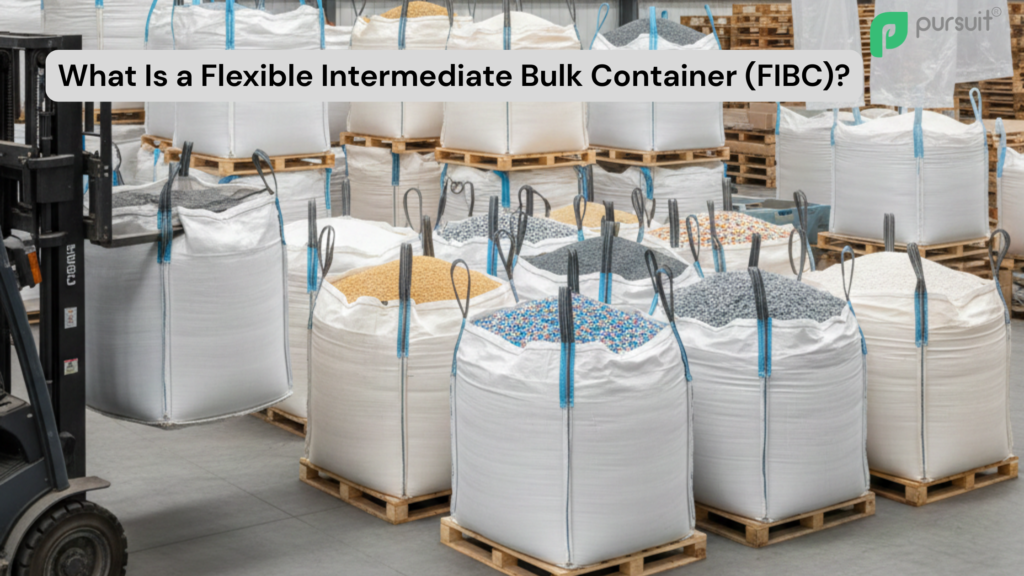
A Flexible Intermediate Bulk Container (FIBC) is an oversized and flexible container which is used to hold as well as transport dry, flowing bulk material in a safe and efficient manner.
Also referred to as the FIBC bags, bulk bags or jumbo bags, the bags are widely applied in agricultural, chemical, food processing, pharmaceutical, construction, and international trade industries.
At Pursuit Industries, we utilize the close collaboration with domestic and international buyers in order to deliver high quality FIBC bags that address international safety, quality and exporting standards.
This guide will tell you all you need to know about flexible intermediate bulk containers including types and materials, use, cost, and compliance so that procurement managers and importers can make informed choices.
What Are Flexible Intermediate Bulk Containers?
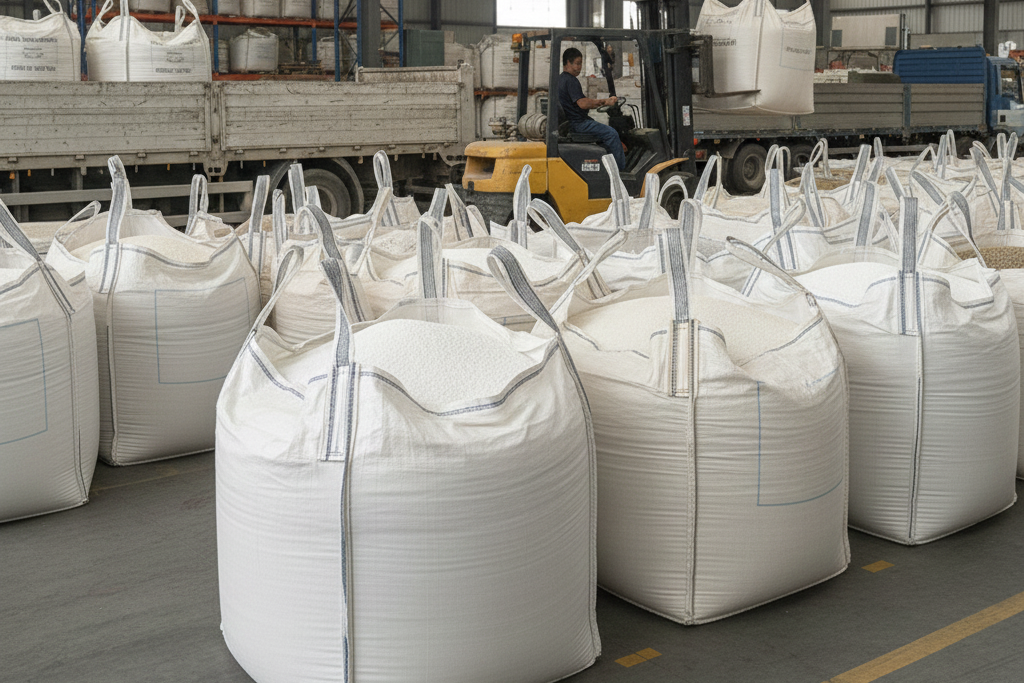
Flexible Intermediate Bulk Containers are industrial grade bags that are made of woven polypropylene (PP) fabric, meant to transport bulk materials of between 500 kg-2000 kg.
These are referred to as intermediate since they fill the gap between small bags (25-50 kg) and large bulk transport systems.
FIBCs are light but very robust thus can be easily handled during transportation with forklifts or cranes without compromising the safety of the products.
FIBC Full Form
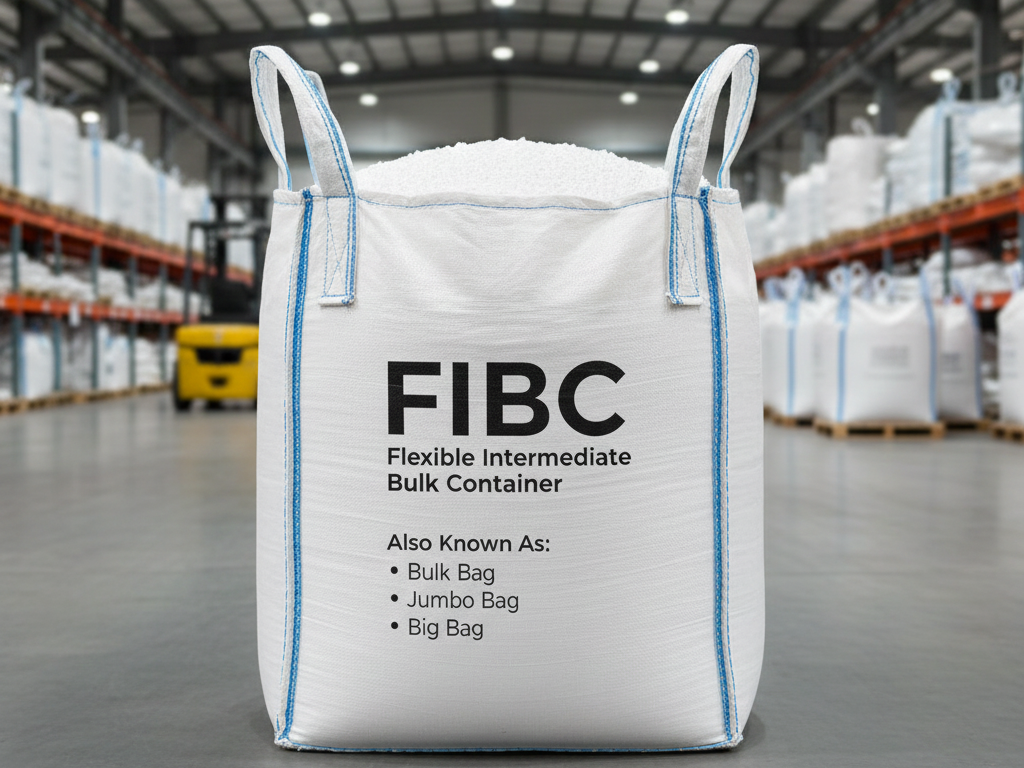
FIBC stands for Flexible Intermediate Bulk Container.
These bags are also referred to as:
- Bulk bags
- Jumbo bags
- Big bags
All these terms describe the same category of flexible bulk packaging solutions.
What Is an Intermediate Bulk Container?

An Intermediate Bulk Container is a reusable container that is applied in the storage and transportation of bulk liquids and solids. IBCs are widely classified into:
- Rigid IBCs – Rigid type made of plastic, metal, or composite (usually of liquid) material.
- Flexible IBCs (FIBC) – These are developed of woven PP (dry bulk materials).
FIBCs of the two are preferred when it comes to dry goods as they are cost effective, space saving, and easy to handle.
Difference Between IBC and FIBC
| Feature | IBC | FIBC |
|---|---|---|
| Structure | Rigid | Flexible |
| Material | Plastic / Metal | Woven Polypropylene |
| Ideal For | Liquids | Dry bulk materials |
| Storage | Requires more space | Foldable & space-saving |
| Cost | Higher | Economical |
Materials Used to Construct Flexible Intermediate Bulk Containers
FIBCs are mostly made of 100 per cent Pure polypropylene (PP) fabric. They can also consist of:
- UV-stabilized woven PP fabric
- LDPE / HDPE inner liners
- Food-grade materials (FDA compliant)
- Anti-static or conductive yarns for hazardous environments
PP has a high tensile strength, resists moisture and is durable which makes it the best material to choose in the manufacture of the FIBCs.
Types of FIBC Bags

The proper type of FIBC is important to the safety and compliance.
Type A FIBC Bags
- No static protection
- Suitable for non-flammable products
Type B FIBC Bags
- Prevents propagating brush discharges
- Used for dry, flammable powders
Type C Conductive FIBC Bags
- Groundable
- Designed for hazardous and explosive environments
Type D Anti-Static FIBC Bags
- Dissipates static without grounding
- Safe for combustible dusts
Flexible Intermediate Bulk Container Bags – Design Options
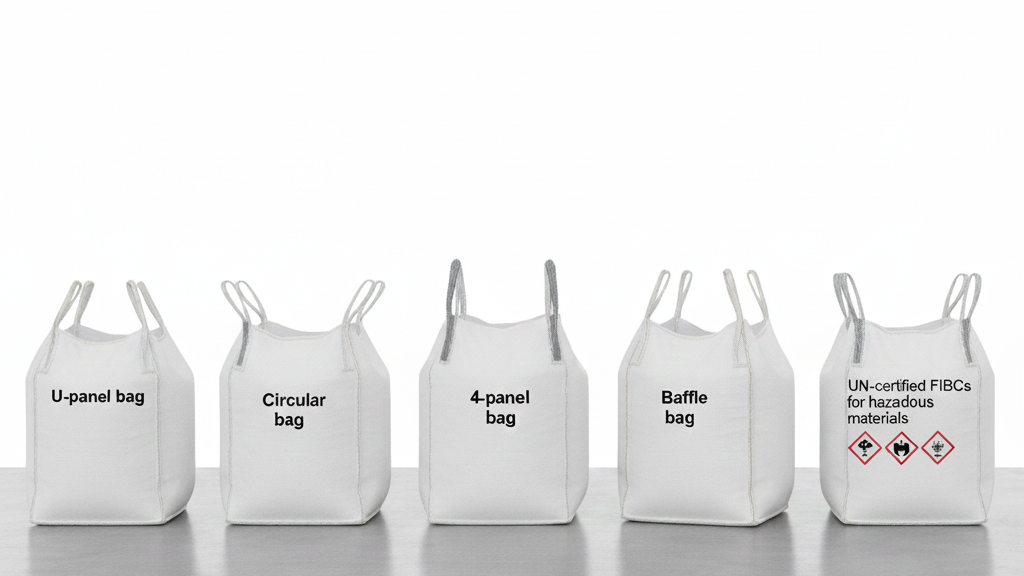
FIBC bags come in different designs to meet the needs of the different material flow and handling requirements:
- U-panel bags
- Circular bags
- 4-panel bags
- Baffle bags
- UN-certified FIBCs for hazardous materials
It also has custom filling spouts, discharge spouts, liners and lifting loop configurations.
Applications of Flexible Intermediate Bulk Containers
The applications of FIBC bags are seen in several industries:
- Agriculture: grains, seeds, fertilizers
- Food Industry: sugar, flour, rice, starch
- Chemicals: powders, polymers, minerals
- Building: cement, sand, additives.
- Pharmaceuticals: APIs and intermediates
- Exports & Logistics: bulk shipping and storage
Flexible Intermediate Bulk Container Sizes & Dimensions
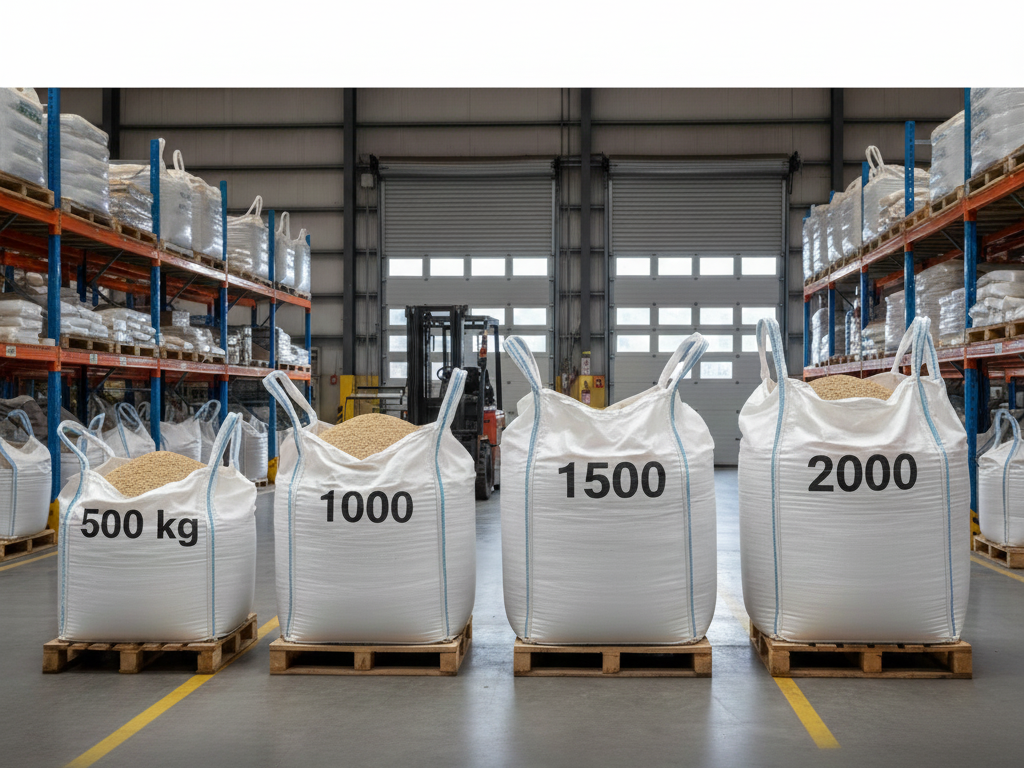
Standard FIBC sizes will maximize the use of containers and logistics. Typical capacities include:
- 500 kg
- 1000 kg
- 1500 kg
- 2000 kg
The density and size of products and the handling needs can be tailored into dimensions and specifications.
Price of Flexible Intermediate Bulk Container
Price of flexible intermediate bulk containers is dependent on a number of factors:
- Fabric GSM and construction
- Type of FIBC (A, B, C, or D)
- Certifications (UN, food-grade, pharma)
- Quantity ordered
- Customization requirements
FIBCs in India have prices ranging between 800 to 2500 rupees depending on the specifications and quantity ordered.
Flexible Intermediate Bulk Container HS Code
FIBC bags are normally categorized as:
- HS Code: 63053200
Proper HS classification is paramount to the customs clearance, GST, and international trade documentation.
Flexible Intermediate Bulk Container Manufacturers

In choosing the manufacturer of flexible intermediate bulk container, consider:
- ISO, BRC, FSSC, and UN certifications
- Export experience
- Quality control processes
- Customization and supply capacity
India is also one of the largest manufacturing centers of the world in terms of manufacturing of high quality bulk bags which are sold all over the world.
Pursuit industries is an enterprise that deals with the production and exportation of superior FIBC bags to suit the needs of international purchasers.
Flexible Intermediate Bulk Container Associations
Organizations: Industry associations are important in ensuring quality and safety standards:
- Indian Flexible Intermediate Bulk Container Association (FIBCA)
- EFIBCA European Flexible Intermediate Bulk Container Association.
- Australian Flexible Intermediate Bulk Container Association
These organizations assist in the maintenance of international compliance, safety and optimum production.
Advantages of Flexible Intermediate Bulk Containers
- Cost-effective bulk packaging
- Lightweight yet strong
- Space-saving and foldable
- Easy handling and transportation
- Reusable and recyclable
- Customizable for various industries
Which Is Better – PP or PE for FIBC?
FIBC bags use polypropylene (PP) as it is very strong and durable. Polyethylene (PE) is usually applied as a moisture protective inner liner and is not the recommended to be used as the main structural material.
Frequently Asked Questions (FAQs)
What are flexible containers?
Packaging solutions, which are currently developed to be versatile (that is, made of pliable materials such as woven PP) to ensure efficient bulk storage and transportation.
What is the difference between IBC and FIBC?
IBCs are hard-sided containers whereas the FIBCs are soft fabric-coated ones or containers used in mostly dry bulk products.
What materials are applied to make flexible intermediate bulk containers?
FIBCs can be constructed of woven polypropylene material with an optional liner and protective elements.
Are FIBC bags reusable?
Yes, numerous FIBG bags are constructed in a way that they can be used in numerous applications with regard to construction and safety requirements.
Conclusion
Flexible Intermediate Bulk Container (FIBC) is an effective, economical, and international approved bulk packaging system.
FIBC bags provide safety, logistics and regulatory compliance of the product with the right material, design and certification.
Pursuit Industries is a manufacturer of a flexible intermediate bulk container that is customized and export-ready. Call us today about the price, specifications or bulk quote.
FIBC Jumbo Bag – Complete Guide, Types & Specifications
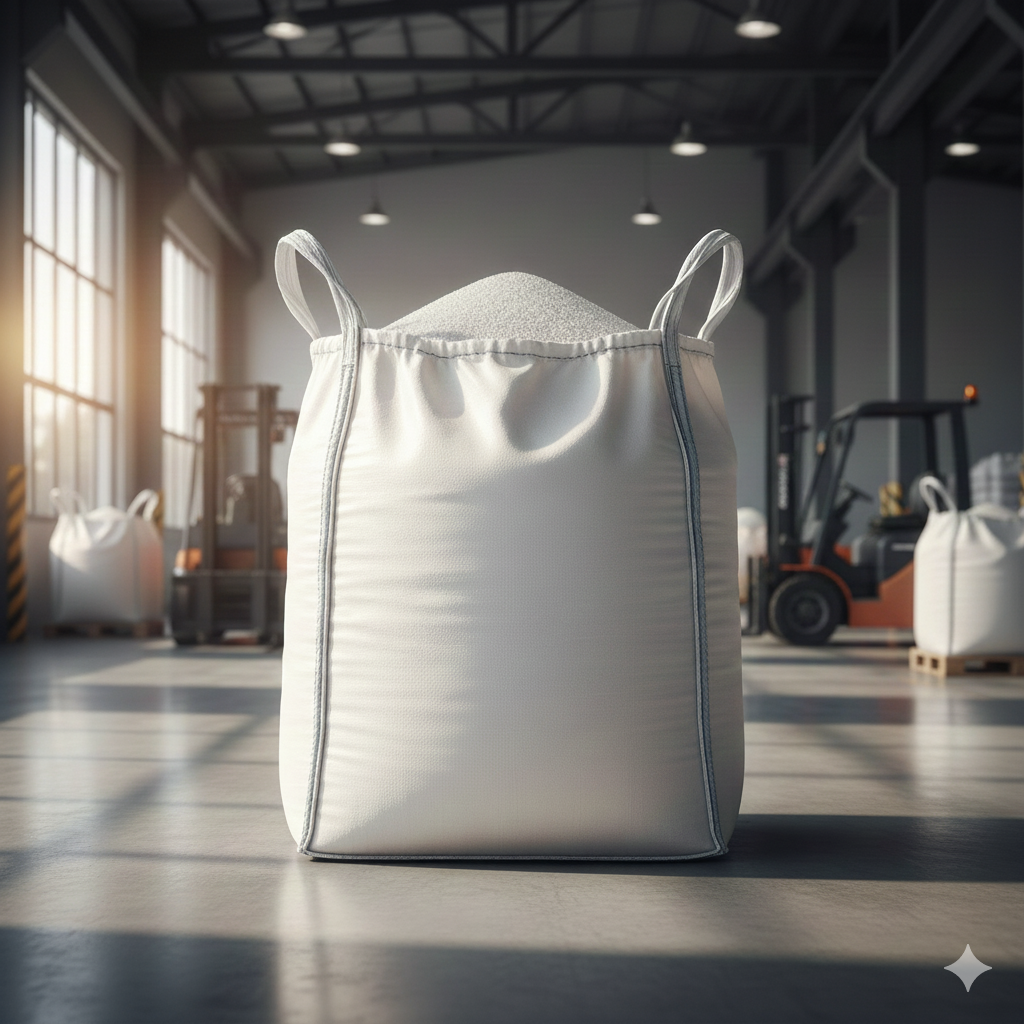
What Is an FIBC Jumbo Bag?
The jumbo bag or the bulk bag or flexible intermediate bulk container (FIBC Jumbo Bag) is one of the most efficient, cost effective and versatile forms of packaging used to transport the dry bulk materials.
The maximum and minimum weight that can be transferred through these woven polypropylene bags is 500 kg to 2000 kg; this is why such bags are vital in agriculture, chemicals, construction, mining, food processing industries among others.
As demand is rising across the globe, particularly with the manufacture of the FIBC bags, jumbo bags, and so on, the buyer would have to know the specifications, types, safety concerns, and test requirements before making a purchase.
This point-by-point guide will ensure that you select the appropriate FIBC jumbo bag in business.
FIBC jumbo bag is a huge but flexible bag constructed out of a woven polypropylene (PP) fabric.
These bags will have the ability to store, lift and safely transport the bulk materials of heavy weight.
Technical definition:
A Flexible Intermediate Bulk Container (FIBC) is a polypropylene woven container of 500 to 2000 kg, that has been designed to be mechanically handled using lifting loops mounted on forklifts or cranes.
Common names globally:
- Jumbo bag
- Bulk bag
- FIBC bag
- Big bag
- Super sack
Why FIBC Bags Are Used
Companies choose FIBC jumbo bags because they are:
- Lightweight yet high-strength
- Reusable and recyclable
- Weather-resistant
- Cost-effective vs drums or cartons
- Safe for storing powders, granules, flakes, and fertilizers
FIBC Jumbo Bag vs Regular Jumbo Bags
Although they are both employed to store large quantities, the FIBC Jumbo Bags are not similar to the conventional jumbo bags in their durability, compliance and handling capabilities.
Frequent bags can be easily torn during the heavy loading, but in the case of the FIBC bags, they are UN-certified, and they are tested under loads that assure safety of industrial materials.
Comparison Table:
| Feature | FIBC Jumbo Bag | Regular Jumbo Bag |
|---|---|---|
| Material Strength | High-density woven polypropylene | Standard polypropylene or fabric |
| Load Capacity | 500–2,000+ kg | Up to 1,000 kg |
| Safety Standards | UN Certified | Usually no certification |
| Reusability | Can be reused multiple times | Limited reuse |
| Customization | High (liners, loops, discharge spouts) | Low |
Components of an FIBC Jumbo Bag
An FIBC jumbo bag consists of several critical components. Each part impacts the bag’s safety, load capacity, and performance.
1 Woven Polypropylene Fabric
- Made from high-strength PP tapes
- Fabric weight typically 160–240 GSM
- UV-stabilized for outdoor use
- Can be coated (laminated) or uncoated
Coated fabric: Protects from moisture and fine-powder leakage
Uncoated fabric: Used for grains, stones, fertilizers
2 Lifting Loops
These are essential for loading and unloading.
Popular loop configurations:
- 4-loop bags (most common)
- 2-loop bags
- 1-loop bags (used for cement, fertilizer industry)
- Stevedore straps (extra lifting option for containers)
Loop materials:
- Polypropylene multifilament yarn
- High-tenacity polyester
3 Filling Options (Top Construction)
Different industries need different filling methods:
Open Top
- Basic design
- For products not requiring sealing
Spout Top
- Circular spout for controlled filling
- Used for powders, resins, fine chemicals
Duffel Top / Skirt Top
- Full opening
- Easy filling
- Can be tied or closed with a rope
Flap Top
- Full cover sheet
- Protects materials from dust and moisture
4 Discharge Options (Bottom Construction)
Flat Bottom
- Most economical
- Product must be manually removed
Spout Bottom
- Easy drainage
- Used for sand, flour, sugar, powders
Full Discharge / Conical Bottom
- For sticky materials
- No wastage
5 Inner Liners
A liner provides:
- Moisture protection
- Air tightness
- Contamination prevention
Types of liners:
- LDPE liners
- Aluminum liners (for moisture-sensitive products)
- EVOH barrier liners
3. Types of FIBC Jumbo Bags (A, B, C & D)
Electrostatic safety matters—especially when handling powders.
Here is an in-depth understanding:
1 Type A FIBC Bags
- Standard, non-conductive bags
- No electrostatic protection
- Made from plain PP fabric
Use for:
Materials that do not cause sparks, such as:
✔ Sand
✔ Gravel
✔ Rice
✔ Fertilizers
✔ Limestone
Avoid using for: flammable powders or gases.
2 Type B FIBC Bags
- Similar to Type A
- Do not ignite explosive dust clouds
- BUT cannot dissipate static electricity
Use for:
✔ Dry powders that do not produce flammable vapors
✔ Food grains
Do not use for:
Flammable environments.
3 Type C FIBC Bags (Conductive Bags)
- Made with conductive threads
- Must be grounded during filling/discharging
- Prevent electrostatic buildup
Use for:
✔ Chemicals
✔ Pharmaceutical powders
✔ Combustible materials
Safety note:
Ungrounded Type C bags can cause explosions.
4 Type D FIBC Bags (Anti-Static Bags)
- No grounding required
- Prevent brush discharges
- Most advanced and safest
Use for:
✔ Petrochemical powders
✔ Hazardous materials
✔ Fine flammable dust
4. FIBC Jumbo Bag Specifications Explained
Knowing specs helps you choose the right bag for your application.
1 Fabric GSM
Common range: 140–240 GSM
Higher GSM = stronger bag.
2 SWL (Safe Working Load)
Standard weight categories:
- 500 kg
- 1000 kg
- 1500 kg
- 2000 kg
Choose SWL based on:
- Product density
- Handling method
- Stack height
3 Safety Factor (SF)
Measures the strength of the bag.
- 5:1 → Single use
- 6:1 → Multi-trip / Reusable
- 8:1 → Heavy-duty, special applications
International standards often require:
- ISO 21898
- UN certification
4 Shape Options
- U-panel bags
- Circular bags
- 4-panel bags
- Baffle bags (ideal for maximizing container space)
5 Printing & Branding Options
FIBC bags can be printed with:
- Company logo
- Product information
- Safety warnings
- UN certification numbers
FIBC Jumbo Bag Applications (Industry-Wise Use Cases)
FIBC jumbo bags are used across 20+ industries. Here are the main sectors:
1 Agriculture
- Seeds
- Pulses
- Wheat
- Rice
- Grains
- Fertilizers
Benefits:
- Prevents external contamination
- Fast loading & unloading
- Ideal for exports
2 Food Industry
- Flour
- Sugar
- Salt
- Spices
- Starch
- Edible powders
Need:
Food-grade certified FIBC with cleanroom manufacturing.
3 Chemical Industry
- Plastic granules
- Resins
- Polymers
- Petrochemicals
- Fertilizer powders
Often need Type C or Type D bags.
4 Construction
- Sand
- Cement
- Aggregates
- Crushed stones
Best choice:
High-strength 4-loop, 1-ton jumbo bags
5 Pharmaceuticals
- Fine powders
- Active pharmaceutical ingredients
Needs:
- Anti-static (Type C or D)
- Cleanroom production
6 Mining
- Ores
- Minerals
- Limestone
- Silica sand
Needs:
- Strong SWL (up to 2000 kg)
- UV protection
FIBC Bag Testing & Quality Standards
Manufacturers follow strict international testing procedures.
1 Top Lift Test
Bag is filled to SWL and lifted for 5 minutes.
2 Drop Test
Filled bag dropped from 30 cm height.
3 Tear Test
Ensures fabric resists ripping under load.
4 UV Testing
Simulates sunlight exposure.
5 Cyclic Load Test
Repeated lifting cycles to check durability.
6 UN Certification
Required for:
- Dangerous goods
- Hazardous chemicals
Ensures the bag meets global safety standards.
Why Choose an FIBC Bags Manufacturer in India?
India is the largest exporter of jumbo bags due to:
1 High-quality polypropylene
Indian PP is known for strength and consistency.
2 Cost-effectiveness
Prices are 30–40% lower than Europe/USA.
3 Advanced manufacturing
- Cutting
- Weaving
- Lamination
- Printing
- Liner insertion
- UN testing
4 Custom designs
Manufacturers provide:
- Size customization
- Logo printing
- SWL variations
- Industry-specific designs
How to Choose the Right FIBC Jumbo Bag (Buyer’s Checklist)
Before ordering, evaluate:
✔ Product type
Powder, granule, flakes, food, chemical?
✔ Weight per bag (SWL)
500 kg, 1 ton, 1.5 ton?
✔ Safety factor
5:1? 6:1? 8:1?
✔ Electrostatic safety
✔ Weather conditions
Outdoor storage needs UV protection.
✔ Liner requirement
Moisture-sensitive materials need liners.
✔ Top & bottom design
Spout, duffel, flap, open?
FAQs About FIBC Jumbo Bags
1. What is the full form of FIBC?
Flexible Intermediate Bulk Container.
2. How much weight can a jumbo bag carry?
450 kg to 2000 kg depending on fabric GSM and design.
3. What are jumbo bags used for?
To store and transport bulk materials like grains, sand, chemicals, powders, minerals, fertilizers, resins, etc.
4. Can FIBC bags be reused?
Yes — 6:1 safety factor bags are reusable.
5. Which FIBC type is best for powders?
Type C or Type D bags according to the requirements of electrostatic safety.
6. Are FIBC bags waterproof?
Not by default.
For moisture protection → Use coated fabric + liners.
7. Are FIBC bags recyclable?
Yes, they are made of 100% PP material.
Conclusion
FIBC Jumbo Bag is very crucial in every industry that requires bulk handling of materials in a safe and effective manner. Such bags have unparalleled strength, flexibility, cost and safety over drums, sacks or wooden crates.
Do you require jumbo bags, bulk bags, FIBC bags, or manufacturer of FIBC bags in India? And you do not have a clear picture of the types, specifications, safety aspects and scope of application to make the right purchase decisions.
An appropriate chosen FIBC jumbo bag will:
- Reduce packaging cost
- Improve handling efficiency
- Ensure safe transport
- Protect materials
- Increase profitability
Jumbo Bags: Complete Guide to Types, Uses, Specifications & How to Choose the Right One
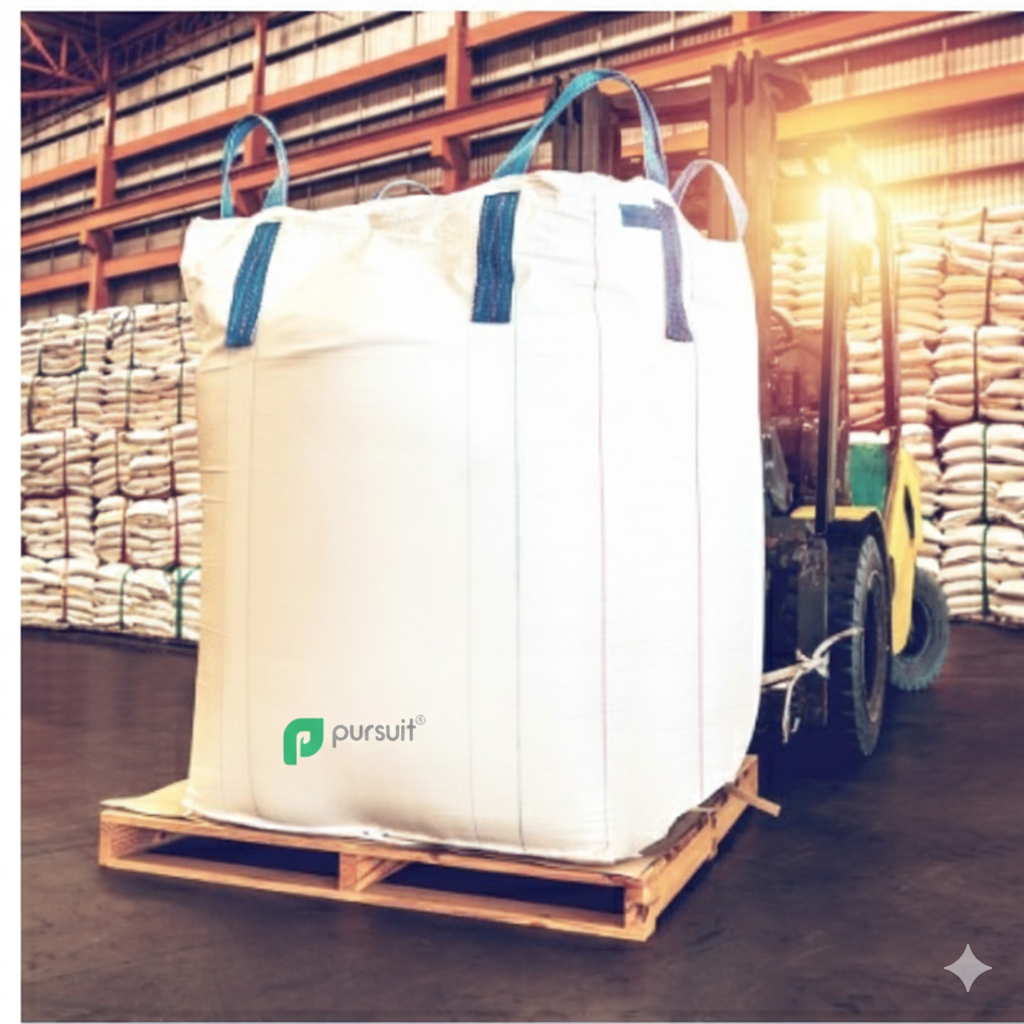
What Are Jumbo Bags?
Jumbo bags or Flexible Intermediate Bulk Containers (FIBC bags) are large durable polypropylene bags used in storing and transportation of bulk materials like grains, chemicals, fertilizers, construction material, plastic granules, and minerals.
They are programmed to be able to hold 500 kg to 2000 kg without breaking or damaging thus they are also one of the most economical industrial packaging in the world.
Unlike small packaging bags, jumbo bags reduce manpower, loading time, wastage, and transportation costs — which is why industries prefer them today.
Why Jumbo Bags Are Popular: Real-World Benefits
These benefits are based on practical, actual usage in industries:
1) Huge Cost Savings
One jumbo bag replaces 20–40 small sacks, reducing packaging cost and labour time.
2) Safe Handling & Storage
The rightly sewn FIBCs ensure that the products are not leaked, contaminated, or wet.
3) Reusable & Eco-Friendly
Most jumbo bags are recyclable. Some can be reused depending on safety factors (SFR).
4) Easy to Transport Bulk Material
Jumbo bags can be loaded and off loaded very fast by use of forklifts, cranes or hooks.
5) Custom-Made for Your Material
You can choose specifications such as:
– Fabric GSM
– Coating
– UV protection
– Liner
– Loops
– Spout design
This makes jumbo bags adaptable for food, pharma, agriculture, construction, mining, chemical and more.
Types of Jumbo Bags
Most buyers get confused because websites show too many technical terms.
Here is a simple, practical explanation:
1. U-Panel Jumbo Bags
Made using two side panels and a bottom panel shaped like a U, giving strong support for heavy material.
Best for:
✔ Cement
✔ Sand
✔ Minerals
✔ Plastic granules
2. Circular Jumbo Bags
Woven in a tube form, so no vertical seams on the body. Ideal for fine powders because fewer stitch holes.
Best for:
✔ Powder chemicals
✔ Flour, sugar
✔ Light-density materials
3. Four-Panel Jumbo Bags
Made with four stitched panels for strong vertical support.
Best for:
✔ High-weight materials
✔ Sharp edged materials
4. Baffle Jumbo Bags (Q-Bags)
Contain “baffles” inside that maintain shape and improve stability.
They save up to 30% more space during shipping because the bag doesn’t bulge.
Best for:
✔ Food grade items
✔ Rice, flour, sugar
✔ Export shipments
Key Specifications You MUST Check Before Buying Jumbo Bags
This is where most buyers get confused.
Here is a simple expert-style checklist:
1. SWL (Safe Working Load)
How much weight the bag can safely carry — 500kg to 2000kg.
2. SFR (Safety Factor Ratio)
5:1 (single use) or 6:1 (multiple use/reusable).
For detailed technical guidelines on SFR and load testing, you can refer to the official FIBC safety standards.
3. Fabric Material & GSM
Higher GSM = more strength.
4. Coated vs Uncoated Fabric
• Coated bags prevent moisture
• Uncoated bags for general materials
5. Loops Type
• 2 loops
• 4 lifting loops
• Cross-corner loops
Your loading method decides the correct loop type.
6. Liner (Inner Poly Liner)
Used when product must not touch the outer PP fabric.
Required for:
– Food
– Fine powder
– Hygroscopic materials
7. UV Protection
Very important for outdoor storage.
Uses of Jumbo Bags Across Industries
These are real, practical use-cases from industries:
Agriculture
✔ Grain storage
✔ Seeds, fertilizer, animal feed
Chemical Industry
✔ Powder chemicals
✔ Plastic granules
✔ Mineral powder
Food Industry (Food-Grade Bags)
✔ Sugar
✔ Flour
✔ Salt
✔ Spices (with liners)
Construction & Mining
✔ Cement
✔ Sand
✔ Stones
✔ Metal powder
How to Choose the Right Jumbo Bag
1. Know your product material
Powder? Granule? Moisture sensitive?
Your product type defines fabric, liner, and coating.
2. Know how the bag will be handled
Forklift? Crane? Manual?
This decides loop style.
3. Ask for a test report
A genuine manufacturer will share:
✔ SWL test
✔ UV test
✔ Top lift test
This is a trust signal.
4. For export – choose baffle bags
They save container space and improve cargo stability.
5. Evaluate safety ratio
Use 5:1 for single use
Use 6:1 for reuse
Why Good Manufacturing Matters
A high-quality jumbo bag depends on:
- Fabric weaving quality
- Stitching accuracy
- Loop strength
- Clean production environment
- ISO/FSSC certification (if food-grade)
Poor-quality bags burst during transport — causing massive product loss.
That’s why choosing the right manufacturer is critical.
Who Should Buy Jumbo Bags?
This blog is specially written for:
✔ Manufacturers
✔ Exporters
✔ Traders
✔ Logistics companies
✔ Agriculture and food industries
✔ Chemical & construction industries
Jumbo bags are the most economical and secure way of packing when dealing with bulk materials.
Conclusion: Are Jumbo Bags the Right Packaging for You?
Yes, jumbo bags would be the most appropriate in case you want to have safe, cost-effective, and efficient bulk packaging.
They minimize the man power, damage to products and decrease the transportation cost.
After reading this guide, you now understand:
✓ Types of jumbo bags
✓ How they are used
✓ Key specs you must check
✓ How to select the right type
Flexible Intermediate Bulk Container (FIBC)
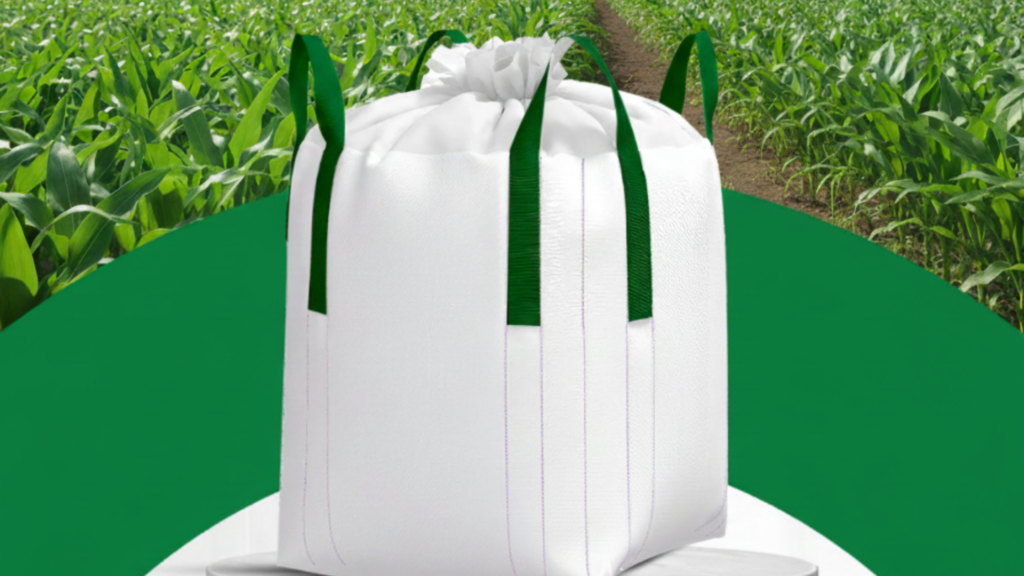
The flexible Intermediate Bulk Containers, also referred to as, FIBCs bulk bags, jumbo bags, flexible intermediate bulk containers, are now the standard worldwide when it comes to transportation and storage of dry and flowable bulk materials.
They are the most preferred in industries in terms of strength, cost-effectiveness and versatility in sectors like agriculture, chemicals, construction, food processing and mining.
This is a full-fledged guide to history, manufacturing, types, applications, benefits, frequently asked questions, and why Pursuit is one of the reputable companies in the proposed solutions of the FIBC.
Flexible Intermediate Bulk Container
History
The introduction of flexible intermediate bulk containers started in the 1940s, and became widely used by industrial application in the 1960s.
FIBCs are woven polypropylene based and thus soon substituted the traditional methods of packaging, such as drums, paper sacks, and rigid IBCs, because of the lightweight, strong, and malleable design.
Manufacturing
The production of modern FIBC is very accurate to provide the product with strength, safety and that it meets international standards.
Raw Material
Woven polypropylene (PP) is mostly used as the material of FIBCs. Good quality PP granules are melted and extrusion is done to create flat tapes.
Tape Extrusion
Polypropylene resin is melted and drawn into tapes and wrapped around bobbins. These are tapes that constitute the main framework of the bulk container.
Weaving
The tapes are woven by the circular or flat weaving machines in order to produce powerful and thick fabric that will sustain weight up to 500 kg to 2000+ kg.
Lamination (if applicable)
Certain flexible intermediate bulk containers are laminated against moisture in order to protect fine powders, chemicals and hygroscopic items – these are frequently used in the storage of hygroscopics.
Cutting and Printing
The branding, safety and handling instructions and the woven fabric are printed to the size.
Sewing and Assembly
Stitched patterns, panels, loops, filling spouts and discharge spouts, make up the entire bag of the FIBC.
Quality Control and Testing
Each FIBC undergoes:
- Load testing
- Drop testing
- UV resistance testing
- Safety factor testing (5:1 or 6:1)
- Anti-static performance testing (for Type B, C, and D FIBCs)
For a full overview of bulk packaging, you can also read our Ultimate Guide to FIBC Bags: Types, Uses, Benefits & Specifications.
What are flexible intermediate bulk containers?
A flexible intermediate bulk container is an industrial bulk bag that is comprised of woven polypropylene, which is used to hold and transport dry, flowable substances such as grains, powders, sand, chemicals, and minerals.
These bags have the capacity to hold a thousand times their weight hence being very efficient.
To know FIBC meaning and full form, check our dedicated guide: FIBC Full Form: Flexible Intermediate Bulk Container (Meaning, Types & Uses Explained).
What is the difference between IBC and FIBC?
| Feature | IBC (Rigid) | FIBC (Flexible) |
|---|---|---|
| Structure | Hard plastic or metal | Flexible woven polypropylene |
| Weight | Heavy | Lightweight |
| Storage | Requires more space | Collapsible & compact |
| Cost | High | Cost-effective |
| Applications | Liquids & chemicals | Dry bulk products |
What is an intermediate bulk container?
An intermediate bulk container (IBC) is a container with large capacity that is used to store or transport bulk material. These containers are of the flexible type, which are known as FIBEs.
What are the different types of FIBC bags?
FIBCs come in several structural variations:
- U-panel bags
- Circular bags
- 4-panel bags
- Baffled bags
- Single-loop & double-loop bags
Materials Used in FIBCs
- Polypropylene fabric
- Conductive threads (for Type C FIBCs)
- PE liners (for powders or food-grade material)
- UV-stabilizing additives
Types of FIBCs
Below are the industry-standard types:
Here are some common types of FIBCs:
- Type A FIBC
- Type B FIBC
- Type C (Conductive) FIBC
- Type D (Antistatic) FIBC
Flexible intermediate bulk container types
01. Type A flexible intermediate bulk containers (no electrostatic protection)
Primary Uses for Type A FIBCs:
- Sand
- Gravel
- Non-flammable materials
Do NOT use for:
- Flammable powders
- Combustible atmospheres
02. Type B FIBC bulk container bag (Surface breakdown voltage < 6 kV)
Primary Uses of Type B FIBCs:
- Dry, flammable powders
- Materials that don’t release high levels of static
Do NOT use for:
- Environments containing flammable gases
03. Type C flexible intermediate bulk container (Grounded & electrically conductive)
Type C conductive FIBCs main uses:
- Solvents
- Chemicals
- Explosive environments
Do NOT use for:
- Situations where grounding cannot be guaranteed
04. Type D bulk container bags (CROHMIQ static dissipative or antistatic)
Type D antistatic FIBCs uses:
- Highly combustible powders
- Locations where grounding is impractical
We have covered each bag type in detail here: Types of FIBC Bags: Complete Guide to FIBC Bag Types, Uses & Specifications.
Flexible Intermediate Bulk Containers Manufacturers
Pursuit Industries, one of India’s trusted and professionally recognized FIBC manufacturers, brings years of real production experience, advanced polypropylene processing systems, and globally compliant quality standards.
With expertise across Type A, B, C, and D bulk bags, Pursuit ensures consistent strength, safety, and customization for industries like chemicals, agriculture, construction, food processing, and mining.
Our ISO-certified manufacturing environment, rigorous testing, and customer-focused approach make Pursuit a reliable partner for high-performance Flexible Intermediate Bulk Containers.
If you want to explore the entire manufacturing process of jumbo bags, check our article: Jumbo Bags (FIBC Bags): Complete Guide, Types, Sizes & Manufacturing.
Benefits of using Pursuit as FIBC manufacturers
- Strict material quality control
- Advanced manufacturing environment
- Food-grade and pharmaceutical compliance
- Ability to customize bulk containers
- Global supply capability
- High durability and strength
For food-safe packaging solutions, refer to our guide: Food-Grade FIBC Manufacturers in India — Complete Guide.
Why Choose Pursuit As Your FIBC Bags Manufacturer?
Pursuit provides highly competitive and sustainable global compliant, flexible solutions to intermediate bulk container, which can be customized and environmentally friendly and sustainable to all industries.
How do flexible intermediate bulk containers compare to other solutions?
Replacing Paper Containers
FIBCs carry tons of product, replacing thousands of paper bags.
Replacing Plastic Carrying Containers
Lighter, safer, and eco-friendly.
Enhancing Shipping Containers
FIBCs maximize container space and reduce product handling.
Replacing or Enhancing Hoppers
Ideal for powders and granules.
Replacing or Enhancing Liquid Loaders
With liners, FIBCs can safely hold liquids.
Replacing or Enhancing Liquid Containers
Reduces cost and improves efficiency.
What Are the 5 Most Common Types of FIBC Bags?
Understanding FIBC Types
Different materials require different construction. The top 5 types include:
Top 5 Different Types of FIBC Bags
1. U-Panel Bulk Bags
Three-panel design with high strength.
2. Circular Bulk Bags
Seamless tubular body — excellent shape retention.
3. 4-Panel Bulk Bags
Offers maximum stability.
4. Baffled Bulk Bags
Perfect for space-saving & shape retention.
5. Single Loop and Double Loop Bags
Used in agriculture and fertilizer industries.
Other Considerations When Choosing a Flexible Bulk Container Type
Top Style
Open top, duffle top, spout top.
Coated vs Uncoated
Coated: prevents moisture.
Uncoated: breathable for agricultural use.
Lift Loops
Single-loop, double-loop, 4-loop.
Static Protection
Choose Type A, B, C, or D based on industry safety needs.
Which Type of Bulk Bag Is Right for You?
Depends on:
- Material type
- Safety requirements
- Industry
- Handling environment
Industry-Specific FIBC Bulk Bag Use Cases
Benefits of Pursuit’s FIBC Containers
1. Superior Durability and Strength
Engineered with high-tensile PP fabric.
2. Compliance with Strict Standards
ISO, FSSC, and food-grade certifications.
Every bag is produced under ISO management systems, FSSC food-safety frameworks, and verified food-grade certifications, ensuring reliability for sensitive industries.
3. An Eco-Friendly Solution
Reusable, recyclable, and reduces packaging waste.
4. Versatility Across Different Applications
Suitable for dry, powdered, granular, and semi-flowable products.
Applications in Various Industries
1. Chemical Industry
Static-protected FIBCs for safe handling.
2. Construction
Cement, sand, aggregate transport.
3. Agriculture
Seeds, grains, fertilizers.
4. Food Industry
Food-grade bulk bags with liners.
5. Mining
Ore, minerals, and metal powders.
For detailed industry applications and FIBC solutions, read: Leading FIBC Bags Manufacturer in India — High-Quality Bulk Packaging Solutions.
How to Select the Right Pursuit FIBC Container for Your Industry
- Identify material behavior
- Check for static hazards
- Decide on loop and top/bottom styles
- Confirm environmental requirements
Benefits of FIBC :
Cost-Effective Transportation and Storage
Carries up to 2 tons at minimal cost.
Space Efficiency
Collapsible and stackable.
Customizable
Available in multiple sizes, coatings, and loop styles.
Environmentally Friendly
Reusable and recyclable.
Improved Safety
Reduces manual handling.
Versatility
Suitable for countless applications.
Ease of Handling
Forklift and crane-friendly.
Protection from Contamination
PE liners ensure hygiene.
Global Compliance
Meets ISO, UN, and industry standards.
Reduced Packaging Waste
Less disposal compared to sacks or boxes.
Frequently Asked Questions
1. What is a Flexible Intermediate Bulk Container (FIBC)?
A Flexible Intermediate Bulk Container (FIBC) is a large, woven polypropylene bag designed for storing and transporting dry, flowable bulk materials such as grains, sand, fertilizers, chemicals, powders, and construction materials. It is also known as a bulk bag, jumbo bag, or super sack.
2. What is an Intermediate Bulk Container (IBC)?
An Intermediate Bulk Container (IBC) is a rigid, reusable industrial container used for transporting liquids, semi-liquids, chemicals, oils, and other fluid-based materials. Most IBCs are made from HDPE plastic with a protective steel cage.
3. What is the difference between FIBC and IBC?
The principal distinction is the content and use:
- FIBC Flexible, woven polypropylene bag of dry material.
- IBC Rigid tank-like containers are containers of liquids and fluid materials.
FIBCs are able to fold when empty whereas IBCs do not.
4. What are the common sizes of FIBC bags?
FIBC bags are available in large sizes which are custom made, though most common dimensions are:
- 90 × 90 × 110 cm
- 95 × 95 × 125 cm
- 100 × 100 × 120 cm
Capacity ranges from 500 kg to 2000 kg, depending on the bag type.
5. What are the standard sizes of Intermediate Bulk Containers (IBC)?
Common IBC tank sizes are:
- 1040 liters (275 gallons)
- 1250 liters (330 gallons)
They are very commonly applied in the field of chemicals, food and industries.
6. What materials are FIBC bags made of?
FIBC bags are made from woven polypropylene (PP) fabric.
They may consist of:
- Coating (lamination)
- Filling/discharge spouts
- Baffles
- Electrostatic protection (Type C / Type D)
7. What industries use FIBC bags?
FIBCs are commonly used in:
- Agriculture
- Chemicals
- Construction
- Food processing
- Mining
- Pharmaceuticals
- Fertilizers
- Plastic resins & powders
8. Are FIBC bags reusable?
Yes, it is possible to use some of the FIBC bags again, however, they should be:
- Multi-purpose (Multi-trip FIBC) certified.
- Handled properly
- Inspected for damage
- Cleaned as per standards
FIBs that have been used single time (one trip) are not reusable.
9. What are the different types of FIBC bags?
Common types include:
- U-panel bags
- Circular bags
- Baffle bags (Q bags)
- Ventilated bags
- Conductive Type C bags
- Anti-static Type D bags
Every type is specific to industries.
10. How much weight can an FIBC bag carry?
FIBC bags normally have 500kg to 2000kg according to:
- Bag design
- Fabric strength
- Safety factor (SF 5:1 or 6:1)
11. Can FIBC bags be customized?
Yes, they can be customized for:
- Size
- Fabric strength
- Liner type
- Printing
- Spouts (filling & discharge)
- Colors
- Baffles or conductive properties Special features
12. Why are FIBC bags preferred in industries?
Because they offer:
- High strength
- Lower cost
- Easy handling
- Lightweight and foldable structure
- Customization
- Safe bulk material storage
They also minimize the wastes of packaging, and storage space.
13. What is the lifespan of an FIBC bag?
An average one-time-use FIBC remains in service one cycle of handling, whereas reusable bags can be used in several trips, again, depending on maintenance and environmental factors.
14. Are FIBC bags safe for food products?
Yes–There are Food-grade FIBC bags.
They are manufactured in clean-room plants, according to:
- GMP (Good Manufacturing Practices)
- HACCP guidelines
- ISO 22000 standards
15. What certifications are important for FIBC manufacturers?
Common certifications include:
- ISO 9001 (Quality Management)
- ISO 22000 / FSSC 22000 (Food Safety)
- UN Certification for hazardous goods
Jumbo Bags (FIBC Bags): Complete Guide, Types, Sizes & Manufacturing
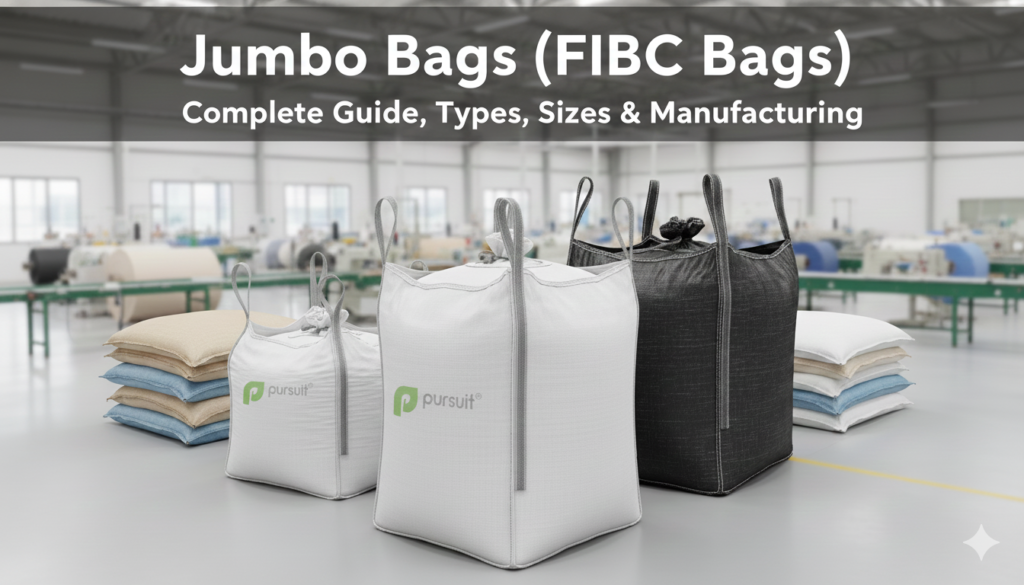
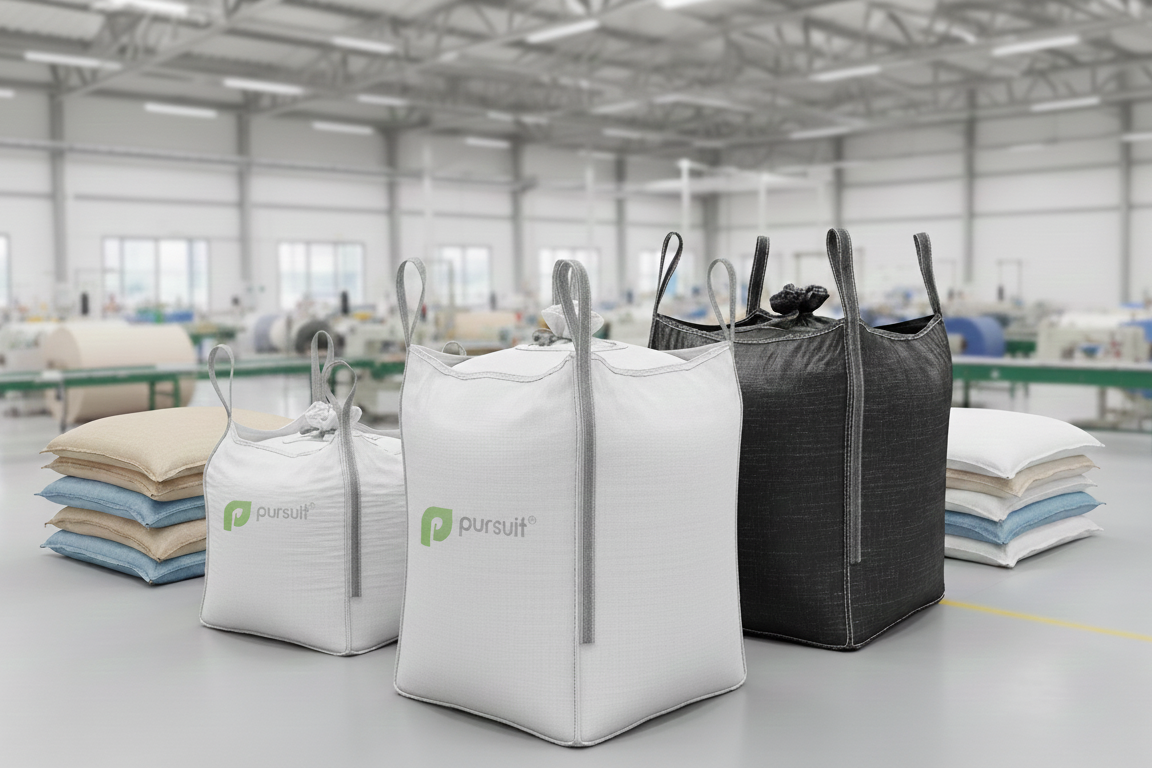
Jumbo Bags commonly referred to as FIBC (Flexible Intermediate Bulk Containers) has emerged as the surest and cost effective method of transporting and storing bulk materials.
These are industrial grade bags which have a capacity of carrying heavy weights of between 500 kg and 2000 kg making them suitable in manufacturing, agriculture, chemicals, construction and export businesses.
In the modern supply chain systems, 1 ton jumbo bags and other high strength FIBG bags have taken the form of a global standard since they are durable, safe, and cost-effective.
This all inclusive guide explains all about Jumbo Bags, their types, uses, sizes, costs and the reason why businesses use them.
Introduction to Jumbo Bags (FIBC Bags)
A Jumbo Bag is a large, woven polypropylene (PP) bulk bag used for storing and transporting powder, granules, flakes, and other bulk materials.
These bags are strong, reusable, and designed for heavy-duty industrial applications.
They are also called:
- FIBC Bags
- Bulk Bags
- Big Bags
- Intermediate Bulk Containers
- 1 Ton Bags
Jumbo Bags are widely used because they:
- Reduce packaging cost
- Carry large volumes in a single bag
- Are lightweight yet extremely strong
- Safe lift/Transport Forklifts or cranes.
Industries use them in preference in fertilizers, grains, cement, minerals, chemicals and sand, aggregates, polymers among others.
For high-quality bulk packaging solutions, manufacturers like https://pursuitind.com/ supply premium-grade Jumbo Bags across multiple industries.
Types of Jumbo Bags
Standard FIBC Jumbo Bags
These are the most common bags used in industries for 500 kg to 2000 kg material carrying capacity. Types include:
- Circular Jumbo Bags
- U-Panel Jumbo Bags
- Four-Panel Bags
- Baffle Bags
These bags are widely supplied by companies such as Leading FIBC & Jumbo Bag Manufacturer for bulk packaging.
Specialty Jumbo Bags
Special packaging industries use these advanced variants:
- Conductive / Type C Bags – Prevent static electricity
- Antistatic / Type B Bags
- Food Grade Jumbo Bags – For sugar, grains & food products
- UN Certified Bags – For hazardous materials
- Ventilated FIBC Bags – For potatoes, onions & vegetables
Single & Two Loop Jumbo Bags
Used mostly in fertilizers, seeds, and cement industries. They are ideal for crane and hook lifting.
Plastic & Poly Jumbo Bags
These include:
- Jumbo Poly Bags
- Jumbo Plastic Bags
- Polyethylene-lined FIBC Bags
- Jumbo Polythene Bags
Jumbo Garbage Bags
Used for industrial waste, municipal waste, and large-scale disposal operations.
Jumbo Bean Bags & Other Variants
These include:
- Jumbo Bean Bags
- Jumbo Bean Bag with Beans
- Bean Bag Jumbo Size
These are consumer products but fall under the keyword category.
Jumbo Bag Sizes & Dimensions
Sizes vary based on volume, capacity, and application.
Most Common Sizes:
- 1 Ton Jumbo Bag – 90 x 90 x 110 cm
- 1 Ton (Large Volume) – 95 x 95 x 125 cm
- 500 kg Bag – 75 x 75 x 90 cm
- 2000 kg Bag – 105 x 105 x 135 cm
Typical range of dimensions:
- Length: 80–120 cm
- Width: 80–120 cm
- Height: 90–180 cm
Manufacturing Process of Jumbo Bags
FIBC bags are produced in several phases:
Raw Material Preparation
Polypropylene granules of good quality are woven.
Fabric Weaving
Circular weaving or flat weaving machines create woven PP fabric.
Cutting & Printing
Fabric is cut precisely, and custom branding is printed.
Stitching & Loop Attachment
Strength stitching is high so that it holds loads.
Liner Insertion
PE liners may be inserted for moisture-sensitive products.
Testing & Certifications
Global manufacturers like Pursuit follow:
- ISO standards
- Food-grade certifications
- UN hazardous material standards
Top Jumbo Bag Manufacturers in India
India is one of the world’s biggest exporters of FIBC bags. Leading manufacturers supply domestic and export markets.
Major Manufacturing Regions
- Gujarat
- Maharashtra
- Rajasthan
- Tamil Nadu
Industries Using Jumbo Bags
Jumbo Bags are used globally across:
Agriculture
- Seeds
- Grains
- Fertilizer
- Animal feed
Construction
- Cement
- Sand
- Concrete mix
- Aggregates
Chemicals & Minerals
- Powdered chemicals
- Minerals
- Pigments
- Polymers
Food & Pharma
Food-grade bags are used for hygienic packaging.
Waste Management
Large jumbo garbage bags help with bulk waste storage.
Bitumen Packaging
Companies like Pursuitind supply 1-ton and FIBC bags for bitumen and industrial chemicals.
Applications & Use Cases
Jumbo Bags are used alongside systems like:
- Jumbo Bag Filling Machines
- Jumbo Bag Packing Systems
- Jumbo Bag Unloading Systems
- Conveyor-based filling solutions
These machines enhance speed and safety in bulk operations.
Technical Specifications of Jumbo Bags
GSM Range
120–240 GSM depending on strength requirement.
SWL (Safe Working Load)
500 kg – 2000 kg.
Safety Factor (SF)
Standard: 5:1
Heavy-duty reusable: 6:1
Loop Types
- Corner loops
- Cross corner loops
- Sleeve lift loops
Bottom Designs
- Flat bottom
- Spout discharge
- Conical discharge
Jumbo Bag Branding & Companies
Pursuit Industries – A Trusted Manufacturer for High-Quality Jumbo Bags
When it comes to premium, export-quality Jumbo Bags, Pursuit Industries stands out as one of the most reliable manufacturers in India.
Pursuit Industries specializes in producing strong, durable, and customizable FIBC Jumbo Bags that meet the requirements of multiple industries including construction, agriculture, chemicals, minerals, polymers, bitumen, and food-grade applications.
Why Pursuit Industries Is Trusted for Jumbo Bags?
✔ High-Strength Material
Pursuit uses top-grade woven polypropylene (PP) fabric with excellent load-bearing capacity for 500 kg to 2000 kg materials.
✔ Customized FIBC Bag Designs
They offer multiple types of jumbo bags such as:
- U-panel bags
- Circular woven bags
- Baffle bags
- Food-grade bags
- UN certified bags
- Liner-integrated bags
✔ Advanced Manufacturing Excellence
The company follows strict quality standards including:
- ISO-certified processes
- Multi-level fabric inspection
- UV stabilization
- International export guidelines
✔ Trusted Across Industries
Industries rely on Pursuit for:
- Fertilizers
- Minerals & powders
- Grains & seeds
- Cement & sand
- Bitumen handling
- Chemical packaging
✔ Bulk & Export Capabilities
Pursuit Industries has strong production capacity, ensuring timely supply for both domestic and international markets.
✔ Reliable Customer Service
Their team provides complete support—from selecting the right bag type to custom sizing, printing, and logistics assistance.
Rishi FIBC Solutions Pvt. Ltd.
One of India’s leading FIBC manufacturers with a strong global export presence.
They specialize in food-grade bags, conductive bags, UN bags, and ventilated jumbo bags.
Known for strict hygiene standards and advanced manufacturing technology.
Singhal Industries Pvt. Ltd.
A major producer of PP woven packaging materials including Jumbo Bags, PP sacks, liners, and HDPE products.
They offer customized FIBC solutions for chemicals, agriculture, construction, and industrial bulk packaging.
Bulk Corp International
Recognized for export-quality FIBC bags across Europe, the Middle East, and the USA.
They manufacture a wide range of Jumbo Bags such as U-panel, circular, baffle bags, and pallet-based bulk bags, all meeting global quality standards.
Related Jumbo Bag Products
- PP Woven Bags (25–50 kg)
- HDPE Bags
- Multi-wall paper bags
- FIBC liners
- Sling bags
- Pallets
- Two-loop bulk bags
These complement Jumbo Bag packaging solutions.
How to Store, Handle & Transport Jumbo Bags
Forklift Handling
Use loops for safe lifting.
Palletization
Bags must be stored on pallets in dry areas.
Safety Guidelines
Avoid dragging or dropping bags.
UV Protection
UV-stabilized fabric increases outdoor storage life.
Jumbo Bags vs Other Packaging Solutions
| Packaging Type | Capacity | Cost | Safety | Reusability |
|---|---|---|---|---|
| Jumbo Bags | Very High | Low | High | Yes |
| Plastic Bags | Low | Medium | Low | No |
| Drums | Medium | High | High | Yes |
| Cartons | Low | Low | Medium | No |
Jumbo Bags offer the best cost-to-capacity ratio.
FAQs
Q1. What is a jumbo bag?
A big PP woven bag that was used to transport 500-2000 kg materials.
Q2. What is the size of a 1 ton jumbo bag?
Typically 90x90x110 cm, but customizable.
Q3. What is the price of a jumbo bag?
Individual prices of between 250-900 per type and strength.
Q4. Which is the most appropriate jumbo bag company in India?
Industrial buyers prefer reliable manufacturers like https://pursuitind.com/ for bulk and export supply.
Conclusion – Why Choose FIBC Jumbo Bags?
Jumbo Bags represent the best package in the bulk material packaging across industries, which is economical, secure, and long-lasting.
They have a high load capacity, can be custom made, and are strong woven constructions which make them suitable to be used in long distance transportation and bulk storage.
Manufacturers like https://pursuitind.com/ play a vital role in supplying high-strength, export-quality FIBC Jumbo Bags suitable for chemicals, agriculture, construction, food, and bitumen industries.
Whether you need 1 ton jumbo bags, food-grade FIBCs, UN certified bags, or custom bulk packaging, Jumbo Bags continue to be the most dependable solution in 2025 and beyond.