
What Is Chlorinated Paraffin? Uses, Properties & Safety (2026)
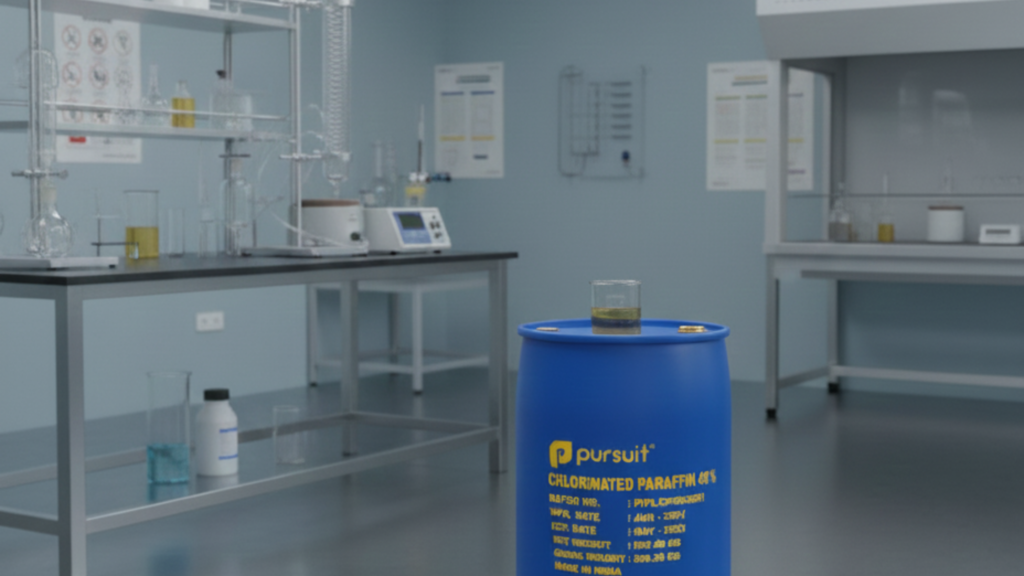
Chlorinated paraffin is a very popular industrial chemical, but it is quite misperceived as it is not only complicated in its chemical structure, but also in a certain shifting regulatory situation.
Chlorinated paraffin has a very important functional role in industries like PVC processing, rubber compounding and metalworking.
Personally, having been directly involved in the development of lubricants and the choice of polymer additives, I have observed the benefits of chlorinated paraffin in performance-related cases, as well as the drawbacks and safety risks of the additive.
This is a guide that is written in a clear, experience-based and technically accurate explanation and updated in 2026.
You’ll learn:
- What chlorinated paraffin actually is
- Its chemical and physical properties
- Where and why it is used
- Safety, hazards, and regulatory considerations
If you’re evaluating chlorinated paraffin for industrial use, the technical team at pursuitind.com regularly supports manufacturers with application-specific guidance.
Explore our industrial chemical solutions → https://pursuitind.com/plastics-rubber-chemicals-suppliers/
What Is Chlorinated Paraffin?
Chlorinated paraffin is a term that is used to refer to a family of chlorinated alkane which is the result of the reaction between straight-chain paraffins and chlorine under controlled conditions.
Key Characteristics
- Made out of petroleum-based paraffins.
- Chlorine content typically ranges from 30% to 70%
- Occurs in the form of liquids or solids depending on the length of chains.
Chlorinated paraffins are complex mixtures, rather than individual compounds, chemically. This is one of the reasons why their behaviour, safety and regulation differ greatly.
Related terms you may encounter:
- Chlorinated alkanes
- CP (industrial abbreviation)
- Chlorinated paraffin chemical mixtures
Types of Chlorinated Paraffins
The chlorinated paraffins are determined on the basis of the carbon chain length which directly influences the use and regulation of the paraffins.
Short-Chain Chlorinated Paraffins (SCCPs)
- Carbon range: C10–C13
- High chlorine content
- Excellent extreme-pressure performance
- Highly restricted due to environmental persistence
Need help choosing the correct chlorinated paraffin grade for your formulation?
Request technical grade guidance from pursuitind.com →https://pursuitind.com/contact-us/
Medium-Chain Chlorinated Paraffins (MCCPs)
- Carbon range: C14–C17
- Widely used as SCCP alternatives
- Better balance of performance and compliance
Long-Chain Chlorinated Paraffins (LCCPs)
- Carbon range: C18+
- Lower volatility
- Limited but growing niche uses
In practice work on the formulation, MCCPs have become the most frequent grade specified.
Key Properties of Chlorinated Paraffin
Building knowledge of properties is a key to proper industrial use.
Physical Properties
- Appearance: Clear to amber liquid or waxy solid
- Density: Higher than base paraffin oils
- Solubility: Insoluble in water, soluble in hydrocarbons
Chemical Properties
- High chlorine content
- Thermal stability under moderate processing conditions
- Chemically inert toward many polymers
Functional Properties
- Extreme pressure (EP) performance
- Flame retardancy
- Plasticizing ability
These characteristics are the reasons why chlorinated paraffin is still in demand in spite of regulatory pressure.
Uses of Chlorinated Paraffin
1. PVC & Polymer Processing
- Secondary plasticizer
- Flame retardant additive
- Used in cables, flooring, and coated fabrics
2. Metalworking Fluids
- EP additive in cutting oils
- Improves tool life and surface finish
- Effective in heavy-duty machining
3. Rubber, Paints & Sealants
- Enhances flexibility
- Improves chemical resistance
4. Other Industrial Uses
- Adhesives
- Leather treatment
- Specialized lubricants
Use is always application-specific and regulation-dependent.
In multiple lubricant and PVC applications, performance improvements depended heavily on formulation balance.
Discuss your application requirements with pursuitind.com chemical specialists
Real-World Industrial Experience
During the development of metal cutting oils, chlorinated paraffin has always been found to have better load-bearing and anti-wear properties than sulfur-only additives.
However, challenges included:
- Odor issues at high temperatures
- Customer concerns over environmental compliance
- Increasing demand for chlorine-free alternatives
We minimized chlorinated paraffin concentration instead of completely getting rid of it in a few instances- performance versus compliance.
Safety, Hazards & Environmental Impact
Health & Safety Considerations
- Low acute toxicity
- Prolonged exposure may cause skin irritation
- Proper PPE and ventilation recommended
Environmental Concerns
- SCCPs are tenacious organic pollutants (POPs)
- Bioaccumulation risk
- Disposal must follow hazardous waste guidelines
Key Takeaway
Chlorinated paraffin is not harmful when it is used in place, with the correct grade choice and regulation.
Regulations & Compliance Overview
- Stockholm Convention: SCCPs listed as restricted substances
- EU REACH: Strict controls based on chain length
- India & Asia: The rules are changing; the MCCPs are often permitted.
The most recent SDS and local regulations should always be consulted first.
Chlorinated Paraffin vs Paraffin
| Aspect | Paraffin | Chlorinated Paraffin |
|---|---|---|
| Chlorine Content | None | High |
| Flame Retardancy | No | Yes |
| EP Performance | Low | High |
| Environmental Risk | Low | Medium to High |
They are not interchangeable materials.
Frequently Asked Questions
What is chlorinated paraffin used for?
In mainly PVC, lubricants, rubber and factory formulations.
How are chlorinated paraffins made?
By chlorinating straight-chain paraffins under controlled conditions.
Why is chlorinated paraffin not used in coolants?
Due to poor water solubility and potential environmental concerns.
Is paraffin oil safe for skin?
Yes, cosmetic grade paraffin oil is not chlorinated paraffin.
Conclusion
Chlorinated paraffin is an industrial chemical of minor technical value that is poorly controlled but carefully regulated. Its future depends on:
- Responsible grade selection
- Regulatory awareness
- Balanced performance needs
Properly utilized, it has remained valuable in contemporary production.
