
FIBC Full Form: Flexible Intermediate Bulk Container (Meaning, Types & Uses Explained)
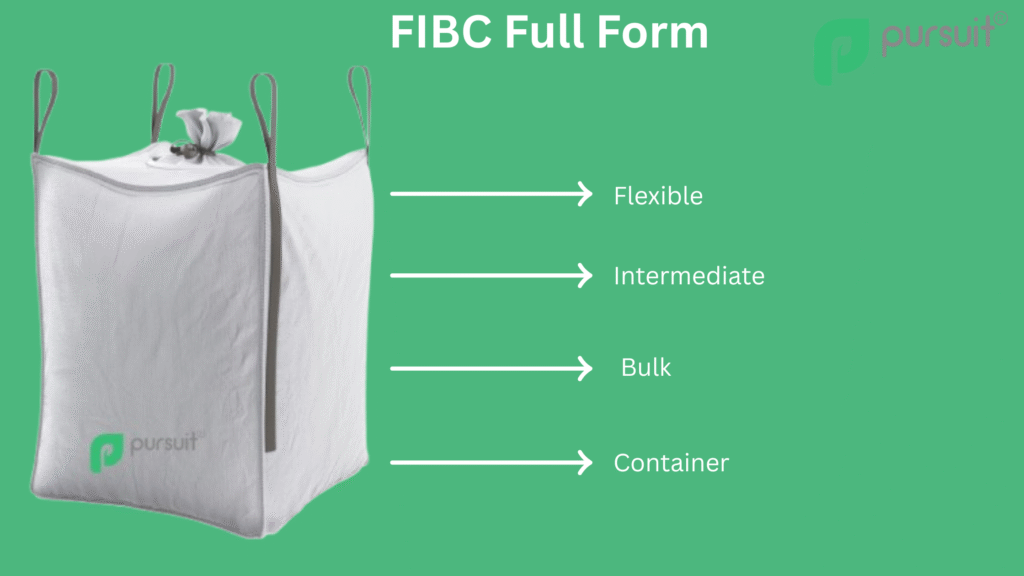
The FIBC full form is Flexible Intermediate Bulk Container.
- Flexible – The bag is soft-sided and foldable
- Intermediate – It carries 500–2,000 kg (medium/bulk capacity)
- Bulk – Used to store/transport bulk materials
The FIBC is a high capacity, robust, industrial bulk bag constructed of a woven polypropylene fabric, forming a bag that is used to facilitate, store and transport dry, flowing substances such as grains, powders, granules, sand, fertilizer, chemicals and building products.
They are lightweight, strong, recyclable and have a heavy capacity of up to 2,000–3,000 kg and therefore they are one of the most preferred bulk packaging solutions in the world.
This elaborate manual covers the definition of FIBC, varieties, manufacturing, dimensions, advantages, usage, safety standards and reasons why industries rely on the use of the bags.
What is an FIBC?
A Flexible Intermediate Bulk Container (FIBC) is an industrial all-purpose container to carry a bulk of material between 500 kg to 2000 kg.
Woven PP (polypropylene) fabric is used to make these bags and this provides the bag with high strength, flexibility, and durability.
The industries in which Fibc is mostly used include:
- Food & agriculture
- Chemicals
- Pharmaceuticals
- Construction
- Mining
- Plastics & resins
- Fertilizers
Their design allows easy lifting with forklifts, cranes, or pallet mechanisms, making them ideal for storage and transport.
Why Are FIBCs Called “Flexible Intermediate Bulk Containers”?
Every word in its entirety is meaningful:
1. Flexible
The bag material is of tough woven fabric which can be bent without snapping.
2. Intermediate
It is not too large or too small like sacks that are used by industries.
3. Bulk
Intended to transport high loads (in many cases more than 1 ton).
4. Container
It holds and carries such materials as a container though in a light form.
The name is ideal in describing the product.
Common Names for FIBC Bags
FIBCs can also be referred to as:
- Bulk Bags
- Jumbo Bags
- Super Sacks
- Big Bags
- Tote Bags
- WPP (Woven Polypropylene) Bulk Bags
These names are based on the usage in the regions yet they allude to the same product.
How FIBC Bags Are Made
FIBCs are made up of woven polypropylene of high strength. The production process usually entails:
- Extrusion of PP granules
- Weaving the polypropylene fabric
- Cutting and printing
- Sewing (U-panel, circular, or 4-panel design)
- Adding loops, spouts, or liners
- Quality testing for SWL and safety factor
Types of FIBC Bags
The knowledge of the kinds assists in choosing the appropriate bag depending on the material, environment and the static safety.
1. Type A — Standard FIBC
- No static protection
- For non-flammable products
- Used in general industries
2. Type B — Surface Breakdown Voltage
- Grabs propagating brush discharges.
- Applied to dry, combustible powders.
3. Type C — Conductive Bags
- knitted with conductive yarn.
- Should have a footing at the time of filling and discharge.
4. Type D — Anti-Static Bags
- Safe discharge of statical electricity.
- No grounding required
- Best suited in flammable surroundings.
FIBC Bag Designs
U-Panel Bags
U shaped design made of 3 panels; very common.
Circular Bags
Mostly woven in a tube form; no side seams.
4-Panel Bags
Constructed using four separate panels; holds its own better.
Baffle Bags (Form-Stable Bags)
Interior baffles are square in shape and space maximizing.
FIBC Liners
There are materials that need extra protection. Liners are added for:
- Food-grade products
- Moisture-sensitive materials
- Fine powders
- Chemical safety
Types of liners include:
- Form-fit liners
- Lay-flat liners
- Aluminum liners
- Conductive liners
Key Features of FIBC Bags
- High Safe Working Load (SWL) — 500 kg to 2000 kg
- UV-stabilized
- Moisture protection
- Reusable and recyclable
- Easy filling and discharge spouts
- Forklift-friendly loops
Applications of FIBC Bags
The industries that utilize the use of the FIBC bags are:
1. Agriculture
Grains, seeds, fertilizers, feed.
2. Chemicals
Powders, resin, pigments.
3. Construction
Sand, cement, gravel.
4. Food Industry
Sugar, flour, spices, starch.
5. Pharmaceuticals
API, bulk powders.
6. Mining
Minerals, ores.
Advantages of FIBC Bags
- Cheap in comparison with hard-packaged containers.
- Less storage space needed
- Light in weight yet very powerful.
- Adjustable in terms of size and functionality.
- Lower shipment and transport expenses.
- Reusable and eco-friendly
How to Choose the Right FIBC Bag
When selecting an FIBC, consider:
- Product type (powder, granules, food, chemicals)
- Required lifting style
- Static protection (Type A to D)
- Need for liners
- SWL & safety factor
- Filling & discharge mechanisms
- Environmental exposure
FIBC Full Form vs. Related Terms
| Term | Meaning |
|---|---|
| FIBC | Flexible Intermediate Bulk Container |
| Jumbo Bag | Common industrial name for FIBC |
| Bulk Bag | Refers to large capacity FIBC |
| Super Sack | Mainly used in the US |
| Big Bag | Commonly used globally |
FAQs About FIBC Full Form
1. What is the full form of FIBC?
Ans: FIBC stands for Flexible Intermediate Bulk Container.
2. Are FIBC and jumbo bags the same?
Ans: Yes, both refer to the same industrial packaging bag.
3. What material is used to manufacture FIBCs?
Ans: Woven polypropylene (PP).
4. What is the capacity of an FIBC bag?
Ans: Typically 500 kg to 2000 kg.
5. Why are FIBCs so popular?
Ans: They are strong, lightweight, reusable, and cost-efficient.
Conclusion
One of the most effective, reliable, and cost effective solutions in bulk handling of materials in any industry is the Flexible Intermediate Bulk Containers (FIBCs).
They are critical to contemporary industrial packaging because of their strength, customisability and versatility.